AI estimate as of June 24, 2025 · verify with a professional before acting
AI-Generated · Verify before acting
Everything on this page is generated by AI for informational purposes only. AI can make mistakes — the AI may misidentify items or misattribute them (artist, maker, brand, designer, origin, era). This is not an official valuation and should not be used for insurance, sale, tax, estate, legal, or lending purposes — or any decision requiring a certified appraisal. It is not an authoritative claim about any person, brand, or rights holder — do not share or rely on it as a factual statement about a third party. Always consult qualified professionals before making financial decisions.
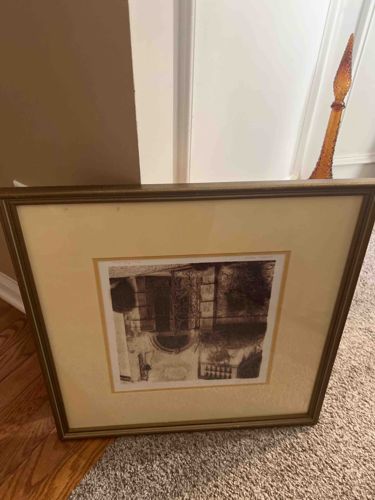
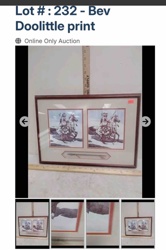
The item is a framed art print, likely a reproduction of a monochromatic artwork, possibly an etching, lithograph, or photograph. The central image appears to depict an architectural or interior scene, rendered in shades of sepia or black and white, suggesting an older artistic technique or a stylistic choice. The details within the print, though somewhat obscured by distance, hint at intricate patterns, possibly wrought ironwork, windows, or decorative elements of a building. The overall size of the framed piece suggests a medium to large-scale wall hanging. The print is professionally matted with a wide, light yellow mat board that serves as a border between the artwork and the frame. The frame itself is of a classic, flat profile, finished in a muted gold or brass tone, showing minimal signs of wear from the visible portions. The construction appears sturdy, indicating a quality framing job. While no specific artist signatures, edition numbers, or maker's marks are discernible from the image, the clean presentation and matting suggest it is a formally produced piece of art. The condition appears good with no obvious damage such as tears, discoloration, water damage, or significant frame scratches visible. The style of the artwork and its framing suggests it could be from the late 20th century or early 21st century, designed to complement traditional or transitional interior decor.
AI Appraisal Report
I have examined the image of this Framed Sepia-Toned Architectural Print. The overall condition appears to be good; I see no obvious signs of damage such as tears, discoloration, or significant frame abrasions. The professional matting and classic gold-toned frame suggest a well-presented piece. Based purely on visual assessment via the image, authenticity regarding artist or origin cannot be definitively confirmed. This would require an in-person examination to look for signatures, edition numbers, watermarks, or other identifying marks; provenance documentation would also be crucial. Without physical inspection, it is difficult to distinguish between an original print, a high-quality reproduction, or even a giclée. Market conditions for decorative framed prints, particularly architectural scenes, are generally stable. This type of artwork appeals to a broad audience seeking traditional or transitional decor. Comparables often include mass-produced framed art from home decor stores or smaller galleries. Demand is moderate, but rarity is low unless it is revealed to be an original work by a documented artist. The primary factors impacting value are its decorative appeal, condition, and framing quality. Its value is largely driven by its aesthetic contribution to an interior space rather than intrinsic artistic merit or rarity. If it were authenticated as an original from a known artist, its value could increase substantially. However, based on what can be observed, it functions as a decorative art object.