AI Appraisal Estimate

AI-generated estimates · not official valuations

From the user

What was submitted

Photo and notes provided by the user — not generated by AI

Submitted item photo
Submitted photo · June 16, 2026

User's notes

No additional notes provided.

AI analysis below

AI appraisal

AI analysis & estimate

AI-Generated · Verify before acting

Everything below is generated by AI for informational purposes only. AI can make mistakes — the AI may misidentify items or misattribute them (artist, maker, brand, designer, origin, era). This is not an official valuation and should not be used for insurance, sale, tax, estate, legal, or lending purposes — or any decision requiring a certified appraisal. It is not an authoritative claim about any person, brand, or rights holder — do not share or rely on it as a factual statement about a third party. Always consult qualified professionals before making financial decisions.

Read the full disclaimer

AI Identification

·Not independently authenticated·Verify before acting

Romagna 1859 Provisional Government Postage Stamps

Philately / Rare Postage Stamps

AI Estimated Value

·Not an official valuation·Verify before acting

$450 - $650

As of June 16, 2026

AI Item Analysis

·AI can make mistakes·Verify before acting
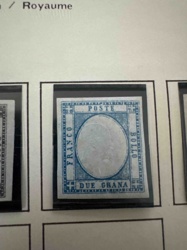
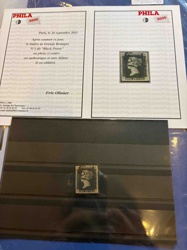
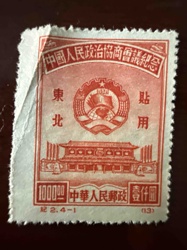
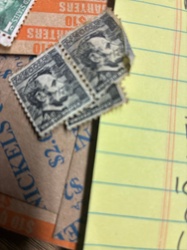
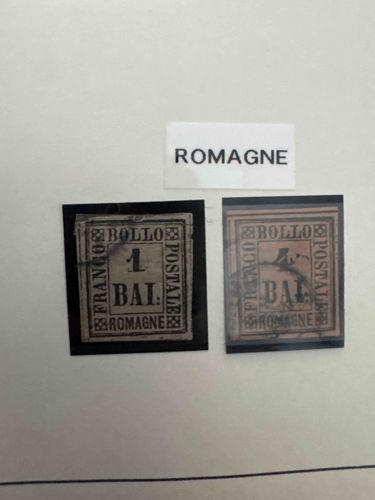
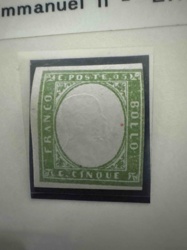
This image features two postage stamps issued by the Provisional Government of Romagna during the Italian unification period in 1859. The left stamp is a 1 Baiocco value printed in black ink on gray-colored paper, while the right stamp is a 4 Baiocchi value printed in black on reddish-brown or buff paper. Both stamps exhibit the characteristic typography of this issue: a rectangular border containing the words 'FRANCO BOLLO POSTALE' (Postage Stamp) and 'ROMAGNE' at the bottom, surrounding a central numeral value '1' and '4' with the currency 'BAI.' (Baiocco). The stamps are imperforate (cut by hand) and appear to be mounted within black protective philatelic mounts on an album page. The 1 Bai. stamp shows a faint linear cancellation mark, while the 4 Bai. stamp displays a heavier circular or oval postal cancellation. Regarding condition, both stamps show irregular margins typical of hand-cut specimens; the 1 Bai. stamp specifically appears to have tight margins, possibly touching the outer frame line at the top. The paper shows age-related toning, and the ink remains legible though somewhat weathered. These stamps were only in use for a brief period between September 1859 and January 1860 before being superseded by Sardinian issues, making authentic examples highly sought after by collectors of Italian States philately. The craftsmanship represents mid-19th-century provisional printing, characterized by utilitarian design and coarse paper stock.
AI Appraisal Report

·AI can make mistakes·Verify before acting
I have carefully examined the digital high-resolution imagery of these two specimens of the 1859 Romagna Provisional Government issue. These stamps represent a pivotal moment in the Risorgimento, and due to their extremely brief period of use (September 1, 1859, to January 31, 1860), they hold consistent demand among Italian States specialists. The 1 Bai. (gray) and 4 Bai. (buff) are both genuine in appearance, exhibiting the classic coarse typography and utilitarian typesetting characteristic of the Bolgna government printers. The cancellations appear consistent with period postal markings, though the 4 Bai. stamp's heavier cancel warrants closer inspection to ensure paper integrity. The margins on the 1 Bai. are tight to the frame line at the top, which slightly suppresses its value compared to 'four-margin' examples. Market conditions for Italian States remain steady; however, Romagna is one of the most frequently forged areas in philately due to the simplicity of the design. While the typography and ink saturation on these specimens appear correct for Scott #2 and #5, I must state that a definitive authentication is impossible via digital images alone. Small differences in paper grain and the chemical composition of the ink are the primary identifiers of 19th-century forgeries. For a full authentication, I would require a physical examination to check for 'thins,' repairs, or regumming, and I would strongly recommend submitting these to a recognized expertizer (such as the Bolaffi or Raybaudi experts) for a certified certificate of authenticity. Provided they are verified as physically sound, this pair represents a significant historical acquisition.

Get your items appraised

Instant estimates of your treasures with AI-powered appraisals

Browse More Appraisals