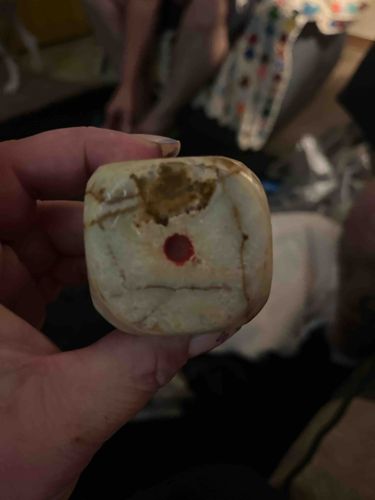
Antiquated Rectangular Stone Seal or Plinth Base
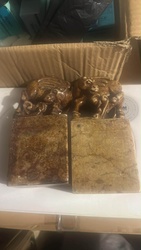
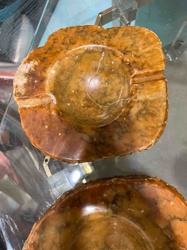
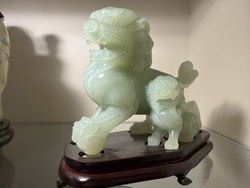
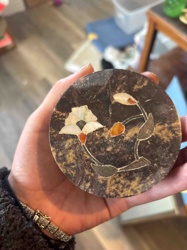
This object is a small, block-shaped item, likely a decorative seal, toggle, or the base of a small statuette. It is carved from a natural stone material, possibly soapstone or a variety of jade, exhibiting a pale cream to yellowish-white hue with significant brownish-tan veining and inclusions. The piece is roughly rectangular with rounded corners, measuring approximately 1.5 to 2 inches across. Centered on the top face is a distinct, circular indentation featuring a deep red pigment, which may indicate a seal paste residue or a structural mounting point for a missing upper component. The stone surface shows heavy signs of age and wear, including several deep-set fractures, surface pitting, and a large loss or 'chip' on the upper edge revealing a coarser interior texture. There are no visible maker's marks or signatures on the shown face, though the overall form suggests a functional or ornamental piece of Asian origin, possibly dating to the mid-20th century or earlier. The craftsmanship appears to be hand-carved, with an uneven, weathered patina that highlights its long-term use and handling.
AI-Generated Appraisal Disclaimer
Estimated Value
$150 - $250
Basic Information
Category
Antique Stones and Decorative Arts
Appraised On
February 28, 2026
Estimated Value
$150 - $250
Item Description
This object is a small, block-shaped item, likely a decorative seal, toggle, or the base of a small statuette. It is carved from a natural stone material, possibly soapstone or a variety of jade, exhibiting a pale cream to yellowish-white hue with significant brownish-tan veining and inclusions. The piece is roughly rectangular with rounded corners, measuring approximately 1.5 to 2 inches across. Centered on the top face is a distinct, circular indentation featuring a deep red pigment, which may indicate a seal paste residue or a structural mounting point for a missing upper component. The stone surface shows heavy signs of age and wear, including several deep-set fractures, surface pitting, and a large loss or 'chip' on the upper edge revealing a coarser interior texture. There are no visible maker's marks or signatures on the shown face, though the overall form suggests a functional or ornamental piece of Asian origin, possibly dating to the mid-20th century or earlier. The craftsmanship appears to be hand-carved, with an uneven, weathered patina that highlights its long-term use and handling.
Get Your Items Appraised
Instant estimates of your treasures with AI-powered instant appraisals