AI estimate as of October 13, 2025 · verify with a professional before acting
AI-Generated · Verify before acting
Everything on this page is generated by AI for informational purposes only. AI can make mistakes — the AI may misidentify items or misattribute them (artist, maker, brand, designer, origin, era). This is not an official valuation and should not be used for insurance, sale, tax, estate, legal, or lending purposes — or any decision requiring a certified appraisal. It is not an authoritative claim about any person, brand, or rights holder — do not share or rely on it as a factual statement about a third party. Always consult qualified professionals before making financial decisions.
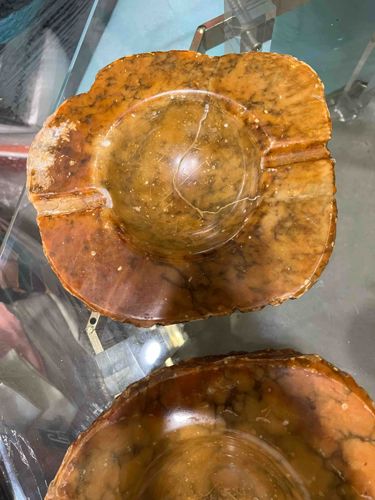
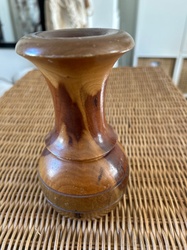
This appears to be a hand-carved stone ashtray, showcasing natural variations in color and texture inherent to the material. The primary colors visible are shades of amber, rust, and deeper brown, with lighter tan and yellowish specks distributed throughout, suggesting a type of marble, onyx, or another variegated natural stone. The form is generally rectangular with softened, irregular edges, giving it an organic and somewhat rustic appearance. The center features a deeply carved, circular recession, forming the main 'bowl' of the ashtray. Around the perimeter of this central depression, there are multiple shallow, rectangular indentations, likely designed as cigarette rests. The surface is polished, reflecting light and highlighting the stone's natural veins and inclusions. There are visible white, hair-thin lines crisscrossing the central bowl, which appear to be internal stress fractures or natural formations within the stone rather than surface cracks. The edges of the ashtray are unrefined, displaying a rough, raw finish that contributes to its natural aesthetic. The craftsmanship is evident in the smooth polishing of the interior and the precise carving of the rests, contrasting with the deliberately unfinished exterior. Based on the material and style, it could be from the mid-20th century or earlier, embodying a certain vintage appeal. No clear manufacturer marks or signatures are discernible from the image.
AI Appraisal Report
I have examined the provided image of this hand-carved stone ashtray to provide an appraisal. Visually, the condition appears good, with the polished surface reflecting light and highlighting the stone's natural veining. The "white, hair-thin lines" noted in the central bowl are characteristic of natural stone and appear to be internal formations or stress fractures rather than surface damage, which is common in such materials. Authenticity as a genuine carved stone item from a natural material is strongly supported by the visible variations in color, texture, and the unrefined edges, indicating hand-craftsmanship rather than a manufactured composite. The style aligns with mid-20th century or earlier decorative items, though precise dating without provenance is difficult.
From a market perspective, stone ashtrays, even vintage or antique ones, generally fall into a niche collectibles market. While appealing for their natural aesthetic and artisanal quality, demand is not exceptionally high. Similar carved stone decorative items, particularly ashtrays, typically retail in the $50-$150 range, depending on the specific stone, quality of carving, and historical significance. The lack of discernible manufacturer marks limits its value from a collectible brand standpoint. The ashtray’s primary value lies in its natural beauty, unique material, and the craftsmanship evident in its carving and polishing. Its function as an ashtray, while part of its original intent, can also appeal to collectors of vintage decorative arts, or those seeking unique accent pieces.
To fully authenticate and determine the exact type of stone (e.g., marble, onyx, travertine), a physical examination would be crucial. In-person inspection would allow for tactile assessment, a more precise evaluation of wear and true condition, and potential identification of any hidden marks or repairs. Scientific testing, like spectroscopic analysis, could definitively identify the stone composition, which might slightly influence value if it turns out to be a particularly rare or desirable type. Provenance documentation, such as original purchase receipts or family history, would be invaluable for precise dating and origin, significantly enhancing its historical and monetary value beyond what can be assessed from images alone. Based on its visual attributes and current market for comparable items, I estimate its appraisal value to be in the range of $60 to $120.