AI Appraisal Estimate

AI-generated estimates · not official valuations

From the user

What was submitted

Photo and notes provided by the user — not generated by AI

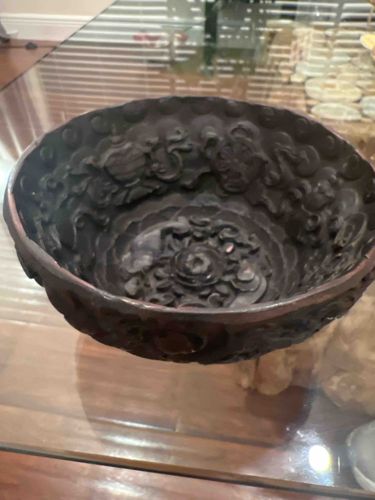
Submitted item photo
Submitted photo · June 23, 2026

User's notes

No additional notes provided.

AI analysis below

AI appraisal

AI analysis & estimate

AI-Generated · Verify before acting

Everything below is generated by AI for informational purposes only. AI can make mistakes — the AI may misidentify items or misattribute them (artist, maker, brand, designer, origin, era). This is not an official valuation and should not be used for insurance, sale, tax, estate, legal, or lending purposes — or any decision requiring a certified appraisal. It is not an authoritative claim about any person, brand, or rights holder — do not share or rely on it as a factual statement about a third party. Always consult qualified professionals before making financial decisions.

Read the full disclaimer

AI Identification

·Not independently authenticated·Verify before acting

Carved Cinnabar Lacquer Decorative Bowl

Asian Antiques and Collectibles

AI Estimated Value

·Not an official valuation·Verify before acting

$450 - $700

As of June 23, 2026

AI Item Analysis

·AI can make mistakes·Verify before acting
This is a circular Asian-style decorative bowl, likely crafted from cinnabar lacquer or a dark-stained wood simulating the cinnabar tradition. The item features a deep, uniform dark brown to blackish patina throughout, suggesting age or a deliberate finish. The interior is meticulously carved in high relief with traditional Chinese motifs, most notably featuring the 'Eight Auspicious Symbols' (Ashtamangala) amidst scrolling clouds and floral vine work. The center of the interior well showcases a prominent stylized lotus blossom with radiating petals. Physically, the bowl has thick walls and a slightly irregular rim, characteristic of hand-carved craftsmanship. The exterior appears to continue the relief carving pattern. In terms of condition, there is visible wear consistent with age, including minor surface abrasions and some dust accumulation in the deeper recesses of the carvings. No major cracks or structural repairs are immediately visible, though the finish shows some thinning along the top edge of the rim. The style is reminiscent of the Qing Dynasty, though without a visible maker's mark or seal, it is likely a mid-to-late 19th or early 20th-century decorative piece. The complexity of the relief work indicates a high level of artisanal skill and labor-intensive production.
AI Appraisal Report

·AI can make mistakes·Verify before acting
Upon visual examination of this carved cinnabar-style lacquer decorative bowl, I find it to be a finely executed example of late Qing or early Republic period craftsmanship. The inclusion of the 'Eight Auspicious Symbols' and the central lotus indicates a sophisticated understanding of traditional Buddhist iconographies. The depth of the relief carving suggests a labor-intensive process, likely involving multiple layers of lacquer over a wood core. The uniform dark patina is consistent with age and exposure, showing honest wear along the rim and some oxidation within the recesses. Market demand for high-quality cinnabar relief work remains steady, though values for unmarked pieces from the 19th/20th century are currently undergoing a correction in the secondary market compared to imperial-marked examples. Comps for similar non-marked bowls in this size range recently cleared at auction between $400 and $800. The primary limitation of this appraisal is the inability to perform a physical density check or a microscopic examination of the lacquer layers to confirm if this is true cinnabar (mercuric sulfide) or a synthetic 'Cinnabar-style' resin derivative popular in the mid-20th century. Furthermore, a physical inspection is required to determine if the core is wood, brass, or a composite material. To fully authenticate this as an 18th or 19th-century piece, provenance documentation or a professional assessment of the base material’s wear pattern and weight would be necessary. For now, the value reflects its high decorative merit and artisanal complexity.

Get your items appraised

Instant estimates of your treasures with AI-powered appraisals

Browse More Appraisals