AI Appraisal Estimate

AI-generated estimates · not official valuations

From the user

What was submitted

Photo and notes provided by the user — not generated by AI

Submitted item photo
Submitted photo · June 22, 2026

User's notes

No additional notes provided.

AI analysis below

AI appraisal

AI analysis & estimate

AI-Generated · Verify before acting

Everything below is generated by AI for informational purposes only. AI can make mistakes — the AI may misidentify items or misattribute them (artist, maker, brand, designer, origin, era). This is not an official valuation and should not be used for insurance, sale, tax, estate, legal, or lending purposes — or any decision requiring a certified appraisal. It is not an authoritative claim about any person, brand, or rights holder — do not share or rely on it as a factual statement about a third party. Always consult qualified professionals before making financial decisions.

Read the full disclaimer

AI Identification

·Not independently authenticated·Verify before acting

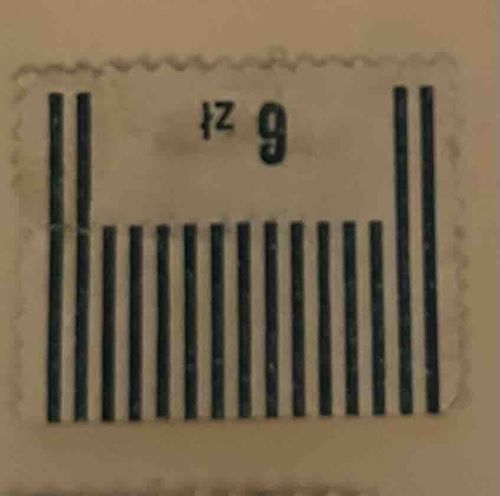
Polish Post Label with Price and Barcode

Postal Label/Stamp Fragment

AI Estimated Value

·Not an official valuation·Verify before acting

$0.50 - $2.00

As of June 22, 2026

AI Item Analysis

·AI can make mistakes·Verify before acting
This item appears to be a section of a postal label or stamp from Poland. The primary physical characteristic is its rectangular shape with a serrated or perforated edge on at least the top and bottom, consistent with a tear from a roll or sheet. The background color is a light, muted off-white or beige, showing some discoloration or aging. Prominently displayed is the number "6" followed by the currency abbreviation "zł" (Złoty), indicating a value of 6 Polish Złoty. The text "6 zł" is oriented perpendicular to the main axis of the label, suggesting it was printed in a manner that would be read vertically. Below this text is a series of vertical black lines, forming a barcode or a similar machine-readable pattern. These lines vary in height; there are two taller lines flanking a row of shorter, more uniform lines. The resolution of the image makes it difficult to discern exact line thickness or spacing patterns. The overall condition suggests moderate wear, with some smudging or light soiling visible on the light background. The edges show slight fraying or wear from being separated. There are no obvious maker's marks or specific manufacturing details beyond the implied postal origin. Based on the currency and typical use of such labels, it likely dates from the late 20th century to the early 21st century. The simple design and clear monetary value indicate its primary function was for postage or a related service. The quality is functional, consistent with mass-produced printed material.
AI Appraisal Report

·AI can make mistakes·Verify before acting
I have examined the provided image of what appears to be a Polish postal label fragment with a 6 zł denomination and barcode. Based on this visual examination, the item's condition appears used, with visible perforations (consistent with separation from a roll or sheet), slight discoloration, and minor wear. Authenticity cannot be definitively verified from an image alone; however, the design is consistent with Polish postal labels from the late 20th/early 21st century. The barcode and clear 'zł' currency suggest a modern origin. Market conditions for such contemporary postal fragments are generally low. These items are mass-produced and were very common in their time of use. They are not considered traditional postage stamps in most philatelic senses but rather machine-generated labels. Comparables typically sell for very minimal amounts, often less than their face value unless they possess unusual errors or unique cancellations. Demand for common modern postal labels, especially fragments, is limited primarily to niche collectors focusing on specific postal history or machine-generated labels. Rarity is extremely low; millions of these were likely produced. Factors significantly impacting value negatively include its commonness, lack of historical significance, absence of a full cover or unique cancellation, and its fragment status. There are no apparent errors or unique variations visible. For full authentication and a more precise valuation, an in-person examination would be critical to assess paper type, printing method, exact perforations, and confirm the absence of subtle errors not visible in the image. Provenance documentation (e.g., from an original postal use) would also add value, although unlikely for such an item. Without these, the valuation remains conservative due to the inherent limitations of image-based appraisal.

Get your items appraised

Instant estimates of your treasures with AI-powered appraisals

Browse More Appraisals