AI Appraisal Estimate

AI-generated estimates · not official valuations

From the user

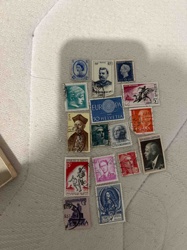
What was submitted

Photo and notes provided by the user — not generated by AI

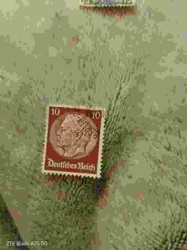
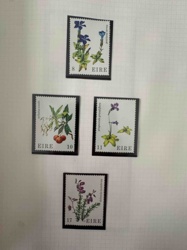
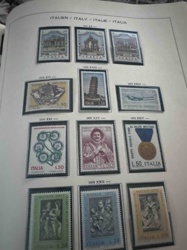
Submitted item photo
Submitted photo · June 18, 2026

User's notes

Stamps from 1960’s

AI analysis below

AI appraisal

AI analysis & estimate

AI-Generated · Verify before acting

Everything below is generated by AI for informational purposes only. AI can make mistakes — the AI may misidentify items or misattribute them (artist, maker, brand, designer, origin, era). This is not an official valuation and should not be used for insurance, sale, tax, estate, legal, or lending purposes — or any decision requiring a certified appraisal. It is not an authoritative claim about any person, brand, or rights holder — do not share or rely on it as a factual statement about a third party. Always consult qualified professionals before making financial decisions.

Note

This analysis also relies on unverified notes provided by the user, which may be incomplete or inaccurate and could affect the result.

Read the full disclaimer

AI Identification

·Not independently authenticated·Verify before acting

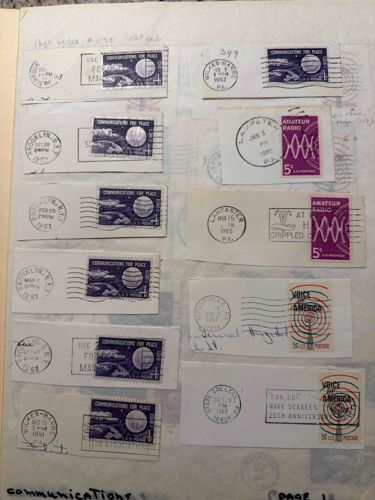
Collection of 1960s United States Philatelic Clippings (Communications Theme)

Philately / Postage Stamps

AI Estimated Value

·Not an official valuation·Verify before acting

$5.00 - $10.00

As of June 18, 2026

AI Item Analysis

·AI can make mistakes·Verify before acting
This is a collection of United States postage stamp clippings from the early to mid-1960s, specifically curated based on the theme of communications. The collection features several examples of the 4-cent 'Communications for Peace' stamp (1960), the 5-cent 'Amateur Radio' stamp (1964), and the 5-cent 'Voice of America' 25th Anniversary stamp (1967). The items are clipped from original envelopes, retaining their postmarks and cancellations. Notable cancellations include circular date stamps from Brooklyn, NY, Wilkes-Barre, PA, Lampeter, PA, and State College, PA, with dates ranging from 1961 to 1967. The physical condition shows the stamps are well-adhered to their original paper backings with clean cuts. Some clippings show slogans or wavy-line cancellations across the face of the stamps. The paper backings exhibit minor age-related toning (patina). The items are mounted inside a collector's album page with handwritten annotations in ink and pencil at the top and bottom of the page, including catalog numbers and pricing notes. The craftsmanship of the stamps themselves reflects the high-quality recessed and lithographic printing processes used by the Bureau of Engraving and Printing during this era, featuring vibrant purples, blues, and multi-colored concentric circles on the Voice of America issue.

AI Appraisal Report

·AI can make mistakes·Verify before acting
I have carefully examined the provided images and descriptions of this topical philatelic collection focusing on 1960s U.S. communications stamps. The collection consists of common commemorative issues including Scott #1171 (Echo I Communications for Peace), #1251 (Amateur Radio), and #1329 (Voice of America). Physically, these are 'on-paper' clippings, which demonstrate authentic period cancellations and standard age-related toning. The handwriting on the mounting page suggests a private hobbyist's assembly rather than a professional exhibit. From a value perspective, these stamps were produced by the Bureau of Engraving and Printing in quantities ranging from 120 million to over 150 million each. Because of this extreme high-volume production, they remain ubiquitous in the secondary market. Used examples, especially those clipped with common machine cancellations, typically trade for only a few cents each in bulk. The thematic curation adds slight appeal for a topical collector, but doesn't elevate the monetary value significantly above the cost of the album page itself. While the colors appear vibrant and the printing processes consistent with 1960s lithography and intaglio, a definitive assessment of condition (such as hidden thins or gum disturbances) requires a physical inspection with a watermark detector and high-magnification loupe. For full authentication and to rule out modern color reproductions, I would need to examine the paper fiber density and ink fluorescence under long-wave UV light. However, given the low market value of these specific issues, forgery is highly unlikely. The current market for such material is dominated by 'kiloware' sales, keeping the valuation at a nominal level.

Get your items appraised

Instant estimates of your treasures with AI-powered appraisals

Browse More Appraisals