AI estimate as of December 12, 2025 · verify with a professional before acting
AI-Generated · Verify before acting
Everything on this page is generated by AI for informational purposes only. AI can make mistakes — the AI may misidentify items or misattribute them (artist, maker, brand, designer, origin, era). This is not an official valuation and should not be used for insurance, sale, tax, estate, legal, or lending purposes — or any decision requiring a certified appraisal. It is not an authoritative claim about any person, brand, or rights holder — do not share or rely on it as a factual statement about a third party. Always consult qualified professionals before making financial decisions.
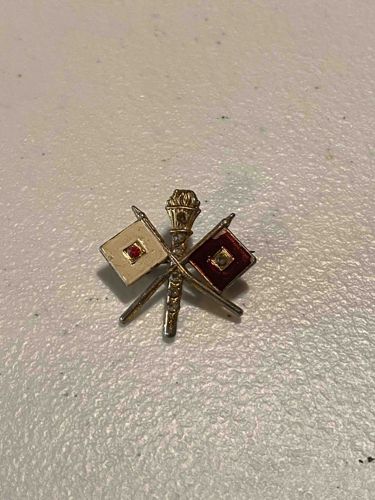
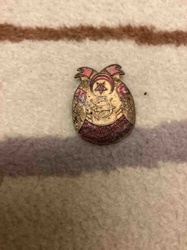
This item is a small, possibly gold-toned or brass-toned, metal lapel pin or badge. It features a central motif of a flaming torch, often symbolizing enlightenment or knowledge. Crisscrossing behind the torch are two flags, each oriented diagonally. The flag on the left has an ivory or cream-colored enamel field with a small, square, red stone or enamel inset in its center. The flag on the right has a dark red or maroon-colored enamel field, also featuring a small, square, clear or light-colored stone or enamel inset in its center. The flags appear to be rectangular with pointed ends, typical of pennants. The metalwork displays some intricate detailing, particularly on the torch, which shows a stylized flame and wrapped handle. The overall condition appears good for its age, though there might be minor surface wear and a slight patina consistent with an older metal item. There are no visible maker's marks or stamps in the provided image. The pin's construction suggests it was likely cast or stamped metal with enamel inlay. The use of a torch and two distinct flags with specific color combinations strongly suggests association with a fraternal organization, society, or perhaps a military unit, likely dating from the mid-20th century to sometime before the current era, given its classic design and material characteristics. The craftsmanship points to a mass-produced item of decent quality, typical for organizational insignia.
AI Appraisal Report
Based on my visual examination of the provided image, this Fraternal Lapel Pin with Flags and Torch appears to be in good condition for its presumed age, showing minor surface wear and a light patina consistent with an older metal item. The enamel inlays on the flags (ivory/cream with red stone, dark red/maroon with clear stone) are intact. Authenticity appears good for what it is – a period fraternal insignia, likely mass-produced. There are no visible maker's marks, which is common for such items.
Market conditions for fraternal pins of this type are generally modest unless they are associated with a particularly rare or historically significant organization, or crafted from precious metals. Comparables, usually found on online marketplaces or at antique fairs, typically range from $10 to $100 depending on condition, specific symbolism, and aesthetic appeal. The demand for common fraternal pins is niche rather than broad. This specific design, while attractive, does not immediately suggest an exceptionally rare organization. The primary value drivers are its good average condition and the inherent collectible interest in fraternal memorabilia.
Factors that could significantly impact value, which cannot be determined from images alone, include the actual metal composition (gold content would increase value substantially), the organizational affiliation, and provenance. Without physical inspection, I cannot confirm the specific metal (gold-toned vs. actual gold), the material of the 'stones' (glass, plastic, or genuine gemstones), or the exact manufacturing techniques. A physical examination for material identification, along with research into the specific flags and torch symbolism, would be critical for full authentication and a more precise valuation. Without such, it remains a decorative but relatively common piece of fraternal insignia.