AI estimate as of October 12, 2025 · verify with a professional before acting
AI-Generated · Verify before acting
Everything on this page is generated by AI for informational purposes only. AI can make mistakes — the AI may misidentify items or misattribute them (artist, maker, brand, designer, origin, era). This is not an official valuation and should not be used for insurance, sale, tax, estate, legal, or lending purposes — or any decision requiring a certified appraisal. It is not an authoritative claim about any person, brand, or rights holder — do not share or rely on it as a factual statement about a third party. Always consult qualified professionals before making financial decisions.
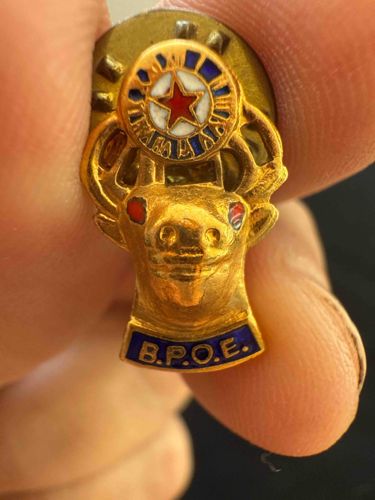
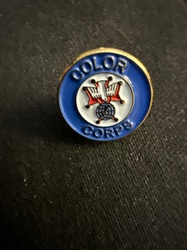
This item is a small, ornate lapel pin or watch fob featuring the emblematic design of the Benevolent and Protective Order of Elks (B.P.O.E.). The pin is predominantly gold-toned, suggesting it is made of brass, gold-plated base metal, or possibly a lower karat gold alloy, although direct metal content cannot be definitively determined from the image. The central and most prominent feature is the head of an elk, rendered in three-dimensional relief, with notable red enamel detailing in the eyes, which stands out against the metallic finish. Immediately above the elk's head, nestled between the antlers, is a circular emblem. This circular emblem features a white background with a prominent red five-pointed star in its center. Surrounding the star are elements in blue and white enamel, with text, possibly 'B.P.O.E.' or other lodge-specific mottos, inscribed in very small lettering that is difficult to decipher fully from the image but consistent with fraternal organization regalia. The overall construction appears solid, with fine details indicating a level of craftsmanship appropriate for commemorative or membership jewelry. The bottom of the pin features a blue enameled banner with the clear white inscription 'B.P.O.E.' The enamel work throughout the piece, particularly on the blue banner and the circular emblem, shows some minor imperfections consistent with age and wear, but the colors remain vibrant. There are no obvious signs of significant damage, repairs, or heavy tarnishing, suggesting it has been reasonably well-preserved. Minor surface scratches or slight dulling of the gold finish might be present upon closer physical inspection, along with a mild patina that often develops on older metallic items. The style and design are characteristic of fraternal organization memorabilia, likely dating from the early to mid-20th century, though without maker's marks or further context, a precise age is difficult to pinpoint. The detailing, especially the sculptural quality of the elk head and the intricate enamel work, indicates a respectable quality of manufacture.
AI Appraisal Report
I have examined the provided image of this Benevolent and Protective Order of Elks (B.P.O.E.) pin/lapel pin. Based on the visual information, the item appears to be an authentic piece of fraternal memorabilia. The design, featuring the elk head with red eyes, the circular emblem with a red star, and the 'B.P.O.E.' banner, is consistent with known Elks lodge regalia. The condition appears to be good to very good; while some minor enamel imperfections and possible surface wear are noted, there are no significant damages or repairs visible. The gold-toned finish also shows well for its presumed age.
Market conditions for B.P.O.E. pins and fobs are generally moderate. These items are fairly common, especially those made of base metals or plated materials. Demand exists among collectors of fraternal order memorabilia, but rarity is typically low unless the item is particularly early, made of precious metals, or associated with a significant event or individual. This specific pin, while well-crafted, doesn't present immediate indicators of exceptional rarity. Factors impacting value positively include its good preservation and the clear B.P.O.E. identification. The lack of precious metal content (unless proven otherwise) and its common design prevent it from reaching higher valuations.
My valuation is based purely on visual assessment of the image. A definitive authenticity verification and more precise valuation would require an in-person examination to confirm metal composition (e.g., gold content, if any), assess the reverse for maker's marks or engravings, detect any hidden damage, and accurately gauge the extent of wear and patina. Provenance documentation could also significantly impact value by establishing historical context or unique ownership.