AI Appraisal Estimate

AI-generated estimates · not official valuations

From the user

What was submitted

Photo and notes provided by the user — not generated by AI

Submitted item photo
Submitted photo · June 10, 2026

User's notes

No additional notes provided.

AI analysis below

AI appraisal

AI analysis & estimate

AI-Generated · Verify before acting

Everything below is generated by AI for informational purposes only. AI can make mistakes — the AI may misidentify items or misattribute them (artist, maker, brand, designer, origin, era). This is not an official valuation and should not be used for insurance, sale, tax, estate, legal, or lending purposes — or any decision requiring a certified appraisal. It is not an authoritative claim about any person, brand, or rights holder — do not share or rely on it as a factual statement about a third party. Always consult qualified professionals before making financial decisions.

Read the full disclaimer

AI Identification

·Not independently authenticated·Verify before acting

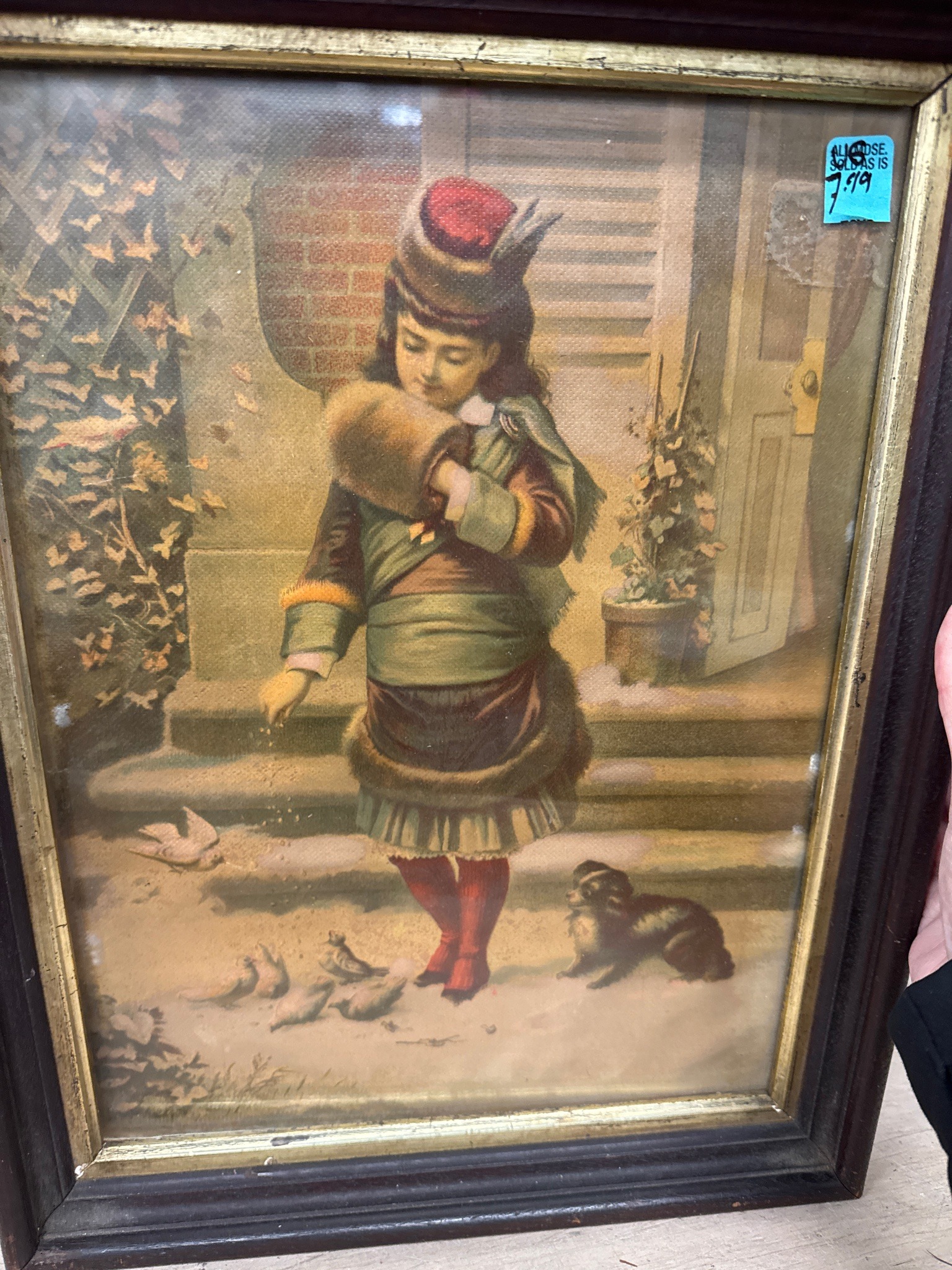
Victorian Era Chromolithograph of Girl Feeding Birds

Antique Prints and Artwork

AI Estimated Value

·Not an official valuation·Verify before acting

$45–$75

As of June 10, 2026

AI Item Analysis

·AI can make mistakes·Verify before acting
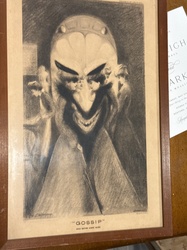
This item is a late Victorian-style chromolithograph or mass-produced printed artwork, likely dating from the 1890s to the 1910s. The piece depicts a young girl in winter attire, including a fur-trimmed hat, muff, and pleated skirt, standing on stone steps to feed small birds. A small dog sits beside her on the snow-flecked ground. The colors are muted earth tones with notable pops of red in the stockings and hat, consistent with period lithographic palettes. The print appears to have an embossed or textured 'honeycomb' surface pattern, a technique often used to mimic the look of canvas or to add depth to inexpensive prints. The artwork is housed in a period-appropriate composite frame with a dark wood finish and a significant inner border of gilded (gold-toned) gesso or painted wood. Condition-wise, the print shows visible surface grime, some slight fading, and a circular hazy spot in the upper right. The frame has significant wear, including loss of gilding, nicks in the wood, and a modern blue 'Sold As Is' price tag adhered to the glass and frame. No maker's mark is immediately visible on the face of the print.
AI Appraisal Report

·AI can make mistakes·Verify before acting
I have completed a visual examination of this Victorian-era chromolithograph. The piece is characteristic of mass-produced decorative prints from the late 19th to early 20th century. My assessment identifies a 'honeycomb' or linen-embossing texture, a common technique used during this period to simulate the aesthetic of an oil painting on canvas. The subject matter—a sentimental scene of a girl with a dog and birds—was highly popular in the domestic market between 1890 and 1915. The condition of this item significantly impacts its marketability. I observed visible surface grime, atmospheric fading, and a circular hazy spot likely indicating moisture trapped beneath the glass. The frame, while original to the era, shows notable gesso loss and structural wear. In the current market, such prints are abundant; they lack the rarity of hand-colored lithographs or limited runs, as these were produced by the thousands for middle-class Victorian homes. Comparable sales for similar prints in distressed period frames typically fall within the $40 to $80 range. Value is primarily driven by the 'shabby chic' decorative appeal rather than fine art investment potential. Please note that this appraisal is based on photographic evidence. A physical inspection is required to confirm the substrate material and check for hidden foxing or mold on the reverse. To fully authenticate the print's origin, I would need to remove it from the frame to search for a publisher's mark (such as Raphael Tuck & Sons) often hidden by the rabbet. Without provenance documentation or a physical sighting of the printing dots under magnification, this remains classified as a decorative vintage print.

Get your items appraised

Instant estimates of your treasures with AI-powered appraisals

Browse More Appraisals