AI estimate as of July 13, 2025 · verify with a professional before acting
AI-Generated · Verify before acting
Everything on this page is generated by AI for informational purposes only. AI can make mistakes — the AI may misidentify items or misattribute them (artist, maker, brand, designer, origin, era). This is not an official valuation and should not be used for insurance, sale, tax, estate, legal, or lending purposes — or any decision requiring a certified appraisal. It is not an authoritative claim about any person, brand, or rights holder — do not share or rely on it as a factual statement about a third party. Always consult qualified professionals before making financial decisions.
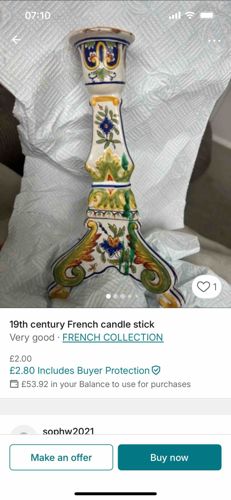
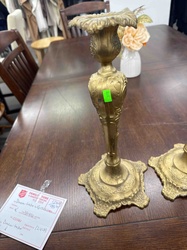
This is a single candlestick, identified as a 19th-century French piece. It appears to be constructed from ceramic or terracotta with a tin-glazed earthenware finish, commonly known as faience, which is characteristic of French pottery from that period. The candlestick is ornately decorated with vibrant, hand-painted polychrome designs featuring floral motifs and rococo-inspired scrolled elements. The color palette includes prominent blues, greens, yellows, and oranges, set against a cream or off-white background. The shaft of the candlestick is multifaceted, tapering and widening at various points, and features distinct sections for decoration. The base is tripartite, with three scrolled feet providing stability, each decorated to match the overall aesthetic. There are visible signs of age and use, consistent with a very good condition for a piece of its presumed age. Without close-up inspection, it's difficult to ascertain specific damages, but typical wear might include minor chips to the glaze, crazing, or fading of colors. The craftsmanship suggests a hand-decorated piece, indicating a certain level of artistry and attention to detail. No visible maker's marks or signatures are discernible from the image, but the style strongly aligns with decorative arts from the 19th century in France, likely intended for domestic display and use. The construction seems robust, indicating a functional as well as decorative purpose.
AI Appraisal Report
Based on my visual examination of the provided image, this single candlestick is consistent with 19th-century French faience. The poly-chrome decoration, featuring floral motifs and rococo-inspired scrolls against a light background, is characteristic of the period's decorative arts. The tripartite, scrolled base and multifaceted shaft are also typical.
Condition appears very good for its age. While I cannot discern minor chips, crazing, or color fading from an image alone, the overall presentation suggests robust construction and careful preservation. The absence of visible major damage (cracks, significant losses) is a positive factor. Authenticity appears strong based on style and decoration, aligning well with French pottery of the era. However, visual assessment alone limits definitive authentication.
In terms of market conditions, 19th-century French faience, particularly ornate examples like this, maintains a steady demand among collectors of European ceramics and decorative arts. Rarity for single candlesticks of this quality is moderate; while not unique, well-preserved, hand-decorated pieces are less common than more utilitarian items. Comparable sales often include pairs, which command higher values, but a strong single piece still has appeal.
Factors significantly impacting value include the vibrant, unrestored condition of the painting, the intact form, and the apparent absence of significant repairs. The aesthetic appeal is high.
Limitations: Without physical inspection, I cannot confirm the presence of restoration, specific glazemicro-crazing, or minor chips. In-person examination would allow for tactile assessment, blacklight testing for repairs, and detailed inspection for maker's marks, which are not discernible in the image. Provenance documentation (e.g., prior sales records, family history) would significantly bolster authenticity and value. Scientific testing, such as thermoluminescence dating, could definitively confirm age but is generally not undertaken for items of this estimated value unless authenticity is in serious doubt.