Niedringhaus Inc. NICO Galvanized Metal Basin
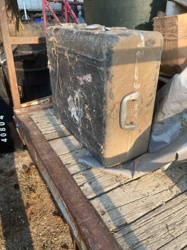
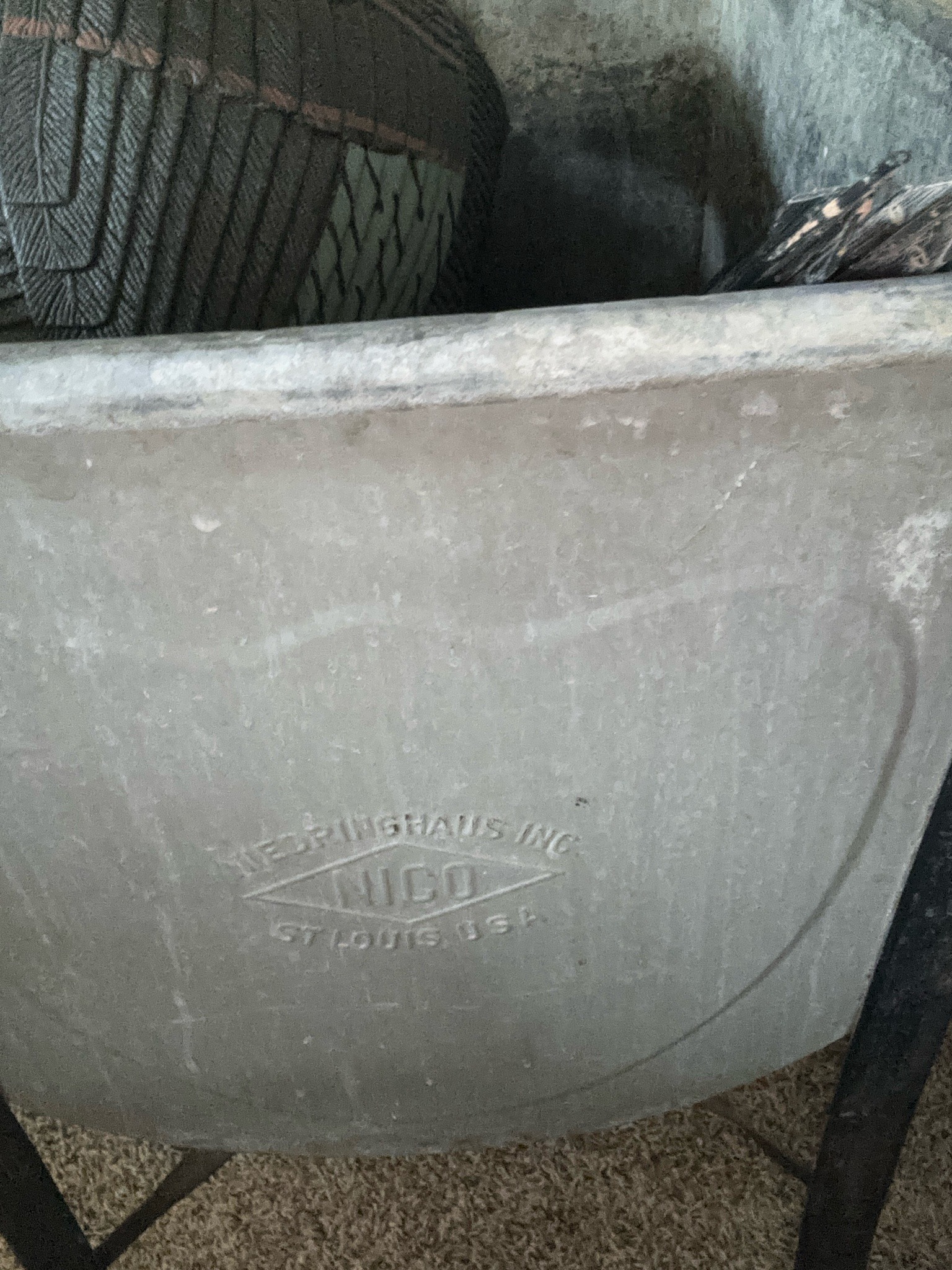
This is a vintage industrial-grade galvanized metal basin or wash tub manufactured by Niedringhaus Inc. in St. Louis, Missouri. The item is constructed from heavy-gauge steel with a hot-dipped zinc coating, giving it its characteristic gray, mottled spangle finish. A prominent embossed maker's mark is located on the side panel, featuring the name 'NIEDRINGHAUS INC.' in an arc over a diamond logo containing the brand 'NICO', with 'ST. LOUIS, USA' positioned below. The design includes a rolled top rim for structural rigidity and an embossed circular or rounded rectangular indentation on the face that serves as both a decorative element and a reinforcement to prevent warping. The metal shows an aged patina with visible surface oxidation, water spots, and minor scratching consistent with mid-20th-century utility equipment. The rugged craftsmanship indicates it was built for durability in a laundry, agricultural, or industrial setting. No significant structural failures like rust-through or deep dents are visible in this view, though some surface corrosion is present near the edges. The period of manufacture likely spans from the 1930s to the 1950s.
AI-Generated Appraisal Disclaimer
Estimated Value
$45.00 - $75.00
Basic Information
Category
Antique Industrial Utility & Housewares
Appraised On
May 6, 2026
Estimated Value
$45.00 - $75.00
Item Description
This is a vintage industrial-grade galvanized metal basin or wash tub manufactured by Niedringhaus Inc. in St. Louis, Missouri. The item is constructed from heavy-gauge steel with a hot-dipped zinc coating, giving it its characteristic gray, mottled spangle finish. A prominent embossed maker's mark is located on the side panel, featuring the name 'NIEDRINGHAUS INC.' in an arc over a diamond logo containing the brand 'NICO', with 'ST. LOUIS, USA' positioned below. The design includes a rolled top rim for structural rigidity and an embossed circular or rounded rectangular indentation on the face that serves as both a decorative element and a reinforcement to prevent warping. The metal shows an aged patina with visible surface oxidation, water spots, and minor scratching consistent with mid-20th-century utility equipment. The rugged craftsmanship indicates it was built for durability in a laundry, agricultural, or industrial setting. No significant structural failures like rust-through or deep dents are visible in this view, though some surface corrosion is present near the edges. The period of manufacture likely spans from the 1930s to the 1950s.
Get Your Items Appraised
Instant estimates of your treasures with AI-powered instant appraisals