AI estimate as of August 7, 2025 · verify with a professional before acting
AI-Generated · Verify before acting
Everything on this page is generated by AI for informational purposes only. AI can make mistakes — the AI may misidentify items or misattribute them (artist, maker, brand, designer, origin, era). This is not an official valuation and should not be used for insurance, sale, tax, estate, legal, or lending purposes — or any decision requiring a certified appraisal. It is not an authoritative claim about any person, brand, or rights holder — do not share or rely on it as a factual statement about a third party. Always consult qualified professionals before making financial decisions.
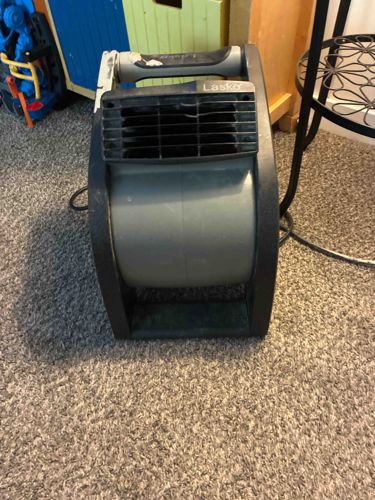
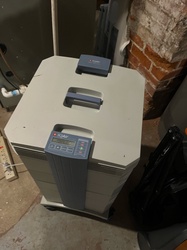
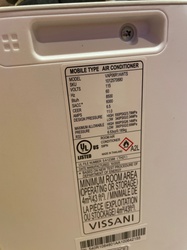
The item is a Lasko brand utility fan, often referred to as a box fan or floor fan, designed for moving a significant volume of air. It features a compact, somewhat rectangular form factor with rounded ends, allowing it to stand upright. The primary color of the fan housing is a medium gray, likely constructed from durable plastic suitable for general home or workshop use. The air intake/output is characterized by a black grated front panel, through which the fan blades (not visible) draw or expel air. A notable feature is the integrated handle located on the top, which appears to be a two-tone design with a lighter gray body and a darker gray or black rubberized grip for comfortable portability. The Lasko brand name is clearly visible in white lettering on the top surface, directly below the handle. The fan is equipped with a black electrical cord, suggesting it is a corded electric model. Visible condition issues include some scuffing and minor discoloration on the plastic surfaces. There appears to be some white residue or scuffing on the lighter gray portion of the handle. The unit generally exhibits signs of normal use, with some dust accumulation visible on and around the grates. There are no obvious signs of significant damage such as large cracks or missing parts, indicating it is likely in working condition despite the cosmetic wear. Its design suggests a modern manufacturing period, likely within the last 10-20 years, as it incorporates contemporary plastic molding techniques. The robust construction points to a utilitarian design focused on functionality and durability rather than ornate aesthetics.
AI Appraisal Report
Upon visual examination of the provided image, I assess this Lasko utility fan to be in good, used condition. Authenticity is readily confirmed by the visible 'Lasko' brand mark. The fan shows typical signs of use, including minor scuffing, some discoloration, and dust accumulation, particularly on the grates. There's notable white residue/scuffing on the lighter portion of the handle. Despite these cosmetic imperfections, there are no apparent cracks or missing components, suggesting functional integrity.
Market conditions for used utility fans like this are generally competitive. New Lasko utility fans, depending on features and power, typically retail between $30-$70. Comparables in the used market, often found on platforms like eBay, Facebook Marketplace, or local second-hand stores, tend to range from $15-$40, varying based on condition and local demand. This specific model appears robust and well-designed for practical use.
Demand for such utilitarian items is consistent, driven by practical needs rather than rarity or collectible value. This is a common, mass-produced item, so rarity is not a factor influencing its value positively. The primary factor impacting its value is its cosmetic condition and, crucially, its operational status. Without physical testing, I cannot verify its working order, which is paramount for a functional appliance.
Limitations in authenticity verification from an image alone primarily concern operational status. While cosmetic condition can be observed, internal motor function, fan blade balance, and electrical safety cannot be confirmed without in-person examination and testing. Provenance documentation (receipts, manuals) would only add negligible value for an item of this type but could confirm its age. Scientific testing is unnecessary for an item like this.