AI Appraisal Estimate

AI-generated estimates · not official valuations

From the user

What was submitted

Photo and notes provided by the user — not generated by AI

Submitted item photo
Submitted photo · June 30, 2026

User's notes

No additional notes provided.

AI analysis below

AI appraisal

AI analysis & estimate

AI-Generated · Verify before acting

Everything below is generated by AI for informational purposes only. AI can make mistakes — the AI may misidentify items or misattribute them (artist, maker, brand, designer, origin, era). This is not an official valuation and should not be used for insurance, sale, tax, estate, legal, or lending purposes — or any decision requiring a certified appraisal. It is not an authoritative claim about any person, brand, or rights holder — do not share or rely on it as a factual statement about a third party. Always consult qualified professionals before making financial decisions.

Read the full disclaimer

AI Identification

·Not independently authenticated·Verify before acting

Cast Iron Tailor's Slug or Heater

Antiques & Housewares

AI Estimated Value

·Not an official valuation·Verify before acting

$45.00 - $75.00

As of June 30, 2026

AI Item Analysis

·AI can make mistakes·Verify before acting
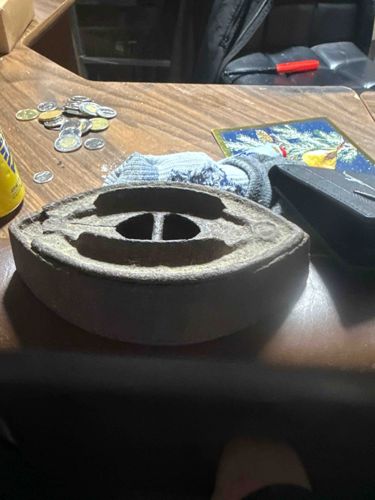
This item is a heavy cast iron 'slug' or heater, traditionally utilized within an antique box iron for pressing laundry. It possesses a distinct double-pointed elliptical or boat-like shape, designed to fit snugly inside a hollow iron base. The physical construction is thick-walled and utilitarian, made of dark, oxidized cast iron that exhibits a rough, pitted surface texture consistent with sand-casting methods. The core features a recessed area with a central bridge or vertical post, which likely served as a mounting point for a removable handle or hook used to lift the heated iron from a stove. There is noticeable surface corrosion and a heavy rust patina across the entire surface, indicating significant age, likely dating from the mid-to-late 19th century. No manufacturer stamps are clearly visible due to the heavy oxidation, though the shape is characteristic of industrial or domestic pressing tools from the Victorian era. The piece shows signs of extensive use and environmental exposure, including blunted edges and a layer of grime, yet it retains its structural integrity as a solid piece of blacksmith-forged or foundry-cast hardware. Its substantial weight would have been essential for heat retention during the ironing process.
AI Appraisal Report

·AI can make mistakes·Verify before acting
I have examined the digital representation of this Victorian-era cast iron slug or heater. Based on the thick-walled construction, the central vertical post for handle attachment, and the characteristic boat-like geometry, the item appears to be an authentic 'slug' used in conjunction with a box iron, likely dating between 1860 and 1890. The surface displays a deep, oxidized patina and pitting consistent with repeated thermal cycles and long-term environmental exposure. Market demand for individual iron slugs is relatively niche, primarily driven by collectors of antique laundry technology or 'sad irons' who require replacement inserts for incomplete box iron sets. While foundries like Enterprise or Wrightsville produced similar pieces, the lack of visible foundry marks on this specimen—due to heavy surface corrosion—limits its appeal as a standalone branded collectible. Comparable sales of uncleaned, single slugs typically fall within the $40 to $80 range depending on weight and regional interest. The primary factor impacting value is the heavy oxidation; while it confirms age, the pitting masks potential maker's marks that could increase value. This appraisal is limited by the inability to physically verify the exact metal composition or weight via the provided image. Full authentication would require an in-person examination to inspect for hairline stress fractures, a thorough cleaning to search for faint stamped numerals or logos, and provenance documentation to link the piece to a specific foundry. Without these, the value remains at a standard utility level for antique hardware.

Get your items appraised

Instant estimates of your treasures with AI-powered appraisals

Browse More Appraisals