AI Appraisal Estimate

AI-generated estimates · not official valuations

From the user

What was submitted

Photo and notes provided by the user — not generated by AI

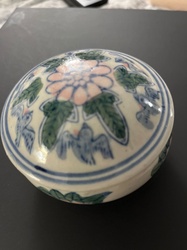
Submitted item photo
Submitted photo · June 22, 2026

User's notes

No additional notes provided.

AI analysis below

AI appraisal

AI analysis & estimate

AI-Generated · Verify before acting

Everything below is generated by AI for informational purposes only. AI can make mistakes — the AI may misidentify items or misattribute them (artist, maker, brand, designer, origin, era). This is not an official valuation and should not be used for insurance, sale, tax, estate, legal, or lending purposes — or any decision requiring a certified appraisal. It is not an authoritative claim about any person, brand, or rights holder — do not share or rely on it as a factual statement about a third party. Always consult qualified professionals before making financial decisions.

Read the full disclaimer

AI Identification

·Not independently authenticated·Verify before acting

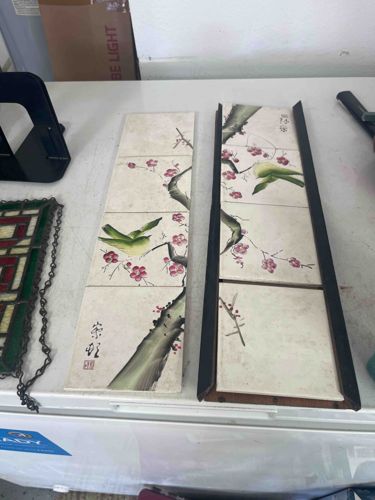
Japanese Hand-Painted Ceramic Art Tile Panels

Asian Fine Art & Ceramics

AI Estimated Value

·Not an official valuation·Verify before acting

$450 - $700

As of June 22, 2026

AI Item Analysis

·AI can make mistakes·Verify before acting
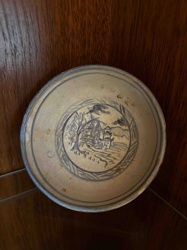
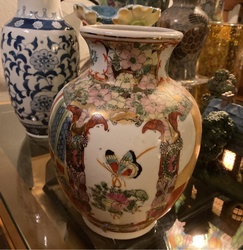
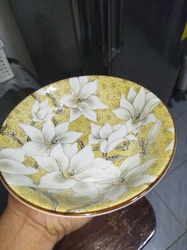
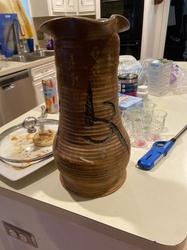
This set consists of two vertical panels, each composed of multiple square ceramic tiles that together form a cohesive mural. The artwork is executed in a traditional Nihonga or sumi-e style, featuring a delicate 'Birds and Flowers' (Kacho-ga) motif. Specifically, the scene depicts vibrant green birds perched on the gnarled branches of a flowering plum or cherry tree, punctuated by subtle pink blossoms. The background is a soft, off-white cream glaze with a slight matte finish. One panel is partially assembled within its original dark-stained wood frame, which features mitered corners and a shallow channel for the tiles. The other panel is currently out of its frame, showing four individual tiles aligned. Each mural includes vertical Japanese calligraphy (inscriptions) accompanied by a red cinnabar seal or 'hank' mark, signifying the artist's signature. The brushwork shows varying line weights and sophisticated tonal gradients in the green plumage and grey-washed branches. Regarding condition, the tiles show some surface grime and minor edge wear. The loose set appears separated from its structural backing, and there is a visible gap in the framed set, suggesting it is missing a segment or is improperly seated. The style and construction point to the mid-20th century, likely produced as high-quality decorative export ware or interior architectural accents.
AI Appraisal Report

·AI can make mistakes·Verify before acting
I have conducted a visual examination of the two Japanese ceramic tile murals depicting traditional Kacho-ga (Bird and Flower) motifs. The execution of the sumi-e style brushwork, particularly the tonal gradients in the avian plumage and the skeletal structure of the flowering branches, indicates a mid-20th century production. The presence of cinnabar ‘hanko’ seals and calligraphy suggests an intentional artist-led design, likely for the high-end decorative export market or Shōwa-era architectural interiors. The condition exhibits notable issues that impact the valuation. Specifically, the detachment of one mural from its mounting and the apparent gaps or missing segments in the framed set suggest a loss of structural integrity. There is visible surface grime and minor 'fleabite' chipping along the tile edges consistent with age and handling. Market demand for Japanese ceramic panels is currently stable, though fragmented sets or those requiring restoration typically realize lower prices than pristine, fully framed pairs sold through specialist Asian art auctions. Critically, this appraisal is based solely on digital images. A definitive valuation is limited by the inability to inspect the tile reverse for kiln marks or manufacturer stamps, which could significantly increase the value if linked to a known studio like Noritake or a master ceramicist. A physical inspection is required to determine if the pigments are hand-painted overglaze or sophisticated screen prints with hand-finished details. Furthermore, verifying provenance through original receipts or import documentation would be necessary to solidify an 'investment grade' attribution. For full authentication, I recommend a professional cleaning and examination of the tile bodies to confirm the clay composition and firing period.

Get your items appraised

Instant estimates of your treasures with AI-powered appraisals

Browse More Appraisals