AI identification & appraisal estimate

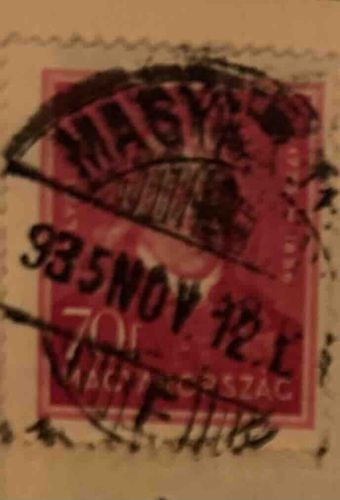
Hungarian Postage Stamp (Issued 1935)

Submitted photo of Hungarian Postage Stamp (Issued 1935)
Photo submitted by the user — not generated by AI

User's notes

Hungary stamp

These notes were written by the person who submitted this item. Appraiser.AI has not verified them, and the AI's identification and estimate may rely on them.

AI Estimated Value

Not an official valuation

$0.50 - $1.00

AI estimate as of November 10, 2025 · verify with a professional before acting

AI-Generated · Verify before acting

Everything on this page is generated by AI for informational purposes only. AI can make mistakes — the AI may misidentify items or misattribute them (artist, maker, brand, designer, origin, era). This is not an official valuation and should not be used for insurance, sale, tax, estate, legal, or lending purposes — or any decision requiring a certified appraisal. It is not an authoritative claim about any person, brand, or rights holder — do not share or rely on it as a factual statement about a third party. Always consult qualified professionals before making financial decisions.

This analysis also relies on unverified notes provided by the user, which may be incomplete or inaccurate and could affect the result.

Read the full disclaimer

AI Item Analysis

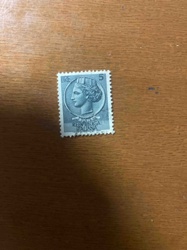
This item is a used Hungarian postage stamp, identifiable by the text 'MAGYARORSZAG' (Hungary) at the bottom. The stamp appears to be a carmine red or deep red color, with a central design that is largely obscured by a prominent black circular postmark. The postmark indicates a date of '935 NOV 12.1', suggesting it was used on November 12, 1935. The denomination '70 F' (Fennig) is visible on the lower left portion of the stamp, indicating its postal value. The stamp has perforated edges, which appear somewhat uneven, suggesting it was torn from a sheet. The overall condition shows significant wear as a result of its use in postal service. The large, heavy postmark covers a substantial portion of the stamp's design, which is a common characteristic of used stamps but can diminish aesthetic appeal and collector value if it obscures key design elements. The paper appears to be of standard thickness for postage stamps of that era, and there are no immediately discernible tears or significant creases beyond the typical handling associated with mailed items. The age is clearly established by the visible postmark. No specific maker's marks are visible beyond the country and denomination, which are standard for government-issued postage.
AI Appraisal Report

I have examined the provided image of the Hungarian postage stamp, issued in 1935. This is a used stamp, confirmed by the '935 NOV 12.1' postmark. The denomination, '70 F', and country 'MAGYARORSZAG' are visible. The condition appears consistent with a used postal item from that era, exhibiting wear and a heavy, central postmark that obscures much of the design. The perforations seem somewhat uneven, which is not uncommon for a stamp removed from a sheet. Authenticity based on the image alone seems probable as a genuine used Hungarian stamp from 1935; however, I cannot definitively confirm authenticity without a physical inspection to check for common alterations like reperforations, repairs, or re-gumming. Market conditions for common, used 1935 Hungarian stamps are generally low unless they possess specific rare varieties or outstanding centering/condition, which is not the case here. The heavy postmark significantly detracts from its aesthetic appeal and collector value, as it obscures key design elements. Rarity for this common issue in used condition is very low. Consequently, demand is also quite low among collectors, usually sought by those aiming to complete a basic collection or type set. Factors significantly impacting value are the commonness of the issue, the typical used condition, and especially the heavy postmark. For full authentication, I would require an in-person examination to verify paper type, watermarks (if applicable to this issue), gum condition (though less critical for used stamps), and to scrutinize for any repairs or hidden defects not visible in the image. Without physical inspection, precise flaw detection and confirmation of specific varieties remain limited.

Keep exploring

More postage stamp appraisals

Get your items appraised

Instant AI-powered appraisal estimates from a photo

Browse More Appraisals