AI Appraisal Estimate

AI-generated estimates · not official valuations

From the user

What was submitted

Photo and notes provided by the user — not generated by AI

Submitted item photo
Submitted photo · June 6, 2026

User's notes

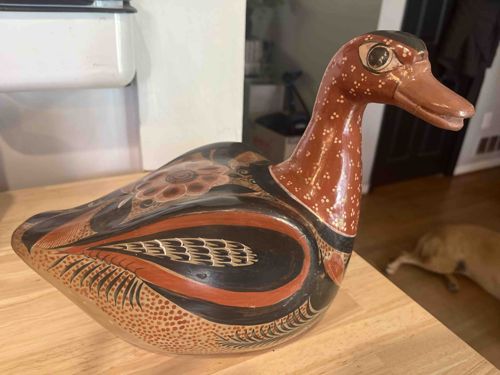
The ceramic, hand-painted duck figurine you’ve shared appears to be a piece of folk art, likely crafted in a traditional style. Based on its dimensions (10x6x11 inches) and the intricate hand-painted designs featuring floral and geometric patterns, it could be an example of pottery from a region known for such craftsmanship, such as Mexican or Central American folk art (e.g., Barro Negro or Tonala pottery). These pieces are often valued for their cultural significance and artistic detail rather than as high-end antiques, unless they are from a renowned artisan or have a verifiable provenance

AI analysis below

AI appraisal

AI analysis & estimate

AI-Generated · Verify before acting

Everything below is generated by AI for informational purposes only. AI can make mistakes — the AI may misidentify items or misattribute them (artist, maker, brand, designer, origin, era). This is not an official valuation and should not be used for insurance, sale, tax, estate, legal, or lending purposes — or any decision requiring a certified appraisal. It is not an authoritative claim about any person, brand, or rights holder — do not share or rely on it as a factual statement about a third party. Always consult qualified professionals before making financial decisions.

Note

This analysis also relies on unverified notes provided by the user, which may be incomplete or inaccurate and could affect the result.

Read the full disclaimer

AI Identification

·Not independently authenticated·Verify before acting

Hand-Painted Folk Art Ceramic Duck Figurine

Ceramic Figurine

AI Estimated Value

·Not an official valuation·Verify before acting

$50 - $85

As of June 6, 2026

AI Item Analysis

·AI can make mistakes·Verify before acting
This is a hand-painted ceramic figurine in the shape of a duck. The figurine measures approximately 10 inches in length, 6 inches in width, and 11 inches in height. It is made of earthenware or clay and has been fired and glazed. The primary colors used in the decoration are a reddish-brown underglaze, black, and white/cream dots and lines. The body of the duck features large, stylized floral motifs in red and brown outlined in black, along with black areas with intricate etched or incised feather-like patterns filled with white/cream. The neck of the duck is a solid reddish-brown with scattered white/cream dots. The head is primarily reddish-brown with a black cap and black and white/cream painted eyes. The beak is unpainted reddish-brown. The overall style suggests it is a piece of folk art, likely from a region known for traditional pottery techniques and vibrant hand-painted designs. The craftsmanship appears to be individual and handmade rather than mass-produced. The visible condition appears to be good with no obvious chips or cracks from the image, though a full examination would be required to confirm. The glaze has a slightly glossy finish. There are no discernible maker's marks or signatures visible in the image. The decorative patterns, particularly the intricate feather detail and floral elements, point towards a potential origin in Mexican or Central American pottery styles, possibly influenced by Tonala ware or similar traditions. This piece is valued more for its artistic merit and cultural significance than as an antique.

AI Appraisal Report

·AI can make mistakes·Verify before acting
Upon visual examination of this hand-painted ceramic duck figurine, I assess it to be a delightful example of folk art, likely originating from Mexico or Central America, showing stylistic similarities to Tonala pottery. The piece measures 10x6x11 inches and is crafted from earthenware, featuring intricate floral and feather-like patterns in reddish-brown, black, and cream. The craftsmanship is individual and handmade. From the images provided, the figurine appears to be in good condition, with no visible chips, cracks, or significant crazing. However, a conclusive assessment of its condition and authenticity is limited. An in-person examination would be required to check for hidden restorations, faint maker's marks, or any structural instabilities. Without a signature or mark, attributing it to a specific artist or workshop is not possible, which significantly impacts its value. The primary factor influencing its worth is its decorative appeal as a piece of traditional folk art. Market comparables for unsigned, contemporary folk art pottery from this region typically range from $40 to $80. While the piece is well-executed and visually appealing, its lack of provenance or attribution places it in a category of decorative, rather than collectible, art. Demand is steady for such decorative items, but the value is constrained by the broad availability of similar unsigned pieces. For full authentication and a more precise valuation, documentation of provenance or identification of a maker's mark through physical inspection would be necessary.

Get your items appraised

Instant estimates of your treasures with AI-powered appraisals

Browse More Appraisals