AI Appraisal Estimate

AI-generated estimates · not official valuations

From the user

What was submitted

Photo and notes provided by the user — not generated by AI

Submitted item photo
Submitted photo · June 6, 2026

User's notes

No additional notes provided.

AI analysis below

AI appraisal

AI analysis & estimate

AI-Generated · Verify before acting

Everything below is generated by AI for informational purposes only. AI can make mistakes — the AI may misidentify items or misattribute them (artist, maker, brand, designer, origin, era). This is not an official valuation and should not be used for insurance, sale, tax, estate, legal, or lending purposes — or any decision requiring a certified appraisal. It is not an authoritative claim about any person, brand, or rights holder — do not share or rely on it as a factual statement about a third party. Always consult qualified professionals before making financial decisions.

Read the full disclaimer

AI Identification

·Not independently authenticated·Verify before acting

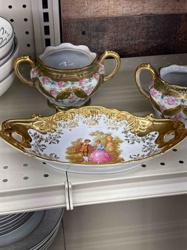
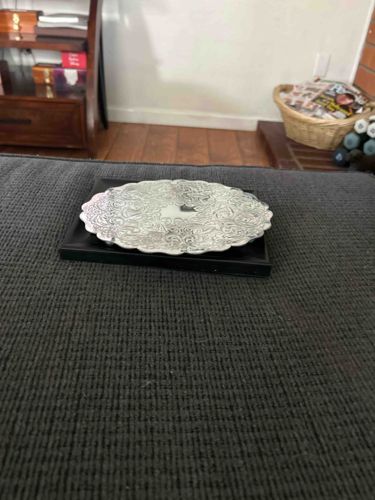
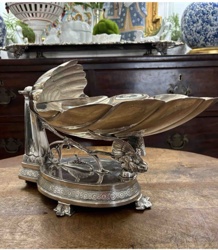
Oval Scalloped Silver-Toned Tray with Repoussé Decoration

Decorative Arts/Tableware

AI Estimated Value

·Not an official valuation·Verify before acting

$350-550

As of June 6, 2026

AI Item Analysis

·AI can make mistakes·Verify before acting
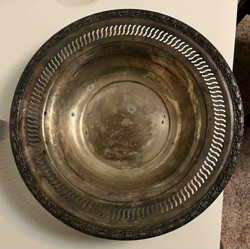
This is an elaborately decorated silver-toned tray or salver, likely made of sterling silver or silver plate, given its lustrous sheen and intricate detailing. The tray is oval-shaped with a scalloped, pie-crust edge, indicative of a classic design often found in antique or vintage silverware. The surface of the tray is richly adorned with extensive repoussé or chased floral and scrollwork patterns, covering the entire visible plane except for a small, unadorned central area, which might have been intended for an engraved monogram or crest. The craftsmanship appears to be of high quality, with fine details visible in the floral motifs, suggesting skilled artistry. There are no visible maker's marks or signatures in the provided image, but such pieces often bear hallmarks on the underside. The tray exhibits a bright, polished finish, indicating it has been recently cleaned, though some subtle dark areas within the recesses of the pattern could suggest residual tarnish or patina, which is common for aged silver. No significant dents, scratches, or repairs are immediately evident from the image, suggesting it is in good overall condition. Based on its ornate style, it likely dates from the late 19th to early 20th century, a period known for such elaborate silverware designs. It is currently positioned on a dark, flat rectangular base, which may be a display stand or part of its original presentation.
AI Appraisal Report

·AI can make mistakes·Verify before acting
Based on my visual examination of the provided image, this Oval Scalloped Silver-Toned Tray with Repoussé Decoration appears to be in very good overall condition. The bright, polished finish suggests it has been recently cleaned, with no obvious major dents, deep scratches, or repairs visible. The intricate repoussé floral and scrollwork detailing is well-preserved, indicating good care over time. Its ornate style strongly suggests a dating from the late 19th to early 20th century, a period known for such elaborate silverware. Market conditions for antique silver-plated or sterling silver trays of this type are generally stable, with consistent demand among collectors of decorative arts and tableware. Comparables often include similar Victorian or Edwardian era serving pieces. While not extremely rare, the high quality of the decorative work enhances its desirability. The primary factor significantly impacting value is the material it is made from. While it has a 'silver-toned' appearance, without physical examination to locate hallmarks, it's impossible to definitively determine if it is sterling silver, silver plate, or another silver-toned metal. Limitations in authenticity verification from an image alone are significant. I cannot confirm the metal composition, the maker, or its precise age. For full authentication, an in-person examination would be crucial to inspect for hallmarks (typically on the underside), assess the weight and feel, and conduct a detailed surface analysis. Provenance documentation, if available, would also be invaluable. Scientific testing like XRF analysis could definitively determine the metal composition.

Get your items appraised

Instant estimates of your treasures with AI-powered appraisals

Browse More Appraisals