AI Appraisal Estimate

AI-generated estimates · not official valuations

From the user

What was submitted

Photo and notes provided by the user — not generated by AI

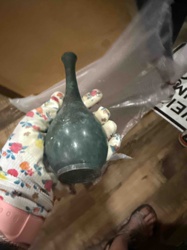
Submitted item photo
Submitted photo · June 6, 2026

User's notes

No additional notes provided.

AI analysis below

AI appraisal

AI analysis & estimate

AI-Generated · Verify before acting

Everything below is generated by AI for informational purposes only. AI can make mistakes — the AI may misidentify items or misattribute them (artist, maker, brand, designer, origin, era). This is not an official valuation and should not be used for insurance, sale, tax, estate, legal, or lending purposes — or any decision requiring a certified appraisal. It is not an authoritative claim about any person, brand, or rights holder — do not share or rely on it as a factual statement about a third party. Always consult qualified professionals before making financial decisions.

Read the full disclaimer

AI Identification

·Not independently authenticated·Verify before acting

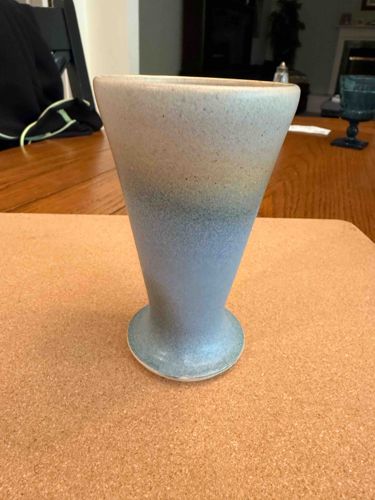
Stoneware Gradient Glaze Footed Vase

Vase

AI Estimated Value

·Not an official valuation·Verify before acting

$80-120

As of June 6, 2026

AI Item Analysis

·AI can make mistakes·Verify before acting
The item is a small, footed vase or goblet-shaped vessel, likely crafted from stoneware or ceramic. Its most striking feature is the gradient glaze, which transitions from a light, almost off-white or very pale beige color at the rim to a muted, dusty blue or teal at the base. The surface appears to have a slightly textured, possibly matte or satin finish with subtle speckling, suggesting a speckled glaze or the natural texture of the fired clay. The form of the vase is elegant and flares outward from a narrow base before gradually expanding upwards to a wider mouth. The foot is distinct, circular, and slightly wider than the narrowest part of the body, providing stability. There are no readily visible chips, cracks, or significant wear on the exterior. The craftsmanship appears to be good quality, indicative of either studio pottery or a mass-produced item with an artisanal aesthetic. The overall style suggests a mid-20th century to contemporary design, favoring clean lines and a natural, earthy color palette, possibly inspired by Nordic or minimalist pottery traditions. There are no obvious maker's marks or signatures visible from this angle. The inner surface might be glazed differently or left unglazed; this is not discernible.
AI Appraisal Report

·AI can make mistakes·Verify before acting
I have examined the image provided of this Stoneware Gradient Glaze Footed Vase. Based on its visual presentation, the vase appears to be in excellent condition, with no visible chips, cracks, or significant wear. The gradient glaze transitions smoothly from a light tone at the rim to a muted blue/teal at the base, indicative of quality craftsmanship. The surface texture and subtle speckling suggest either a speckled glaze or the natural qualities of the stoneware. Its elegant form, distinct foot, and clean lines align with a mid-20th century to contemporary aesthetic, possibly influenced by minimalist or Nordic design. In terms of market conditions, similar stoneware vases with well-executed gradient glazes, particularly those with an artisanal or studio pottery appeal, generally fetch moderate prices. Comparable items from unidentifiable makers, but good quality, typically range from $75 to $150. If this piece were attributed to a known studio potter or designer, its value could increase significantly. Demand for well-crafted decorative stoneware remains steady, though this specific piece does not appear to possess exceptional rarity without a maker's mark or unique design elements. The primary factors impacting value would be the maker's identity, the precise type of clay and glaze, and its history. A significant limitation is the inability to verify authenticity or specific maker information from images alone. An in-person examination would allow for inspection of the interior, base for maker's marks, assessment of weight, and tactile quality. Provenance documentation, if available, would be crucial for attributing the piece to a specific artist or period.

Get your items appraised

Instant estimates of your treasures with AI-powered appraisals

Browse More Appraisals