AI Appraisal Estimate

AI-generated estimates · not official valuations

From the user

What was submitted

Photo and notes provided by the user — not generated by AI

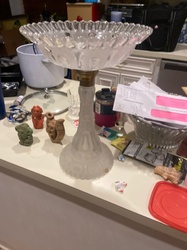
Submitted item photo
Submitted photo · June 10, 2026

User's notes

No additional notes provided.

AI analysis below

AI appraisal

AI analysis & estimate

AI-Generated · Verify before acting

Everything below is generated by AI for informational purposes only. AI can make mistakes — the AI may misidentify items or misattribute them (artist, maker, brand, designer, origin, era). This is not an official valuation and should not be used for insurance, sale, tax, estate, legal, or lending purposes — or any decision requiring a certified appraisal. It is not an authoritative claim about any person, brand, or rights holder — do not share or rely on it as a factual statement about a third party. Always consult qualified professionals before making financial decisions.

Read the full disclaimer

AI Identification

·Not independently authenticated·Verify before acting

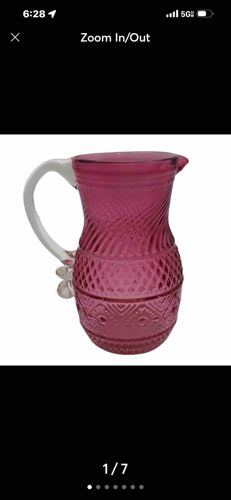
Fenton Cranberry Glass Swirl and Diamond Point Pitcher

Collectible Glassware / American Art Glass

AI Estimated Value

·Not an official valuation·Verify before acting

$40–$75

As of June 10, 2026

AI Item Analysis

·AI can make mistakes·Verify before acting
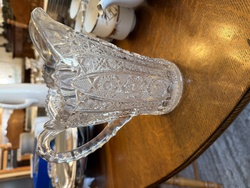
This item is an elegant cranberry glass pitcher, likely manufactured by Fenton Art Glass. The pitcher features a vibrant, deep translucent pink hue, characteristic of gold ruby or cranberry glass formulations. Its physical construction is notable for a multi-patterned blown glass body: the neck displays a tight diagonal swirl or 'optic' ribbing that transitions into a mid-section featuring a diamond point or hobnail texture. Below the diamonds, there is a decorative band containing embossed circular rosettes and geometric patterns. The vessel is finished with a clear, applied glass handle that attaches at the rim and mid-body, featuring a decorative 'leaf' or 'crimped' terminal at the bottom attachment point. The spout is delicately formed for pouring. In terms of condition, the glass appears structurally sound with no visible cracks or major chips, although there is a slight dullness or 'cloudiness' visible in the top portion, which may indicate mineral deposits or light surface wear. Based on the style and molded patterns, this piece likely dates to the mid-20th century (circa 1940s-1960s), showcasing high-quality American craftsmanship typical of the Ohio Valley glass houses. The contrast between the rich cranberry body and the clear handle is a classic aesthetic marker for this era of collectible glassware.
AI Appraisal Report

·AI can make mistakes·Verify before acting
Based on my visual examination, this pitcher appears to be a genuine mid-20th century example of American cranberry glass, exhibiting characteristics strongly consistent with Fenton Art Glass, specifically the 'Opalescent Swirl' or variants of the 'Diamond and Rib' patterns often produced for companies like L.G. Wright. The deep, rich cranberry hue—achieved through metallic gold salts—is consistent with quality production from the Ohio Valley region between the 1940s and 1960s. The clear, applied reeded handle with its decorative crimson attachment point shows skilled hand-finishing, typical of this era. While the form is elegant, my valuation is significantly conservative due to the 'cloudiness' noted in the upper neck. In the glass collecting market, this is often 'glass sickness' (permanent etching) or hard water staining. If this is merely dirt, the value could rise to the $100–$125 range; however, if it is permanent sickness, which is notoriously difficult to remove, it relegates the piece to 'display only' or cabinet filler status. Current market demand for brown furniture era antiques is softer, yet cranberry glass retains a dedicated, albeit narrowing, collector base. Comparables for pristine examples of similar Fenton or L.G. Wright pitchers often fetch over $100, but condition is paramount. Limitations: To provide a definitive valuation, I would need to handle the piece to test the surface texture of the cloudy area. An in-person inspection is required to distinguish between washable residue and permanent glass sickness. Additionally, finding a manufacturer's mark (often absent on earlier Fenton or contract pieces) would solidify the attribution.

Get your items appraised

Instant estimates of your treasures with AI-powered appraisals

Browse More Appraisals