AI Appraisal Estimate

AI-generated estimates · not official valuations

From the user

What was submitted

Photo and notes provided by the user — not generated by AI

Submitted item photo
Submitted photo · June 22, 2026

User's notes

No additional notes provided.

AI analysis below

AI appraisal

AI analysis & estimate

AI-Generated · Verify before acting

Everything below is generated by AI for informational purposes only. AI can make mistakes — the AI may misidentify items or misattribute them (artist, maker, brand, designer, origin, era). This is not an official valuation and should not be used for insurance, sale, tax, estate, legal, or lending purposes — or any decision requiring a certified appraisal. It is not an authoritative claim about any person, brand, or rights holder — do not share or rely on it as a factual statement about a third party. Always consult qualified professionals before making financial decisions.

Read the full disclaimer

AI Identification

·Not independently authenticated·Verify before acting

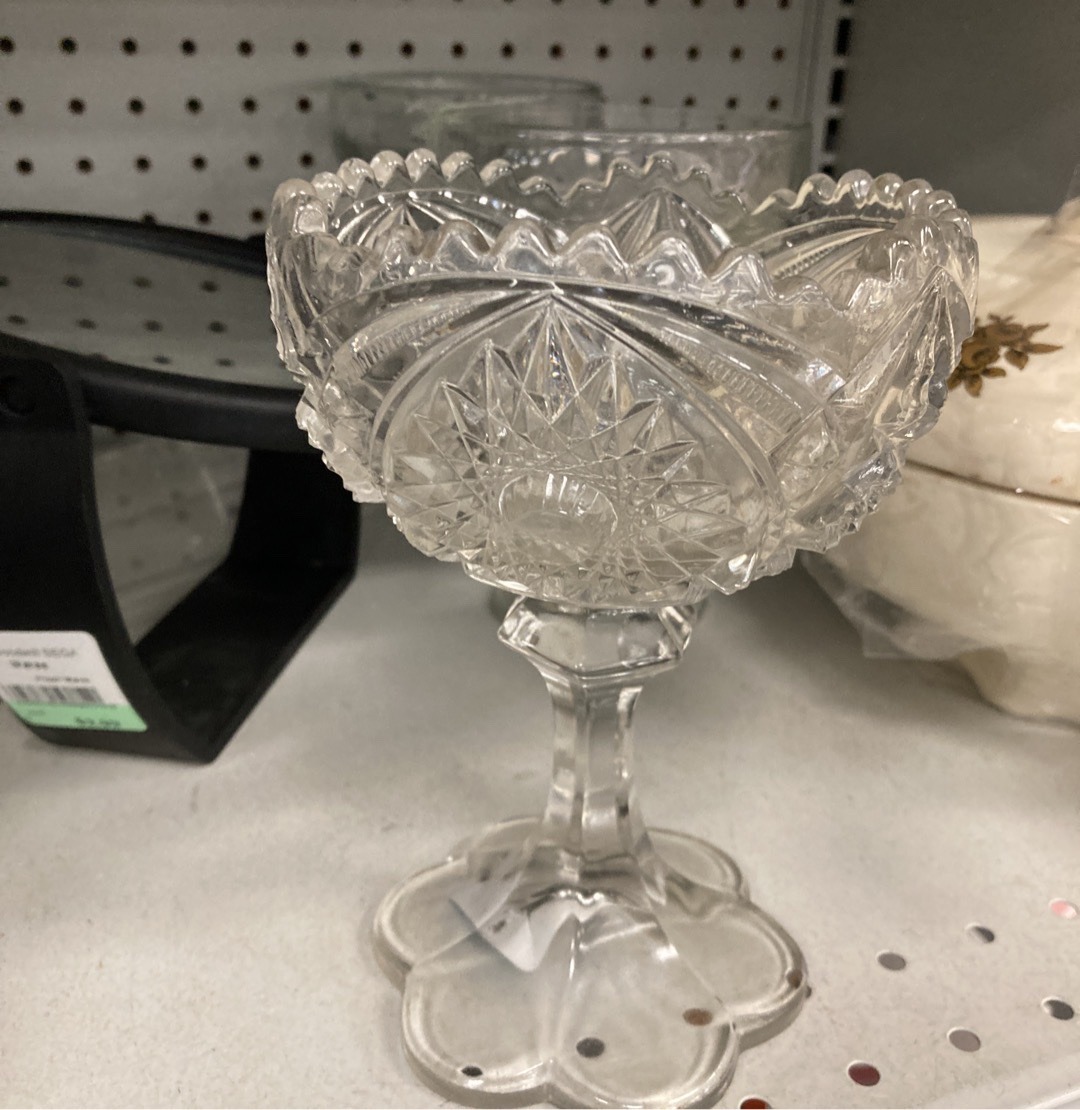
Pressed glass compote in the Early American Pattern Glass style

Decorative Glassware

AI Estimated Value

·Not an official valuation·Verify before acting

$25.00 - $45.00

As of June 22, 2026

AI Item Analysis

·AI can make mistakes·Verify before acting
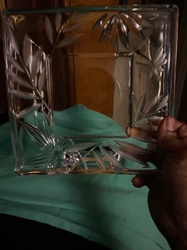
This item is a clear glass compote or pedestal candy dish, featuring a deeply textured decorative motif. The bowl showcases a 'Brilliant' style geometric pattern, including starbursts (daisies), hobstars, and fan-like serrated edges along the rim, which is stylistically consistent with late 19th or early 20th-century Early American Pattern Glass (EAPG). The vessel is supported by a faceted hexagonal or octagonal stem that transitions into a wide, scalloped (petal-shaped) base. Based on the visual evidence, the piece appears to be made of pressed glass rather than hand-cut crystal, as indicated by the slightly softened edges of the molded patterns. The glass is transparent with no significant discoloration visible, though a physical inspection would be required to check for the 'ring' or weight associated with lead crystal. The condition appears fair to good for a vintage item; however, there is visible shelf wear on the underside of the base, and some minor 'flea bite' chips are possible along the sharp serrated edges of the rim, which are common for this style and age. No maker's mark or signature is visible in the provided image; therefore, any specific attribution to manufacturers like Smith, Indiana Glass, or Fostoria remains a hypothesis subject to verification of a molded logo or documentation. This identification relies entirely on stylistic features common to mass-produced American decorative glassware.
AI Appraisal Report

·AI can make mistakes·Verify before acting
Based on the visual evidence provided, I have examined this clear pressed glass compote featuring a geometric pattern consistent with Early American Pattern Glass (EAPG) from the late 19th or early 20th century. While it bears stylistic similarities to patterns produced by manufacturers such as Indiana Glass or L.E. Smith, I cannot verify a specific maker without a physical inspection for molded logos or catalog documentation. From what I can see, the 'soft' edges of the starburst and hobstar motifs suggest a pressed mold process rather than hand-cutting. I cannot determine the lead content or 'ring' of the glass from a photograph, nor can I confirm if this is a later mid-20th-century revival piece. My valuation is based on the piece being an EAPG-style item in fair to good condition; however, the noted shelf wear and potential 'flea bite' chips on the serrated rim typically reduce market demand. The market for generic pressed glass of this era is currently stable but modest, with collectors favoring pieces with documented provenance or rare colors. If this were to be identified as a contemporary mass-produced reproduction or a later 'In the Style of' imitation, the value would likely fall below $15.00. To provide a more precise valuation, I would need to perform an in-person examination to check for internal bubbles, straw marks, or specific wear patterns that distinguish antique glass from modern replicas. Authentication would require comparing the dimensions and weight against known manufacturer specifications. Given the current uncertainty of attribution, this estimate reflects the typical interest in decorative American glass of this aesthetic type.

Get your items appraised

Instant estimates of your treasures with AI-powered appraisals

Browse More Appraisals