These notes were written by the person who submitted this item. Appraiser.AI has not verified them, and the AI's identification and estimate may rely on them.
AI Estimated Value
Not an official valuation
$250-400
AI estimate as of October 11, 2025 · verify with a professional before acting
AI-Generated · Verify before acting
Everything on this page is generated by AI for informational purposes only. AI can make mistakes — the AI may misidentify items or misattribute them (artist, maker, brand, designer, origin, era). This is not an official valuation and should not be used for insurance, sale, tax, estate, legal, or lending purposes — or any decision requiring a certified appraisal. It is not an authoritative claim about any person, brand, or rights holder — do not share or rely on it as a factual statement about a third party. Always consult qualified professionals before making financial decisions.
This analysis also relies on unverified notes provided by the user, which may be incomplete or inaccurate and could affect the result.
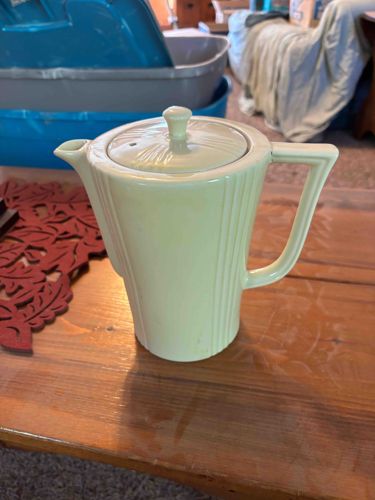
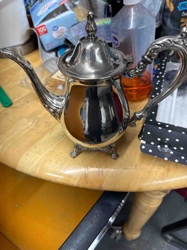
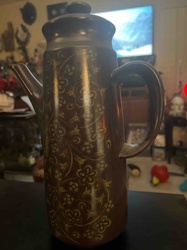
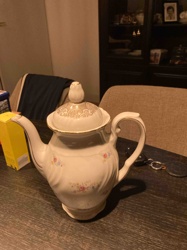
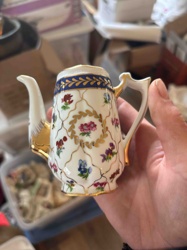
This item is an excellent condition Art Deco style teapot or coffee pot, manufactured by Forman Brothers in Brooklyn, NY. It is constructed from glazed ceramic, presenting a pleasant, soft pastel yellow or pale green color, typical of the Art Deco period's aesthetic for kitchenware. The pot features a distinctive angular, stepped design with strong vertical fluting on its body, characteristic of the streamlined and geometric forms popular in the 1920s and 1930s. The handle is an integral part of this design, extending upwards from the base and angling back to meet the rim, maintaining the clean, linear appearance. The spout is short and elegantly integrated into the overall shape, adding to its functional yet stylized form. The lid is also ceramic, with a small, rounded knob-like finial and a continuation of the fluted pattern, indicating careful attention to design consistency. Visible condition issues are minimal; the item appears to be in excellent condition with no obvious chips, cracks, or significant wear. The glaze appears consistent and vibrant. The manufacturing details 'Forman Brothers Brooklyn NY' are noted to be on the bottom, confirming its origin. This piece beautifully exemplifies the Art Deco movement's emphasis on industrial efficiency and graceful design, making it a desirable collectible.
AI Appraisal Report
Based on my visual examination of the provided image and the owner's description, this Forman Brothers Brooklyn NY Art Deco Teapot or Coffee Pot presents as an excellent example of its type. The condition appears superb, with no visible chips, cracks, or significant glaze wear, which is a major factor in its desirability. The soft pastel yellow/pale green color and angular, stepped design with strong vertical fluting are quintessential Art Deco, aligning perfectly with the period's aesthetics for housewares. The 'Forman Brothers Brooklyn NY' mark on the bottom, as described, confirms its authenticity and origin.
Market conditions for vintage American Art Deco ceramics in excellent condition are stable. While not as high-demand as some European Art Deco pottery, Forman Brothers pieces, particularly in such pristine state and iconic design, consistently attract collectors. Comparable sales of well-preserved Forman Brothers teapots or coffee pots, considering their relative rarity compared to mass-produced items, generally fall within the $200-$450 range, with exceptional examples fetching more. The integrated design of the handle and spout, along with the fluted lid, adds to its collectibility.
A significant factor impacting value here is the exceptional condition for an item of this age. Art Deco kitchenware often shows signs of use or damage. The vibrant and consistent glaze further enhances its appeal. Demand for quality Art Deco pieces remains steady among collectors focusing on American decorative arts.
I must note the limitations of appraising from images alone. While the visible details strongly suggest authenticity and excellent condition, a physical in-hand inspection would be necessary to confirm the absence of hairline cracks, repairs, or discreet glaze imperfections not apparent in photographs. Furthermore, tactile examination could fully verify the ceramic body and glaze quality. Without direct examination or further provenance beyond the described mark, absolute certainty regarding every detail of authenticity and condition is impossible, though the visual evidence is highly compelling.