AI estimate as of December 11, 2025 · verify with a professional before acting
AI-Generated · Verify before acting
Everything on this page is generated by AI for informational purposes only. AI can make mistakes — the AI may misidentify items or misattribute them (artist, maker, brand, designer, origin, era). This is not an official valuation and should not be used for insurance, sale, tax, estate, legal, or lending purposes — or any decision requiring a certified appraisal. It is not an authoritative claim about any person, brand, or rights holder — do not share or rely on it as a factual statement about a third party. Always consult qualified professionals before making financial decisions.
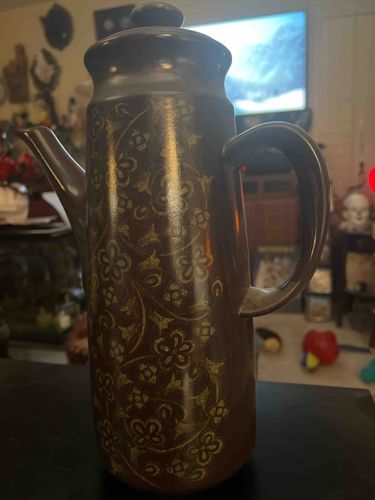
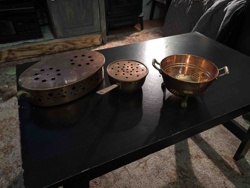
This item is a vintage ceramic coffee pot, likely designed for perking or serving coffee. It features a tall, slender, cylindrical body, a rounded spout, and a C-shaped handle, all crafted from unglazed or matte-finished brown ceramic. The pot has a fitted lid with a small, round knob. The dominant aesthetic feature is the intricate floral pattern, applied in a lighter, possibly gold or ochre, glaze or paint, covering the majority of the pot's body. The design consists of repeating floral motifs, possibly daisies or chrysanthemums, intertwined with delicate scrolling vines and leaves. The floral pattern appears to be consistently applied around the circumference. The overall color scheme is earthy, with the dark brown contrasting subtly with the lighter design. There are no visible chips, cracks, or significant wear evident from the provided image, suggesting good overall condition for its presumed age. The lack of glossy finish gives it a rustic or artisanal appeal. The manufacturing details cannot be discerned as no maker's marks or signatures are visible. Based on its style and material, it likely dates from the mid to late 20th century, possibly 1960s-1980s. The craftsmanship suggests a mass-produced item with decorative appeal often found in vintage kitchenware.
AI Appraisal Report
I have visually examined this Vintage Brown Ceramic Coffee Pot with Floral Design. The item appears to be in good overall condition, with no visible chips, cracks, or significant wear, which is positive for its age. The unglazed or matte brown ceramic with the lighter floral pattern gives it a rustic and appealing aesthetic typical of mid to late 20th-century kitchenware, likely dating from the 1960s-1980s. Its design, including the tall cylindrical body, rounded spout, and C-shaped handle, suggests its functionality as a coffee pot, possibly for serving or even perking. Authenticity, based solely on visual inspection, places it within the described vintage period. It presents as a mass-produced decorative item rather than a unique artisan piece.
Market conditions for vintage ceramic coffee pots of this style are generally stable but not exceptionally strong. Comparable items, often found in estate sales, antique malls, or online marketplaces, typically fall within the $20-$50 range, depending on condition and specific design appeal. Demand for such pieces is moderate, driven by collectors of vintage kitchenalia or individuals seeking decorative accent pieces for a retro-themed interior. Rarity is low as similar mass-produced items were common during its presumed manufacturing period.
Factors significantly impacting value include its good condition, which is a plus, and its decorative floral motif. However, the lack of a known maker’s mark, brand, or unique design limits its potential for higher valuation. Without a manufacturer, provenance is difficult to establish, which affects collectibility. To confirm authenticity beyond visual assessment, an in-person examination would be necessary to inspect for hidden flaws, assess the ceramic's quality and glaze application details, and search for faint or obscured maker's marks. Microscopic analysis of the ceramic body and paint could also provide more precise dating and confirm manufacturing methods. Without these, the appraisal remains based on visual characteristics and market trends for generic vintage items of this type.