AI estimate as of October 23, 2025 · verify with a professional before acting
AI-Generated · Verify before acting
Everything on this page is generated by AI for informational purposes only. AI can make mistakes — the AI may misidentify items or misattribute them (artist, maker, brand, designer, origin, era). This is not an official valuation and should not be used for insurance, sale, tax, estate, legal, or lending purposes — or any decision requiring a certified appraisal. It is not an authoritative claim about any person, brand, or rights holder — do not share or rely on it as a factual statement about a third party. Always consult qualified professionals before making financial decisions.
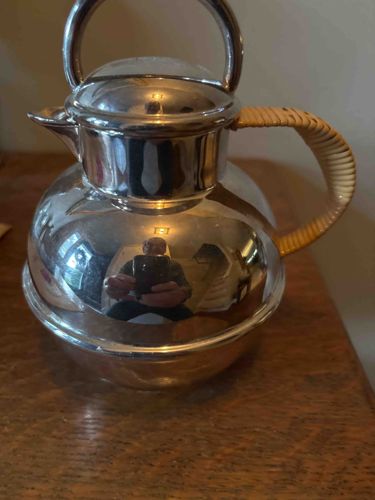
This item is an insulated teapot or coffee pot, characterized by its shiny, reflective metallic body, which appears to be either silver-plated brass/copper or stainless steel. The main body is bulbous or ovoid, sitting on what looks like a slightly narrower base, perhaps part of a double-walled construction for insulation. The surface is highly polished, exhibiting significant reflections including that of the person taking the photograph and various room details. It features a small, functional spout for pouring. The lid is also metallic and domed, fitting snugly into the body of the pot. A distinctive feature is the handle, which is gracefully arched and wrapped with a light-colored, possibly cane or rattan, wicker material. This wicker wrapping serves both an aesthetic purpose, adding a natural contrast to the metal, and likely a practical one, providing heat insulation for safe handling. The overall condition appears to be good with a high luster, although minor surface scratches or tarnish could be present but are not clearly discernible from the image. No specific maker's marks or signatures are visible. The style suggests a mid-20th century to contemporary design, emphasizing functionality and a blend of materials. The quality of craftsmanship is indicated by the smooth finish and the integration of the wicker handle.
AI Appraisal Report
Upon examining the provided image of this insulated teapot/coffee pot, I can assess its condition and potential value. The item presents as a well-maintained, highly polished piece of kitchenware or tableware. Its reflective metallic body, likely silver-plated brass/copper or stainless steel, shows good luster. The bulbous form and domed lid suggest functionality, while the wicker-wrapped, arched handle is a key aesthetic and practical feature, providing insulation for safe handling. From the image, the condition appears good, with no obvious dents or significant scratches, though minor surface wear or tarnish cannot be definitively ruled out without a physical inspection. The wicker wrapping also appears intact and in good order.
autenticity, given the lack of visible maker's marks, relies heavily on the style indicators. The blend of materials and design points to a mid-20th century to contemporary manufacturing period. Without any visible hallmarks or brand identifiers, it's challenging to attribute it to a specific manufacturer. Such items, particularly if unbranded, generally fall into a moderate price range in the secondary market. Comparables for well-preserved, unbranded insulated metal teapots or coffee pots with unique features like wicker handles typically retail between $50 and $120. Demand for such pieces is steady among collectors of vintage kitchenware or those seeking functional aesthetic items for their homes. While not exceedingly rare, the combination of materials adds to its appeal.
Factors impacting value include its good aesthetic condition and the practical-yet-decorative wicker handle. However, the absence of a discernible maker's mark significantly limits its upper market value, as branding often dictates higher price points for collectors. For full authentication and a more precise appraisal, a physical examination would be crucial to assess material composition (e.g., sterling silver vs. silver plate vs. stainless steel), internal condition for insulation effectiveness, and to search for any faint or hidden marks. Provenance documentation could also greatly enhance its value, especially if linked to a known designer or manufacturer. Without these, the appraisal remains based on aesthetic appeal and general market comparables for similar unbranded items.