Navajo Geometric Flat-Weave Kilim Rug
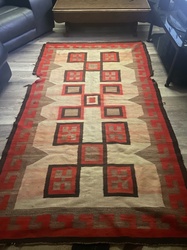
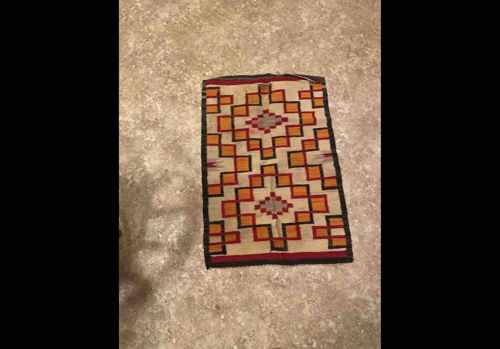
A rectangular, hand-woven floor rug featuring a bold, stepped-diamond geometric design characteristic of Navajo or Southwest Native American styles. The rug is composed of high-contrast natural and dyed wool fibers including shades of madder red, ochre orange, cream, grey, and charcoal black. The central field contains two large stacked serrated diamonds with grey centers, surrounded by staggered geometric blocks that create a dynamic visual movement across the surface. Construction is a traditional flat tapestry weave, showing clean selvage edges and a dark outer border. This piece appears to be a mid-20th-century weaving, likely from the 1940s to 1960s, given the color palette and design complexity. Visually, the rug shows mild signs of age-appropriate wear, including subtle color bleeding in the red pigments into the cream ground, and slight fraying at the corner tassels or end fringes. The weave density appears tight and consistent, indicating high-quality craftsmanship by a skilled weaver. No prominent holes or significant staining are immediately visible, though minor edge curling suggests a need for professional blocking to restore its original rectangular shape.
AI-Generated Appraisal Disclaimer
Estimated Value
$1,800 - $2,500
Basic Information
Category
Native American Textiles and Weavings
Appraised On
December 28, 2025
Estimated Value
$1,800 - $2,500
Item Description
A rectangular, hand-woven floor rug featuring a bold, stepped-diamond geometric design characteristic of Navajo or Southwest Native American styles. The rug is composed of high-contrast natural and dyed wool fibers including shades of madder red, ochre orange, cream, grey, and charcoal black. The central field contains two large stacked serrated diamonds with grey centers, surrounded by staggered geometric blocks that create a dynamic visual movement across the surface. Construction is a traditional flat tapestry weave, showing clean selvage edges and a dark outer border. This piece appears to be a mid-20th-century weaving, likely from the 1940s to 1960s, given the color palette and design complexity. Visually, the rug shows mild signs of age-appropriate wear, including subtle color bleeding in the red pigments into the cream ground, and slight fraying at the corner tassels or end fringes. The weave density appears tight and consistent, indicating high-quality craftsmanship by a skilled weaver. No prominent holes or significant staining are immediately visible, though minor edge curling suggests a need for professional blocking to restore its original rectangular shape.
Related Tags
Get Your Items Appraised
Instant estimates of your treasures with AI-powered instant appraisals