Navajo Kilim Small Weaving
Native American Textiles and Rugs

Navajo Kilim Small Weaving

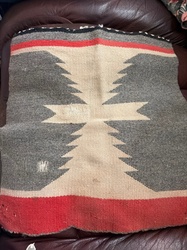
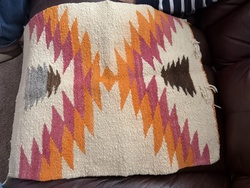
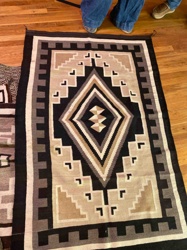
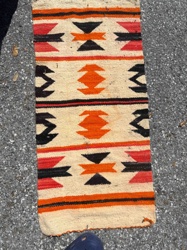
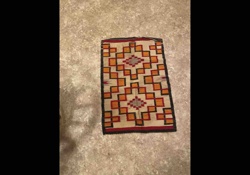
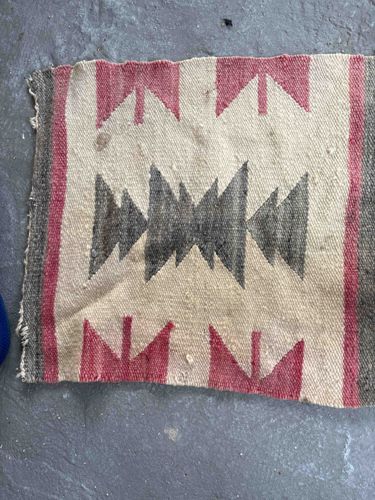
This is a small, hand-woven floor rug or wall hanging, likely of Navajo (Diné) origin, featuring a flat-weave tapestry construction. The piece is crafted from hand-spun wool and showcases a natural palette including cream, charcoal grey, and a faded terracotta red. The central motif consists of a serrated diamond or 'double lightning' pattern in grey, flanked by red geometric stepped borders that reflect traditional Southwestern indigenous design elements. The weaving demonstrates a single-ply wool construction common in mid-20th-century tourist trade items. Regarding condition, the textile shows significant wear and age; the edges are frayed, particularly along the left-hand warp ends, and there is visible surface pilling and embedded soil. Several small perforations or moth nips are visible within the cream field. The asymmetry in the serrated edges suggests a hand-loomed origin rather than factory production. There are no visible maker's marks or tags, which is typical for such authentic folk art. The overall patina indicates an age of approximately 40 to 60 years, dating it likely to the mid-century period of Southwestern textile production.
Estimated Value

$150 - $300

Basic Information

Category

Native American Textiles and Rugs

Appraised On

March 14, 2026

Estimated Value

$150 - $300

Item Description

This is a small, hand-woven floor rug or wall hanging, likely of Navajo (Diné) origin, featuring a flat-weave tapestry construction. The piece is crafted from hand-spun wool and showcases a natural palette including cream, charcoal grey, and a faded terracotta red. The central motif consists of a serrated diamond or 'double lightning' pattern in grey, flanked by red geometric stepped borders that reflect traditional Southwestern indigenous design elements. The weaving demonstrates a single-ply wool construction common in mid-20th-century tourist trade items. Regarding condition, the textile shows significant wear and age; the edges are frayed, particularly along the left-hand warp ends, and there is visible surface pilling and embedded soil. Several small perforations or moth nips are visible within the cream field. The asymmetry in the serrated edges suggests a hand-loomed origin rather than factory production. There are no visible maker's marks or tags, which is typical for such authentic folk art. The overall patina indicates an age of approximately 40 to 60 years, dating it likely to the mid-century period of Southwestern textile production.

Get Your Items Appraised

Instant estimates of your treasures with AI-powered instant appraisals

Browse More Appraisals