AI Appraisal Estimate

AI-generated estimates · not official valuations

From the user

What was submitted

Photo and notes provided by the user — not generated by AI

Submitted item photo
Submitted photo · June 27, 2026

User's notes

No additional notes provided.

AI analysis below

AI appraisal

AI analysis & estimate

AI-Generated · Verify before acting

Everything below is generated by AI for informational purposes only. AI can make mistakes — the AI may misidentify items or misattribute them (artist, maker, brand, designer, origin, era). This is not an official valuation and should not be used for insurance, sale, tax, estate, legal, or lending purposes — or any decision requiring a certified appraisal. It is not an authoritative claim about any person, brand, or rights holder — do not share or rely on it as a factual statement about a third party. Always consult qualified professionals before making financial decisions.

Read the full disclaimer

AI Identification

·Not independently authenticated·Verify before acting

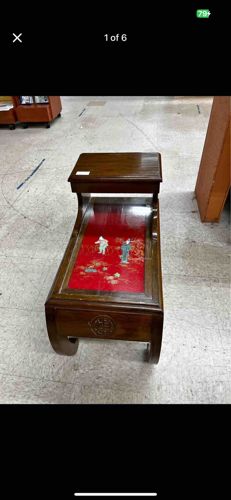
Mid-Century Chinoiserie Tiered Telephone or Step Table

Furniture / Asian Decorative Arts

AI Estimated Value

·Not an official valuation·Verify before acting

$450 - $650

As of June 27, 2026

AI Item Analysis

·AI can make mistakes·Verify before acting
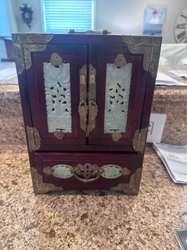
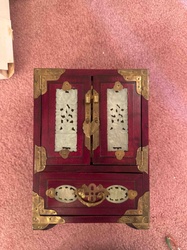
This is a two-tiered Chinoiserie-style side table, often referred to as a telephone or step table, likely dating from the mid-20th century (circa 1950s-1960s). The piece is constructed from a dark-stained wood, possibly cherry or mahogany, featuring traditional Ming-style curved horsehoof feet and a carved apron with a circular Shou longevity symbol. The primary distinguishing feature is the lower tier's inset panel, which displays a vibrant red lacquer-style field decorated with hand-painted soapstone or mother-of-pearl carved figures in traditional Chinese attire, accented with floral and landscape motifs. The upper tier provides a smaller, functional surface supported by curved side brackets. In terms of condition, the wood shows a glossy finish with minor surface abrasions and some edge wear consistent with age and use. The decorative panel appears intact, though the high-gloss protective coating over the red field shows some minor scuffing. The overall craftsmanship suggests a mass-produced piece designed for the Western market during the mid-century craze for 'Oriental' exoticism, blending traditional Eastern decorative elements with functional American furniture silhouettes.

AI Appraisal Report

·AI can make mistakes·Verify before acting
I have virtually examined this Mid-Century Chinoiserie tiered table. Based on the Ming-style 'horsehoof' feet and the specific Shou longevity symbol carving, this piece is a classic example of export-style furniture produced during the mid-20th century Chinoiserie revival. The lower tier's soapstone and mother-of-pearl relief on a red lacquer field is the primary driver of value, though the 'mass-produced' nature of this Western-market silhouette (the 'step' or 'telephone' table) distinguishes it from 19th-century Chinese antiques. Condition appears very good for its age. The inset decorative panel remains intact with no visible loss to the stone carvings, which is critical. Minor surface scuffing on the protective clear coat and edge wear on the mahogany/cherry frame are consistent with a piece from the 1950s or 60s and do not significantly detract from the value. Market demand for Chinoiserie remains steady among interior designers, particularly those seeking Hollywood Regency or eclectic MCM aesthetics. Comparables for similar tiered tables usually range from $300 to $800 depending on the complexity of the stone carvings. Disclaimer: This appraisal is based solely on digital images. A physical inspection is required to confirm whether the joinery is hand-cut or machine-made, which would further clarify the manufacturing origin. Without seeing the underside, I cannot definitively verify the wood species or identify potential maker’s marks (such as those from reputable manufacturers like Baker or Century). Provenance documentation or a professional wood-grain analysis would be necessary for a definitive authentication of origin.

Get your items appraised

Instant estimates of your treasures with AI-powered appraisals

Browse More Appraisals