AI Appraisal Estimate

AI-generated estimates · not official valuations

From the user

What was submitted

Photo and notes provided by the user — not generated by AI

Submitted item photo
Submitted photo · June 15, 2026

User's notes

No additional notes provided.

AI analysis below

AI appraisal

AI analysis & estimate

AI-Generated · Verify before acting

Everything below is generated by AI for informational purposes only. AI can make mistakes — the AI may misidentify items or misattribute them (artist, maker, brand, designer, origin, era). This is not an official valuation and should not be used for insurance, sale, tax, estate, legal, or lending purposes — or any decision requiring a certified appraisal. It is not an authoritative claim about any person, brand, or rights holder — do not share or rely on it as a factual statement about a third party. Always consult qualified professionals before making financial decisions.

Read the full disclaimer

AI Identification

·Not independently authenticated·Verify before acting

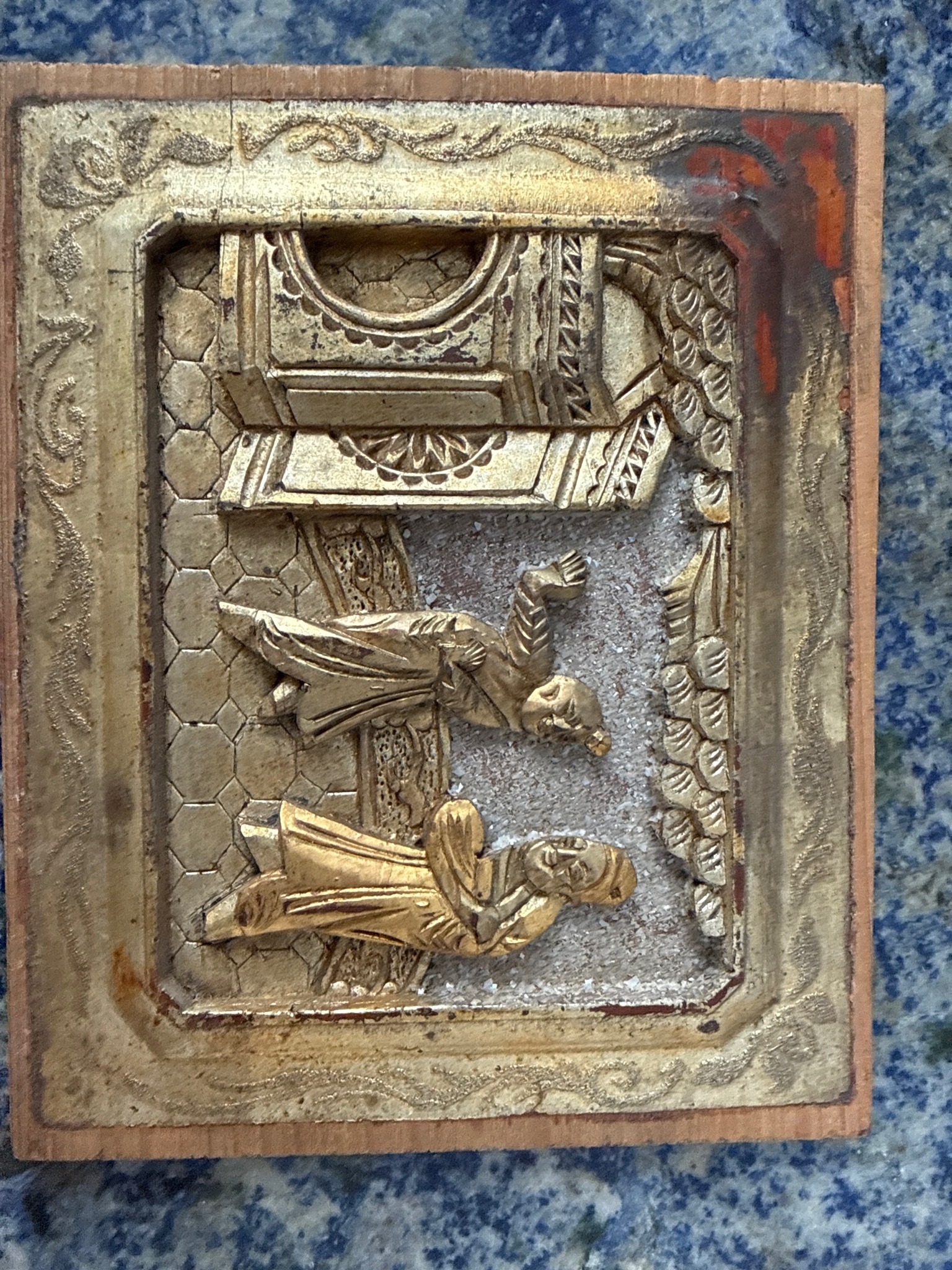
Hand-Carved and Gilded Relief Wood Panel depicting an Oriental Scene

Religious and Decorative Arts

AI Estimated Value

·Not an official valuation·Verify before acting

$150-$250

As of June 15, 2026

AI Item Analysis

·AI can make mistakes·Verify before acting
This item is a rectangular wood panel featuring a high-relief hand-carved scene, possibly of East Asian origin. The panel measures approximately 4x6 inches and is constructed from a solid piece of light-colored wood, likely boxwood or linden. The composition depicts two figures in traditional robes within an architectural setting; both figures are represented in mid-action, positioned sideways relative to the frame. The background features a honeycomb-patterned ground and a granulated texture, possibly reflecting a decorative gesso or crushed stone technique. The surface is heavily gilded with a gold leaf or gold paint that has aged to a soft, matte luster. Notable features include the intricate architectural carving at the top, showing a semi-circular structure with geometric and floral motifs. There are significant condition issues, including a large vertical crack on the left side of the upper frame and various chips to the gilding, revealing red bole underneath in the upper right corner. The craftsmanship is highly detailed, showing skilled chiseling in the folds of the garments. The style suggests it may be a fragment from a larger piece of furniture or an altarpiece, likely dating from the late 19th to early 20th century.

AI Appraisal Report

·AI can make mistakes·Verify before acting
Upon visual examination of this hand-carved gilded relief panel, I have identified it as a late 19th-century (Late Qing Dynasty) architectural fragment, likely originally part of a larger wedding bed or decorative screen from Southern China. The high-relief carving demonstrates proficient traditional Cantonese or Chaozhou-style craftsmanship, characterized by the 'honeycomb' pierced background and gold-lacquer finish. The use of red bole beneath the gilding is a standard period technique used to provide depth to the gold leaf. However, the piece suffers from significant structural vulnerabilities. A prominent vertical split on the upper left rail suggests desiccation of the wood, and the loss of gilding across the high points reveals an unprotected substrate. These condition issues significantly detract from the value, as restoration costs would likely exceed the market premium for a fragment of this size (4x6 inches). Market demand for small, non-functional architectural fragments remains stable for interior design purposes but is currently soft for collectors of fine Chinese export art. Comparable intact panels of similar scale typically realize between $300 and $500; the current valuation reflects a 50% reduction due to the structural crack. Importantly, this assessment is based on photographic evidence. A physical inspection is required to determine if the base wood is Phoebe zhennan or more common linden, and to confirm if the gilding is true gold leaf or a bronze-based paint. Full authentication would require provenance documenting its removal from the original furniture and an UV-light examination to detect modern adhesive repairs in the wooden substrate.

Get your items appraised

Instant estimates of your treasures with AI-powered appraisals

Browse More Appraisals