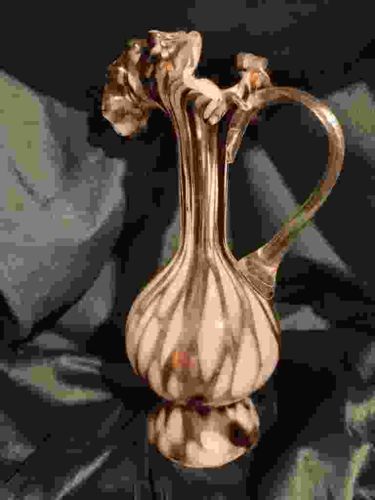
Art Nouveau Iridescent Glass Ewer
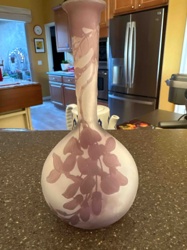
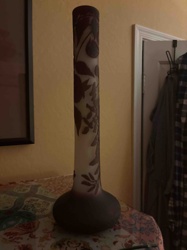
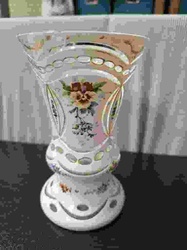
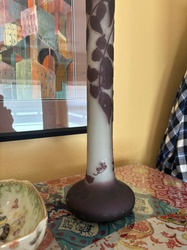
This exquisite Art Nouveau ewer is a masterful example of late 19th to early 20th-century glassmaking, likely of Bohemian or Austrian origin such as Loetz or Kralik. The vessel features a bulbous lower body that tapers into an elongated, slender neck, terminating in an elaborate, sculptural floral-form rim resembling the petals of an orchid or lily. The glass displays a complex iridescent 'Phänomen' style finish, characterized by oil-slick lusters of gold, amber, and pearlescent cream. A distinctive vertical 'optic ribbing' or pulled trail pattern runs the length of the body, enhancing the play of light. A gracefully curved handle is applied to the side, exhibiting high-quality craftsmanship in the integration of the glass elements. The base appears to be a pedestal foot, providing stability to the tall silhouette. This piece exhibits typical characteristics of the Jugendstil period, focusing on organic, flowing lines. While no signature is immediately visible in the image, the complexity of the rim and the depth of the iridescence indicate a high-end production. The condition appears stable with a rich patina, though minute surface scratches or base wear consistent with age (approx. 100-120 years) may be present upon closer physical inspection.
AI-Generated Appraisal Disclaimer
Estimated Value
$1,800 - $2,500
Basic Information
Category
Art Glass / Antiques
Appraised On
March 21, 2026
Estimated Value
$1,800 - $2,500
Item Description
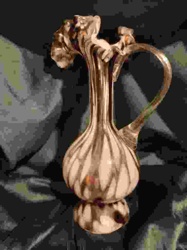
This exquisite Art Nouveau ewer is a masterful example of late 19th to early 20th-century glassmaking, likely of Bohemian or Austrian origin such as Loetz or Kralik. The vessel features a bulbous lower body that tapers into an elongated, slender neck, terminating in an elaborate, sculptural floral-form rim resembling the petals of an orchid or lily. The glass displays a complex iridescent 'Phänomen' style finish, characterized by oil-slick lusters of gold, amber, and pearlescent cream. A distinctive vertical 'optic ribbing' or pulled trail pattern runs the length of the body, enhancing the play of light. A gracefully curved handle is applied to the side, exhibiting high-quality craftsmanship in the integration of the glass elements. The base appears to be a pedestal foot, providing stability to the tall silhouette. This piece exhibits typical characteristics of the Jugendstil period, focusing on organic, flowing lines. While no signature is immediately visible in the image, the complexity of the rim and the depth of the iridescence indicate a high-end production. The condition appears stable with a rich patina, though minute surface scratches or base wear consistent with age (approx. 100-120 years) may be present upon closer physical inspection.
Get Your Items Appraised
Instant estimates of your treasures with AI-powered instant appraisals