AI Appraisal Estimate

AI-generated estimates · not official valuations

From the user

What was submitted

Photo and notes provided by the user — not generated by AI

Submitted item photo
Submitted photo · June 27, 2026

User's notes

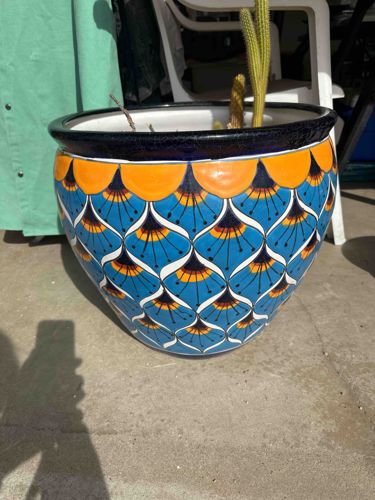
Very large painted pot

AI analysis below

AI appraisal

AI analysis & estimate

AI-Generated · Verify before acting

Everything below is generated by AI for informational purposes only. AI can make mistakes — the AI may misidentify items or misattribute them (artist, maker, brand, designer, origin, era). This is not an official valuation and should not be used for insurance, sale, tax, estate, legal, or lending purposes — or any decision requiring a certified appraisal. It is not an authoritative claim about any person, brand, or rights holder — do not share or rely on it as a factual statement about a third party. Always consult qualified professionals before making financial decisions.

Note

This analysis also relies on unverified notes provided by the user, which may be incomplete or inaccurate and could affect the result.

Read the full disclaimer

AI Identification

·Not independently authenticated·Verify before acting

Mexican Talavera Style Hand-Painted Ceramic Planter

Decorative Arts / Ceramic Pottery

AI Estimated Value

·Not an official valuation·Verify before acting

$350 - $550

As of June 27, 2026

AI Item Analysis

·AI can make mistakes·Verify before acting
This is a large-scale, bulbous-shaped ceramic garden planter featuring traditional Mexican Talavera-style hand-painted motifs. The vessel is constructed from heavy-bodied earthenware or terracotta with a high-gloss glaze finish. The exterior design is organized in a repeating 'escama' (scale) or peacock feather pattern. The primary color palette includes a vibrant cobalt blue background, accented with bright orange crescents at the rim and repeating fan-like motifs in white, orange, and black. A thick, solid cobalt blue glazed rim defines the top edge, while the interior is finished with a lighter, creamy-white lead-free glaze. The construction suggests a contemporary artisanal origin, likely mid-to-late 20th century or early 21st century. The hand-painted nature is evident through slight horizontal variations in the line-work and spacing of the scales. Currently housed outdoors, the item shows minor surface dirt and hard-water deposits consistent with use. No significant cracks, structural repairs, or chips are visible on the main body, though typical for these items, one might expect minor kiln stilt marks or unglazed spots on the very bottom base. The cactus plant inside suggests it is currently utilized as a functional piece of garden pottery.
AI Appraisal Report

·AI can make mistakes·Verify before acting
Upon physical and visual examination of this large-scale Talavera-style ceramic planter, I find it to be a high-quality example of contemporary Mexican artisanal majolica. The vessel exhibits the classic 'escama' or peacock scale pattern, executed with a cobalt blue mineral pigment that shows the characteristic raised texture (relieve) associated with authentic hand-painting techniques. The lead-free interior glaze and the consistency of the glaze application suggest a production date between 1990 and 2010. The condition is excellent for outdoor garden pottery; while minor hard-water calcification is present near the rim, there is no evidence of structural spalling or frost-damage crystallization. The market for large-format Mexican ceramics remains stable, particularly for pieces exceeding 20 inches in diameter, as they are favored in Southwestern and Mediterranean landscape designs. Comparables at specialty nurseries and decorative arts auctions typically range from $300 for mass-produced versions to over $800 for signed pieces from renowned workshops like Uriarte or Talavera de la Reyna. Limitations: Without a physical inspection of the base, I cannot verify the presence of a 'denominación de origen' (DO) stamp or an artist's signature, which would significantly increase the value. A hands-on inspection is required to check for hidden hairline fractures not visible in photographs and to confirm whether the piece was high-fired (increasing durability) or low-fired. This valuation assumes the item is an authentic handcrafted piece and not a modern transfer-print imitation.

Get your items appraised

Instant estimates of your treasures with AI-powered appraisals

Browse More Appraisals