AI estimate as of September 16, 2025 · verify with a professional before acting
AI-Generated · Verify before acting
Everything on this page is generated by AI for informational purposes only. AI can make mistakes — the AI may misidentify items or misattribute them (artist, maker, brand, designer, origin, era). This is not an official valuation and should not be used for insurance, sale, tax, estate, legal, or lending purposes — or any decision requiring a certified appraisal. It is not an authoritative claim about any person, brand, or rights holder — do not share or rely on it as a factual statement about a third party. Always consult qualified professionals before making financial decisions.
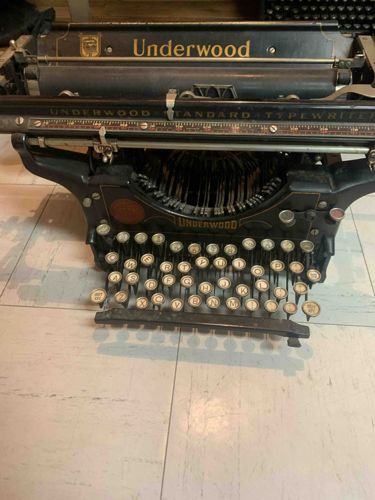
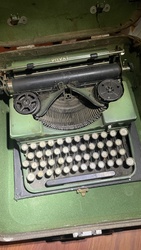
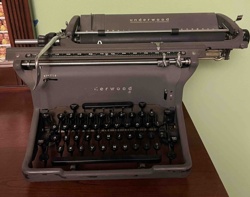
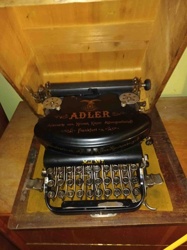
This is an antique Underwood Standard Typewriter, characterized by its robust construction and iconic design. The typewriter is primarily black with gold-colored lettering for the 'Underwood' brand name prominently displayed on the paper guide and the front frame. Additional text, 'UNDERWOOD STANDARD TYPEWRITER', is visible along the carriage area. Its physical characteristics include a heavy-duty metal frame, indicative of early 20th-century manufacturing. The keys are round with white centers and black lettering, a classic design for typewriters of this era. The key layout appears to be QWERTY. The typebars are visible, arranged in a semi-circular basket beneath the platens, suggesting a 'front strike' mechanism. Visible condition issues include some general wear consistent with its age and use, such as minor scuffs on the black finish and some discoloration on the keycaps. There are no obvious signs of major damage or repairs from the provided image, but a thorough inspection would be required to confirm. The overall patina suggests that while it has been used, it has also been reasonably well-preserved for an item of its age. The machine exhibits the hallmarks of high-quality craftsmanship, typical of Underwood typewriters, which were known for their durability and reliability. It likely dates from the early to mid-20th century, a period when manual typewriters were essential office equipment. The specific model (e.g., No. 3, 4, or 5) is not discernible without closer inspection of a serial number or specific model markings, but the 'Standard Typewriter' designation is clear. Its heavy build and mechanical complexity signify it as a significant piece of industrial design history.
AI Appraisal Report
Based on my visual examination of the provided image, this Underwood Standard Typewriter appears to be an authentic example of an early to mid-20th century manual typewriter. The prominent 'Underwood' branding, robust construction, classic black finish with gold lettering, round keys, and visible front-strike typebar mechanism are all consistent with genuine Underwood models. The overall condition, displaying general wear, minor scuffs, and some keycap discoloration, suggests it has been used but also reasonably cared for, retaining an attractive patina. There are no obvious signs of major damage or repair that would significantly devalue it.
In terms of market conditions, vintage manual typewriters, particularly well-preserved Underwood Standard models, enjoy a steady, albeit niche, demand from collectors, decorators, and writers seeking a tactile typing experience. While not exceedingly rare, a working and aesthetically pleasing example commands a fair price. Factors positively impacting its value include its complete appearance and the legendary reliability associated with Underwood machines. Conversely, average wear and the lack of a specific model number (e.g., No. 5) without closer inspection prevent it from reaching the higher end of the market for exceptionally pristine or rare variants.
It is crucial to note that this appraisal is based solely on visual inspection of the image. For full authentication and a definitive valuation, I would require a physical examination to assess mechanical functionality, inspect for hidden damage or repairs, verify all parts are original, and locate any serial numbers for precise dating. Provenance documentation, though not typically extensive for these items, could also provide additional context. Without these, the current value reflects its condition as visually presented, assuming it is largely functional or easily restorable.