AI identification & appraisal estimate

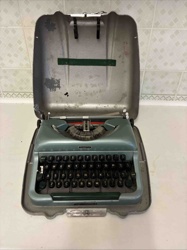
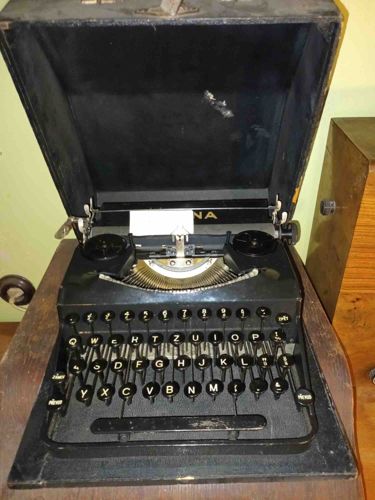
Mirina Portable Typewriter

This name is the AI's identification of the item — it may be incorrect.

Submitted photo of Mirina Portable Typewriter
Photo submitted by the user — not generated by AI

User's notes

Mirina

These notes were written by the person who submitted this item. Appraiser.AI has not verified them, and the AI's identification and estimate may rely on them.

AI Estimated Value

Not an official valuation

$450 - $650

AI estimate as of March 11, 2026 · verify with a professional before acting

AI-Generated · Verify before acting

Everything on this page is generated by AI for informational purposes only. AI can make mistakes — the AI may misidentify items or misattribute them (artist, maker, brand, designer, origin, era). This is not an official valuation and should not be used for insurance, sale, tax, estate, legal, or lending purposes — or any decision requiring a certified appraisal. It is not an authoritative claim about any person, brand, or rights holder — do not share or rely on it as a factual statement about a third party. Always consult qualified professionals before making financial decisions.

This analysis also relies on unverified notes provided by the user, which may be incomplete or inaccurate and could affect the result.

Read the full disclaimer

AI Item Analysis

This is a vintage Mirina brand portable typewriter, likely dating from the 1930s or 1940s. The machine features a compact, low-profile design finished in a matte or semi-gloss black enamel over a metal frame. It is housed within its original hard-shell carrying case, which is lined with dark material and shows significant signs of age and wear. The keyboard is a QWERTZ layout, common in Central European regions, with circular black keycaps featuring white lettering. The typebars are arranged in a semicircular fan pattern, visible and exposed above the keyboard. Notable branding is seen in gold or yellow lettering on the back frame, clearly displaying the 'MIRINA' name. The machine appears to have its original ribbon spools, though the ribbon itself may be dried or missing. Condition-wise, the typewriter shows visible dust accumulation, minor surface abrasions, and potential light oxidation on metal components. The case lid exhibits some peeling and interior staining. Despite these signs of age, the mechanical construction suggests a high level of mid-century European craftsmanship, designed for durability and portability.
AI Appraisal Report

I have carefully examined the provided images and descriptions of this Mirina portable typewriter. Based on its visual characteristics, this is an authentic specimen from the 1930s or early 1940s. The Mirina is a relatively rare German-made portable, manufactured by the G. G. J. Heinzelmann factory. Its low-profile, sleek design represents a high point in European mid-century mechanical engineering. The matte black enamel appears mostly intact, though the visible dust and superficial oxidation suggest it has been in storage for decades without maintenance. The presence of the original case adds significant value, despite its worn condition. The market for vintage typewriters remains strong among both collectors and interior designers. While more common brands like Underwood or Remington fetch lower prices ($100-$300), the Mirina is a scarcer 'sleeper' brand that appeals to serious collectors of European mechanical history. The Central European QWERTZ layout is a standard regional variant that does not detract from its value but confirms its provenance. Key value factors include the rarity of the brand and the integrity of the mechanical fan-pattern typebars. However, the dried ribbon and potential internal gumming mean it would likely require professional servicing to be functional. This valuation assumes no missing internal springs or cracked carriage gears. Note: Authenticity and value cannot be fully finalized through images alone. A physical inspection is required to test the mechanical escapement and carriage return. Total value would be bolstered by provenance documentation (original receipts or owner history). To reach the higher end of this appraisal, a 'type test' to confirm alignment and the absence of bent slugs is necessary.

Keep exploring

More vintage office equipment appraisals

Get your items appraised

Instant AI-powered appraisal estimates from a photo

Browse More Appraisals