AI Appraisal Estimate

AI-generated estimates · not official valuations

From the user

What was submitted

Photo and notes provided by the user — not generated by AI

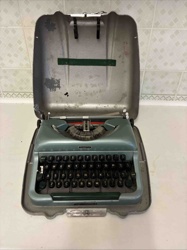
Submitted item photo
Submitted photo · June 6, 2026

User's notes

No additional notes provided.

AI analysis below

AI appraisal

AI analysis & estimate

AI-Generated · Verify before acting

Everything below is generated by AI for informational purposes only. AI can make mistakes — the AI may misidentify items or misattribute them (artist, maker, brand, designer, origin, era). This is not an official valuation and should not be used for insurance, sale, tax, estate, legal, or lending purposes — or any decision requiring a certified appraisal. It is not an authoritative claim about any person, brand, or rights holder — do not share or rely on it as a factual statement about a third party. Always consult qualified professionals before making financial decisions.

Read the full disclaimer

AI Identification

·Not independently authenticated·Verify before acting

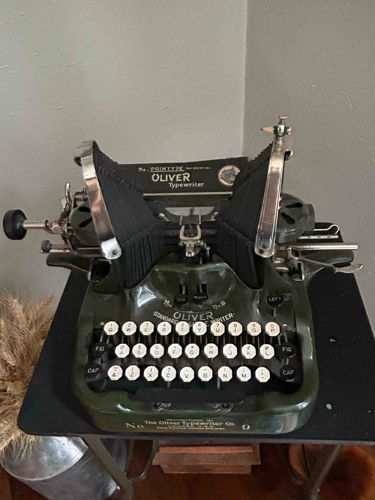
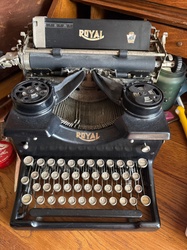
Oliver No. 9 'Printype' Standard Visible Typewriter

Antique Office Equipment / Typewriters

AI Estimated Value

·Not an official valuation·Verify before acting

$250 - $400

As of June 6, 2026

AI Item Analysis

·AI can make mistakes·Verify before acting
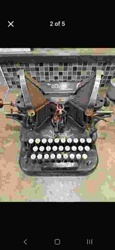
This is an Oliver No. 9 standard visible typewriter, recognizable by its iconic olive-green color and unique 'U-shaped' typebars that strike down from the sides rather than up from below. Manufactured by the Oliver Typewriter Company in Chicago, Illinois, the No. 9 model was produced roughly between 1915 and 1922. The machine features an all-metal chassis with a rich olive enamel finish, accented by nickel-plated components like the carriage return lever and carriage ends. The keyboard consists of three rows of white circular keys with 'Printype' font characters. The 'Printype' branding is clearly visible on the paper table at the top, along with the company logo. The front base plate confirms the model No. 9 and the manufacturing location. Physically, the machine shows a level of age-appropriate patina, with some slight dullness to the nickel plating and minor thinning of the green paint on high-contact areas. There is visible dust accumulation within the typebar mechanisms and the inner carriage works, though the overall structure appears intact without major visible fractures or missing primary components. The craftsmanship is high-grade early 20th-century industrial design, characterized by heavy cast-iron construction and intricate mechanical engineering intended for heavy business use.
AI Appraisal Report

·AI can make mistakes·Verify before acting
I have completed a visual examination of the Oliver No. 9 'Printype' Standard Visible Typewriter. The machine demonstrates characteristic features of the late production run (c. 1915-1922), including the iconic olive-green enamel and 'U-shaped' down-strike typebars. The 'Printype' branding remains crisp, indicating this unit was marketed for its ability to mimic book-font aesthetics, a desirable feature for collectors. The physical condition shows moderate patina; the nickel plating exhibits oxidation and the enamel shows thinning consistent with heavy office use. While the structure remains intact, internal dust accumulation suggests the escapement and ribbon advancement mechanisms may require professional servicing to be fully functional. The Oliver No. 9 is the most mass-produced model of this unique design, making it relatively common on the secondary market compared to the rarer No. 1 or No. 2 models. However, its sculptural 'batwing' aesthetic maintains steady demand among both typewriter enthusiasts and interior decorators. Current market comparables for a No. 9 in unrestored, 'as-found' condition range between $200 and $350, with premium values reached for machines with original tins or intact baseboards. This appraisal assumes no major internal fractures. A definitive valuation is limited by the inability to test mechanical tension or internal spring integrity via photographs. Full authentication would require an in-person inspection of the serial number located on the carriage frame to confirm the exact year of manufacture, along with a 'typing test' to evaluate alignment and feed roller condition. No provenance documentation was provided, which could otherwise enhance value if linked to a notable historical entity.

Get your items appraised

Instant estimates of your treasures with AI-powered appraisals

Browse More Appraisals