AI Appraisal Estimate

AI-generated estimates · not official valuations

From the user

What was submitted

Photo and notes provided by the user — not generated by AI

Submitted item photo
Submitted photo · June 25, 2026

User's notes

No additional notes provided.

AI analysis below

AI appraisal

AI analysis & estimate

AI-Generated · Verify before acting

Everything below is generated by AI for informational purposes only. AI can make mistakes — the AI may misidentify items or misattribute them (artist, maker, brand, designer, origin, era). This is not an official valuation and should not be used for insurance, sale, tax, estate, legal, or lending purposes — or any decision requiring a certified appraisal. It is not an authoritative claim about any person, brand, or rights holder — do not share or rely on it as a factual statement about a third party. Always consult qualified professionals before making financial decisions.

Read the full disclaimer

AI Identification

·Not independently authenticated·Verify before acting

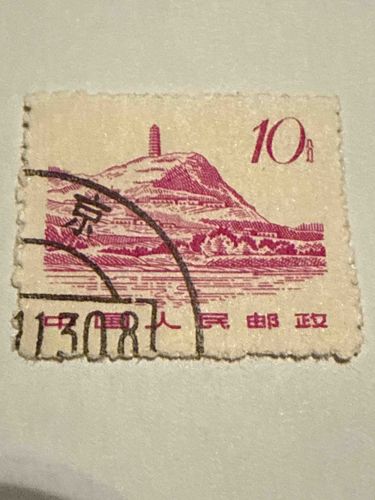
People's Republic of China 1952 Yan'an Pagoda Postage Stamp

Philately / Collectible Postage Stamps

AI Estimated Value

·Not an official valuation·Verify before acting

$45.00 - $75.00

As of June 25, 2026

AI Item Analysis

·AI can make mistakes·Verify before acting
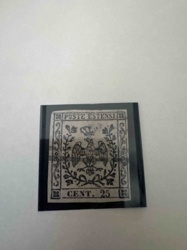
This is a used postage stamp from the People's Republic of China, issued in 1952 as part of the 'Revolutionary Holy Sites' series. The stamp is printed in a distinct carmine or rose-red monochrome ink on cream-colored paper. It features a landscape illustration of the Baota (Pagoda) Mountain in Yan'an, which served as the headquarters for the Chinese Communist Party during the late 1930s and 1940s. The denomination '10分' (10 fen) is clearly printed in the upper right corner. Below the central image, the text '中国人民邮政' (China People's Post) is displayed in stylized Chinese characters. The stamp exhibits a circular black postal cancellation mark (postmark) on the left side, which includes the character '京' (indicating Beijing) and a date stamp partially reading '11308'. The stamp has rough, perforated edges which appear slightly worn, a common trait for stamps of this era. The paper shows minor yellowing or oxidation consistent with its age, but the ink remains relatively vibrant. This piece represents an important historical period in Chinese philately, reflecting post-revolutionary iconography and early state-issued postal artifacts from the 1950s.

AI Appraisal Report

·AI can make mistakes·Verify before acting
I have examined the digital representation of the 1952 People's Republic of China 'Revolutionary Holy Sites' stamp, featuring the Pagoda Hill at Yan'an. This 10-fen denomination, part of the R4 series, is presented in its used state with a visible Beijing ('京') postmark dated 1953. Physically, the stamp shows characteristics consistent with authentic period stock, including the expected rose-red ink saturation and fibrous porosity of early PRC paper. The perforations exhibit typical irregularity for the era, and the slight oxidation noted is a hallmark of genuine 1950s Chinese philatelic material stored in ambient humidity. The market for early 'New China' stamps remains robust, particularly for the 'R' (Regular) and 'C' (Commemorative) series. However, as a used specimen with a heavy cancellation that partially obscures the central vignette, its value is significantly lower than a mint-never-hinged (MNH) counterpart. Recent auction results for this specific 10-fen R4 issue range from $40 to $80 depending on the clarity of the postmark and the lack of hidden defects like thins or creases. While this image suggests a genuine article, definitive authentication is impossible without physical inspection. To confirm its status, I would need to perform a back-light test to check for paper thinning, verify the watermark (if applicable), and ensure the ink response under UV light matches known 1952 pigments. Furthermore, examining the 'Beijing' cancellation under 40x magnification is necessary to ensure the postmark was applied contemporaneously and is not a later 'canceled-to-order' or forged mark intended to simulate value. Provenance regarding the original collector's location during the 1950s would further solidify its history.

Get your items appraised

Instant estimates of your treasures with AI-powered appraisals

Browse More Appraisals