These notes were written by the person who submitted this item. Appraiser.AI has not verified them, and the AI's identification and estimate may rely on them.
AI Estimated Value
Not an official valuation
$5 - $10
AI estimate as of November 9, 2025 · verify with a professional before acting
AI-Generated · Verify before acting
Everything on this page is generated by AI for informational purposes only. AI can make mistakes — the AI may misidentify items or misattribute them (artist, maker, brand, designer, origin, era). This is not an official valuation and should not be used for insurance, sale, tax, estate, legal, or lending purposes — or any decision requiring a certified appraisal. It is not an authoritative claim about any person, brand, or rights holder — do not share or rely on it as a factual statement about a third party. Always consult qualified professionals before making financial decisions.
This analysis also relies on unverified notes provided by the user, which may be incomplete or inaccurate and could affect the result.
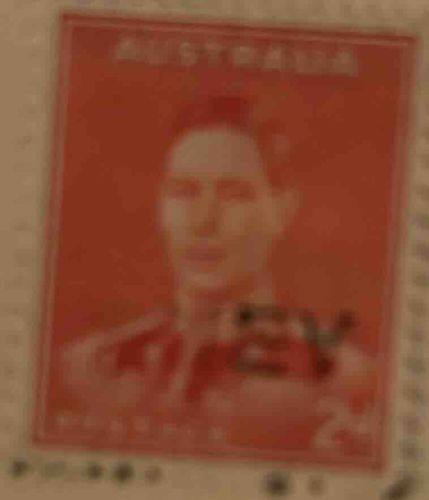
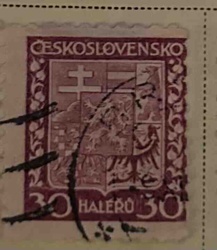
This item is a postage stamp, likely from Australia, featuring a portrait of what appears to be the Duke and Duchess of York, specifically showcasing the Duchess. The stamp is predominantly a reddish-orange or terracotta color. The central motif is a head-and-shoulders portrait of a woman, possibly Elizabeth Bowes-Lyon, later Queen Elizabeth The Queen Mother, given the 'Duke and Duchess of York' context. Her facial features are somewhat obscured due to the image's low resolution and potential wear on the stamp itself. She appears to be wearing formal attire, possibly a dress or military uniform, with some intricate detailing visible around the collar or neckline. The word 'AUSTRALIA' is clearly visible in the upper part of the stamp, indicating its country of origin. In the lower right corner, what appears to be the denomination '2d' (two pence) is faintly visible. The stamp's edges are perforated, a standard feature for postage stamps, suggesting it was torn from a sheet. The overall condition appears to be used, with some signs of aging or light wear, as is common for collectible stamps. The printing quality, despite the blurry image, suggests a lithographic or similar printing process. The style points to an early to mid-20th-century philatelic design, likely commemorating a royal event or visit. The uniform color and portrait style are indicative of stamps issued during the British Empire era. There are no discernible maker's marks besides the country name and denomination. The quality of craftsmanship is typical for government-issued stamps of the period.
AI Appraisal Report
Based on my examination of the provided image, this is an Australian stamp featuring the Duchess of York, likely Elizabeth Bowes-Lyon, issued to commemorate a royal event or visit. The stamp's reddish-orange color and the visible '2d' denomination strongly suggest it is part of the 1927 'Visit of the Duke and Duchess of York' series.
The condition appears to be used, indicated by the visible perforations and what seems to be a light cancellation mark, though this is difficult to confirm definitively from the low-resolution image. There are also signs of aging consistent with its probable early to mid-20th-century origin. Authenticity, based on the visible design elements and 'AUSTRALIA' inscription, appears high for a genuine postage stamp of this era, although definitive authentication would require in-person inspection.
Market conditions for common stamps from this period, even those commemorating royal events, are generally modest unless the stamp possesses rare varieties, pristine unused condition, or significant plating flaws. While popular with collectors of Australian philately and royal memorabilia, this specific stamp is not considered rare. Numerous examples exist, and its value is primarily driven by its historical significance rather than scarcity.
Factors impacting value include the visible wear and probable cancellation, placing it firmly in the lower end of collectible stamps. Without clearer images or physical inspection, it is impossible to determine if there are any specific print varieties or overprints that might increase its value.
For full authentication and a more precise valuation, a physical examination would be crucial. This would allow for a detailed assessment of the paper, gum (if unused), precise cancellation details, any potential watermarks, and verification against known varieties. Provenance documentation, though less common for individual stamps of this value, could also add to its history, but is not typically required for this type of item.