AI Appraisal Estimate

AI-generated estimates · not official valuations

From the user

What was submitted

Photo and notes provided by the user — not generated by AI

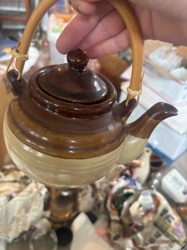
Submitted item photo
Submitted photo · May 27, 2026

User's notes

Mid century, no marking

AI analysis below

AI appraisal

AI analysis & estimate

AI-Generated · Verify before acting

Everything below is generated by AI for informational purposes only. AI can make mistakes — the AI may misidentify items or misattribute them (artist, maker, brand, designer, origin, era). This is not an official valuation and should not be used for insurance, sale, tax, estate, legal, or lending purposes — or any decision requiring a certified appraisal. It is not an authoritative claim about any person, brand, or rights holder — do not share or rely on it as a factual statement about a third party. Always consult qualified professionals before making financial decisions.

Note

This analysis also relies on unverified notes provided by the user, which may be incomplete or inaccurate and could affect the result.

Read the full disclaimer

AI Identification

·Not independently authenticated·Verify before acting

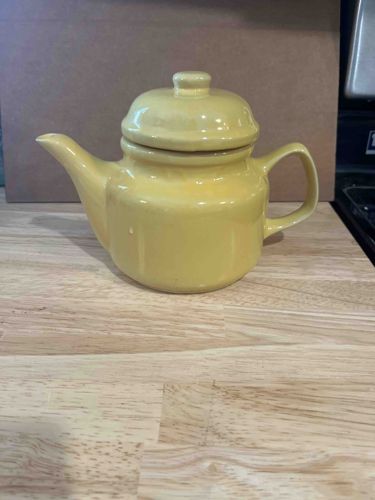
Mid-Century Yellow Ceramic Teapot

Tea Wares

AI Estimated Value

·Not an official valuation·Verify before acting

$25-45

As of May 27, 2026

AI Item Analysis

·AI can make mistakes·Verify before acting
This is a vintage ceramic teapot, likely dating from the mid-century period as indicated. It features a bright, solid yellow glaze that appears to be uniform and glossy, suggesting an earthenware or stoneware body. The teapot has a classic, squat, rounded body with a short, subtly curved spout and a C-shaped handle, ergonomically designed for pouring. A distinguishing feature is its segmented design, particularly between the lid and the main body, creating a slight shoulder or ridge where the lid sits snugly. The lid itself is domed with a small, simple knob for easy removal. There are no visible chips, cracks, or significant damage to the glaze, though there are a few water spots or minor drips visible on the side, which are superficial. The overall condition appears good, with some signs of use consistent with age but no obvious repair work. The craftsmanship seems solid and functional for everyday use. While no maker's marks are discernible from the image, the clean lines and vibrant color are characteristic of mid-century kitchenware, emphasizing utility with a touch of cheerful design. The construction implies a mass-produced item rather than a hand-crafted piece, but it exhibits good quality for its type, with smooth finishes and well-integrated parts.
AI Appraisal Report

·AI can make mistakes·Verify before acting
Upon visual examination of the provided images, this ceramic teapot presents as a characteristic example of mid-century design, likely produced between the 1950s and 1970s. Its vibrant yellow glaze, simple geometric form, and functional design are hallmarks of the era's popular kitchenware. The condition appears to be good for its age, showing a glossy, intact glaze with no major chips, cracks, or crazing visible in the photos. The absence of a maker's mark is common for many mass-produced items from this period and complicates specific attribution, which in turn moderates the value. The market for unmarked mid-century ceramics is active but generally modest. Comparable teapots from known manufacturers like Hall or Fiesta Ware can command higher prices, but similar unmarked pieces typically sell in the lower range. Demand is steady among collectors of vintage kitchenware and those seeking retro decor. The primary factor limiting the value is its anonymous origin. A higher value would be contingent on identifying the maker. It is crucial to note the limitations of an appraisal based solely on images. Without a physical inspection, I cannot confirm the absence of hairline cracks, repairs, or internal staining. Full authentication would require an in-person examination to search for faint or impressed marks, assess the weight and material composition, and confirm the condition under magnification. Provenance or period catalog references could also help attribute it to a specific manufacturer.

Get your items appraised

Instant estimates of your treasures with AI-powered appraisals

Browse More Appraisals