AI Appraisal Estimate

AI-generated estimates · not official valuations

From the user

What was submitted

Photo and notes provided by the user — not generated by AI

Submitted item photo
Submitted photo · June 9, 2026

User's notes

JAPAN

AI analysis below

AI appraisal

AI analysis & estimate

AI-Generated · Verify before acting

Everything below is generated by AI for informational purposes only. AI can make mistakes — the AI may misidentify items or misattribute them (artist, maker, brand, designer, origin, era). This is not an official valuation and should not be used for insurance, sale, tax, estate, legal, or lending purposes — or any decision requiring a certified appraisal. It is not an authoritative claim about any person, brand, or rights holder — do not share or rely on it as a factual statement about a third party. Always consult qualified professionals before making financial decisions.

Note

This analysis also relies on unverified notes provided by the user, which may be incomplete or inaccurate and could affect the result.

Read the full disclaimer

AI Identification

·Not independently authenticated·Verify before acting

Japanese Porcelain Floral Tea Set

Kitchenware / Tea Service

AI Estimated Value

·Not an official valuation·Verify before acting

$45–$65

As of June 9, 2026

AI Item Analysis

·AI can make mistakes·Verify before acting
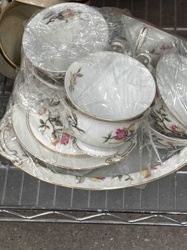
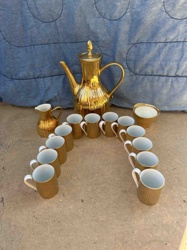
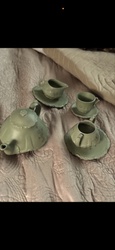
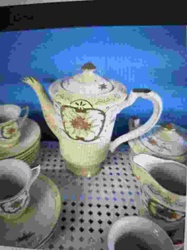
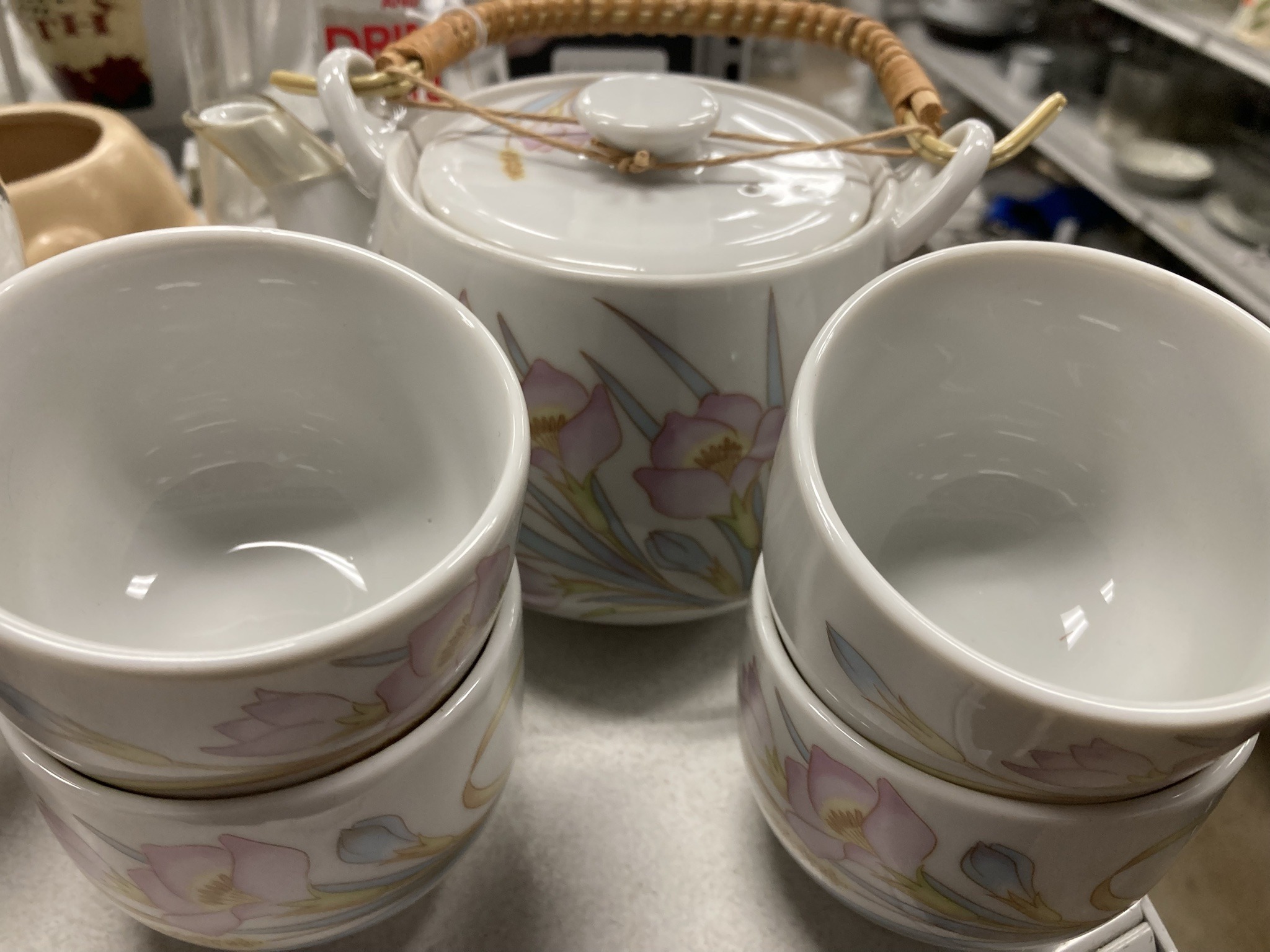
This is a five-piece Japanese porcelain tea set consisting of one cylindrical teapot and four handleless teacups (yunomi). The set is finished in a bright white vitreous glaze featuring a delicate transfer-printed floral pattern of pink irises or lilies with light blue and green foliage. The teapot is constructed with a flat-top lid and an overhead 'dobin' style handle made of bent bamboo or rattan, secured by metallic gold-colored wire loops through porcelain lugs. The spout and lid are accented with thin gold-painted gilding that shows minor signs of rubbing and wear due to age. Each piece exhibits a high-fire ceramic body typical of late 20th-century mass-manufactured Japanese export porcelain (circa 1970s–1990s). The cups are designed with a slightly tapered base for stacking, though the image shows them stacked in pairs. The condition appears fair to good; there are no immediate visible cracks or chips, but heavy shelf wear is noted on the unglazed foot rings, and the bamboo handle shows slight darkening and fraying consistent with use. No prominent maker's mark is visible in the frame, but the design is characteristic of mid-range household sets designed for daily use or souvenir export from Japan.
AI Appraisal Report

·AI can make mistakes·Verify before acting
I have conducted a visual examination of this five-piece Japanese porcelain tea set. The set features a classic dobin-style teapot and four yunomi cups, decorated with a transfer-printed floral motif. Upon inspection, the vitreous glaze and high-fire ceramic body suggest mass production from the mid-to-late 20th century (approximately 1970s–1980s). The condition is fair to good; while the porcelain remains structurally sound without visible crazing, the gilding on the spout and lid shows manual wear, and the organic bamboo handle exhibits age-related fraying. The market for this specific type of Japanese export ware is currently saturated. These sets were produced in large quantities by companies like Noritake, Imari-ware producers, or for department store exports (e.g., Seyei or Fitz and Floyd). They are valued today primarily as functional decorative items rather than rare collectibles. Comparable sets on the secondary market consistently realize prices in the $40 to $70 range depending on the completeness and the preservation of the handle. A significant factor impacting value is the lack of a prominent maker's mark or 'Nippon' era provenance. While the design is aesthetically pleasing, the lack of rarity and the presence of minor wear to the gilding prevents a higher valuation. Since this appraisal is based on images alone, I cannot definitively rule out internal hairline fractures or verify the mark on the underside of the cups. A full authentication would require an in-person physical examination to check the resonance of the porcelain, inspection of factory backstamps for specific kiln identification, and any original packaging or provenance documentation from the point of purchase in Japan.

Get your items appraised

Instant estimates of your treasures with AI-powered appraisals

Browse More Appraisals