AI estimate as of October 30, 2025 · verify with a professional before acting
AI-Generated · Verify before acting
Everything on this page is generated by AI for informational purposes only. AI can make mistakes — the AI may misidentify items or misattribute them (artist, maker, brand, designer, origin, era). This is not an official valuation and should not be used for insurance, sale, tax, estate, legal, or lending purposes — or any decision requiring a certified appraisal. It is not an authoritative claim about any person, brand, or rights holder — do not share or rely on it as a factual statement about a third party. Always consult qualified professionals before making financial decisions.
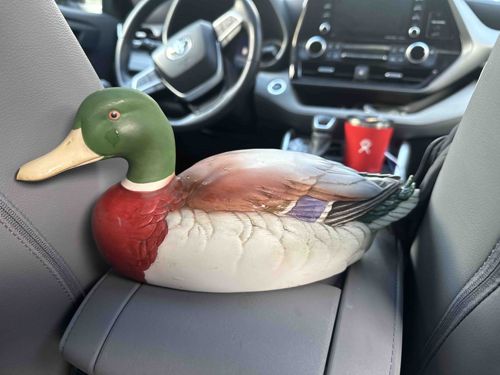
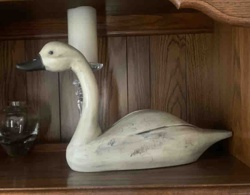
This item is a decorative mallard duck, likely serving as a decoy or a substantial figurine. It exhibits a realistic portrayal of a male mallard, characterized by its distinctive plumage colors and form. The head is painted in a vibrant iridescent green, leading into a thin white neck ring. The breast is a rich reddish-brown, transitioning to a light, cream-colored underside with textured, scalloped detailing to mimic feathers, suggesting a molded or carved construction. The back and wings display a complex pattern of muted browns, grays, and a prominent iridescent blue/purple speculum (wing patch) with black and white borders, typical of a male mallard. The bill is a soft yellow-orange, and the eyes are a deep red, possibly glass or painted.
The material appears to be a solid, durable substance, potentially wood, resin, or ceramic, given its weight and the slight sheen on the painted surfaces. There are visible signs of wear, particularly around the head and bill, including minor paint loss or scuffs. A notable imperfection is a small drip mark or imperfection below the right eye on the green head. The textured feather detailing on the body and wings indicates a good level of craftsmanship, aiming for a lifelike representation. While no specific maker's marks are discernible from the image, the quality of painting and texturing suggests it's not a mass-produced, low-end item. Its size appears substantial, occupying the majority of a car's center console, likely around 12-18 inches in length. Its style suggests a mid-20th century to contemporary creation, aligning with traditional waterfowl art and collectible decoys.
AI Appraisal Report
I have carefully examined the provided image of this Mallard Duck item. It presents as a well-crafted decorative piece, likely serving as a substantial figurine or a decorative decoy. The realistic portrayal of a male mallard, detailed plumage colors, and textured feathering suggest a good level of craftsmanship, aiming for lifelike representation. The iridescent green head, reddish-brown breast, and prominent blue speculum are characteristic of a male mallard.
Condition-wise, I observe visible signs of wear, particularly around the head and bill, including minor paint loss and scuffs. A notable imperfection is a small paint drip below the right eye. These are consistent with typical use or handling over time, but do slightly detract from its pristine appearance. The material appears solid and durable, potentially wood, resin, or ceramic, but without physical inspection, I cannot definitively determine the exact composition. The size, estimated at 12-18 inches, is substantial, contributing to its decorative presence.
From images alone, definitive authenticity regarding a specific carver or maker is impossible. I cannot discern any maker's marks, which would be crucial for higher valuation. Market conditions for decorative duck figurines and contemporary decoys are stable but not commanding ultra-high prices unless attributed to a renowned carver or possessing significant age and provenance. Comparables for unsigned, well-made decorative mallards of this type typically range from $75 to $175.
Factors impacting value include its good decorative appeal despite minor wear. The lack of a discernible maker limits its value compared to documented folk art pieces. Demand for such items is generally steady among collectors of waterfowl art and Americana. For full authentication and to ascertain the exact material and age, an in-person examination would be required, along with a search for any hidden maker's marks, and potentially a provenance study if any documentation exists.