AI Appraisal Estimate

AI-generated estimates · not official valuations

From the user

What was submitted

Photo and notes provided by the user — not generated by AI

Submitted item photo
Submitted photo · May 27, 2026

User's notes

No additional notes provided.

AI analysis below

AI appraisal

AI analysis & estimate

AI-Generated · Verify before acting

Everything below is generated by AI for informational purposes only. AI can make mistakes — the AI may misidentify items or misattribute them (artist, maker, brand, designer, origin, era). This is not an official valuation and should not be used for insurance, sale, tax, estate, legal, or lending purposes — or any decision requiring a certified appraisal. It is not an authoritative claim about any person, brand, or rights holder — do not share or rely on it as a factual statement about a third party. Always consult qualified professionals before making financial decisions.

Read the full disclaimer

AI Identification

·Not independently authenticated·Verify before acting

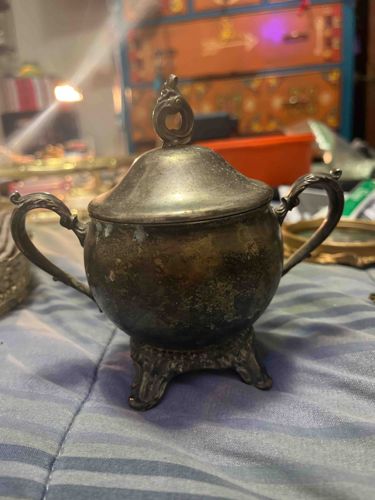
Antique Silver Plate Sugar Bowl with Lid

Tableware/Servingware

AI Estimated Value

·Not an official valuation·Verify before acting

$40 - $70

As of May 27, 2026

AI Item Analysis

·AI can make mistakes·Verify before acting
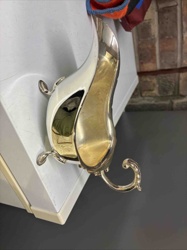
This item is an antique or vintage sugar bowl, likely crafted from silver plate. It features a classical or Rococo-revival aesthetic, evident in its ornate detailing. The sugar bowl is round-bodied with two scrolling handles attached to the sides, each featuring decorative elements at their connection points to the body. It stands on three short, cabriole-style legs with leaf-like or paw-like feet, which appear directly molded into the base, providing stability. The bowl is topped with a removable domed lid, crowned with a finial that resembles an inverted scroll or a stylized leaf, incorporating an open loop or ring design. The finish is a heavily tarnished silver tone, exhibiting significant oxidation with dark grey and greenish-black discoloration across its entire surface, particularly in recessed areas and crevices, which suggests a considerable age and lack of recent polishing. There are no clear manufacturer's marks or signatures visible from the provided image. The overall condition suggests advanced age and wear, consistent with a piece that has been used and stored without meticulous preservation, contributing to its strong antique patina. The craftsmanship appears to be cast metal, with detailed but somewhat softened edges due to wear and tarnish. This piece would have been part of a larger tea or coffee set.
AI Appraisal Report

·AI can make mistakes·Verify before acting
Upon visual examination of the provided image, I assess this antique silver-plated sugar bowl with lid. Its design, featuring scrolling handles, classical or Rococo-revival ornamentation, and cabriole legs, is consistent with late 19th to early 20th-century silver plate production. The heavy tarnish and significant oxidation, particularly in recessed areas, contribute to an authentic antique patina, indicating considerable age and lack of recent polishing. While the craftsmanship appears detailed, the softened edges suggest wear and possibly a cast manufacturing process. This piece would undoubtedly have been part of a larger tea or coffee service. From a market perspective, comparable tarnished silver-plated sugar bowls from this era, especially those without clear maker's marks, typically fall into the lower-to-mid range of antique tableware. The demand for such items is moderate; collectors often prefer complete sets or pieces in better polished condition, or those with identifiable makers. The rarity of an unmarked, single sugar bowl is low. The primary factor impacting its value is its material (silver plate rather than sterling silver) and its current heavily tarnished condition. While some prefer the 'uncleaned' look, many buyers will factor in the effort and cost of restoration/polishing. Limitations to this appraisal are significant due to image-only examination. I cannot verify the base metal, plating thickness, or definitively identify any faint manufacturer's marks or hallmarks crucial for authentication and precise dating. An in-person examination would allow for closer inspection for marks, assessment of structural integrity, and identification of any repairs. Provenance documentation (if available) would confirm ownership history, and a silver test could distinguish between silver plate and sterling, which would drastically alter the valuation. Without these, the appraisal remains an estimate based solely on visual cues and prevailing market trends for similar unmarked silver-plated wares.

Get your items appraised

Instant estimates of your treasures with AI-powered appraisals

Browse More Appraisals