AI estimate as of November 15, 2025 · verify with a professional before acting
AI-Generated · Verify before acting
Everything on this page is generated by AI for informational purposes only. AI can make mistakes — the AI may misidentify items or misattribute them (artist, maker, brand, designer, origin, era). This is not an official valuation and should not be used for insurance, sale, tax, estate, legal, or lending purposes — or any decision requiring a certified appraisal. It is not an authoritative claim about any person, brand, or rights holder — do not share or rely on it as a factual statement about a third party. Always consult qualified professionals before making financial decisions.
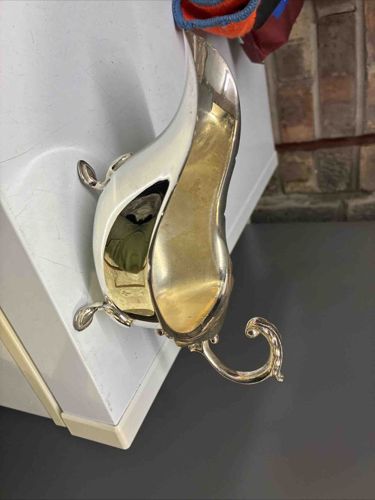
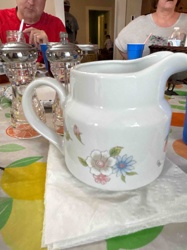
This is a silver-plated gravy boat, characterized by its elegant and somewhat fluid, curvilinear design. The main body of the boat is polished to a high shine, reflecting light brightly, though some areas show signs of tarnish, particularly visible in the deeper parts of the interior and crevices, suggesting a need for cleaning. The exterior appears to be a bright silver color, contrasting slightly with the warmer, slightly yellowed tones of the tarnished areas. The boat features a prominent, elongated handle with a decorative scroll or acanthus leaf motif at its end, adding to its ornamental quality. The handle is attached to the body in a graceful curve. The boat rests on three small, ornate legs, also featuring a scrolled design, providing stability and elevating it from the surface. The construction appears to be high-quality, likely formed from multiple pieces soldered together, as evidenced by the distinct design of the handle and legs. There are no visible major dents or significant damage, but surface scratches and wear consistent with age and use are likely present, although not overtly clear from the provided image. The overall style suggests an early to mid-20th century aesthetic, possibly late Art Nouveau or Art Deco influence, or a more traditional Georgian or Victorian revival piece due to the scrollwork. The craftsmanship, particularly the detailing on the handle and legs, indicates a factory-produced item rather than a handcrafted bespoke piece. The reflective quality of the surface also makes it difficult to discern any specific maker's marks or stamps without closer inspection.
AI Appraisal Report
I have examined the image of this silver-plated gravy boat. Visually, the piece presents with an elegant, curvilinear design, indicative of early to mid-20th century aesthetics—possibly late Art Nouveau, Art Deco, or a revival of Georgian/Victorian styles, especially given the scrollwork. The polished surface shows a high shine, but I can discern areas of tarnish, particularly in deeper interior sections and crevices, suggesting it requires cleaning. The overall condition appears good, with no obvious major dents or damage, though surface scratches and wear consistent with age and use are highly probable given its material and function, though not clearly visible from the image provided. The detailed scroll handle and ornate tripartite legs suggest factory production rather than a bespoke artisan piece. This type of construction and design was common for mass-produced silver-plated items during that period.
Market conditions for silver-plated gravy boats of this vintage are generally stable but not exceptionally high. Demand is moderate, driven by collectors of antique tableware and those seeking period-appropriate decorative items. Authenticity appears consistent with silver-plated items of the stated period, but without hallmarks or maker's marks, definitive attribution of a specific manufacturer is impossible. The reflective surface in the image also hinders a clear view of any potential marks. The primary factor impacting value here is the silver-plated nature, which is less valuable than sterling silver. Condition, once cleaned, would be a strong secondary factor. Its decorative appeal also contributes.
Limitations to verification are significant: I cannot confirm maker's marks, actual material composition (e.g., base metal), or the extent of plating wear without an in-person physical examination. A weigh-in would also give me more data points to compare, along with a 'hands on' examination for general condition. Provenance would add value for a specific manufacturer. Given these considerations, and based on comparable sales of similar silver-plated gravy boats, I would place the appraisal value between $40 and $70. This reflects its decorative quality, age, and general current market for such items.