AI estimate as of October 4, 2025 · verify with a professional before acting
AI-Generated · Verify before acting
Everything on this page is generated by AI for informational purposes only. AI can make mistakes — the AI may misidentify items or misattribute them (artist, maker, brand, designer, origin, era). This is not an official valuation and should not be used for insurance, sale, tax, estate, legal, or lending purposes — or any decision requiring a certified appraisal. It is not an authoritative claim about any person, brand, or rights holder — do not share or rely on it as a factual statement about a third party. Always consult qualified professionals before making financial decisions.
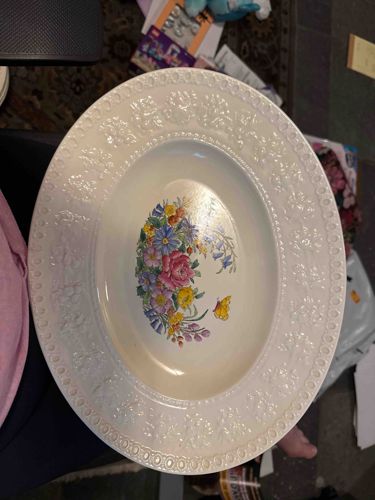
This appears to be an oval-shaped ceramic serving bowl, likely made of earthenware or porcelain, featuring a decorative floral motif. The primary color of the bowl is an off-white or cream, providing a soft background for the ornamentation. The rim of the bowl is broad and features an embossed or molded pattern consisting of repeating floral or vine-like elements, interspersed with a raised dot or pearl-like design around the outer and inner edges of the rim profile. This gives the bowl a classic and somewhat ornate aesthetic. In the center well of the bowl, there is a vibrant transferware or hand-painted floral design. This central design features a cluster of various flowers, including what appear to be pink roses, blue and yellow blossoms, and purple accent flowers, arranged in a naturalistic bouquet. A small, delicate yellow butterfly with small black details is depicted flying to the right of the floral cluster, adding a touch of whimsy. The colors in the floral design are rich and varied, suggesting a multi-color palette that stands out against the cream background. There are no immediately visible chips, cracks, or significant wear evident from the provided image, indicating it is in at least good condition. The material appears glossy, suggesting a glazed finish, typical of ceramic dinnerware designed for serving food. The overall style suggests a traditional or possibly vintage aesthetic, potentially dating from the mid-20th century onwards, often associated with familiar brands producing decorative dinnerware. The craftsmanship, particularly the detailed embossing on the rim, suggests a product designed for both utility and decorative appeal.
AI Appraisal Report
Upon visual examination of the provided image, this Floral Oval Ceramic Serving Bowl appears to be in very good overall condition. I observe no discernible chips, cracks, or significant crazing, and the glaze appears intact and glossy. The colors of the central floral motif are vibrant, and the embossed rim pattern is crisp, suggesting minimal wear from use or age. Authenticity, based solely on this image, seems straightforward for a manufactured ceramic piece of this type; it lacks features that would typically indicate a high-value antique or artisan origin requiring extensive verification. In-person examination would primarily confirm the absence of subtle hairline cracks, minor glaze imperfections, or repairs, and to assess the texture and weight, which can sometimes hint at the type of ceramic material (earthenware vs. porcelain).
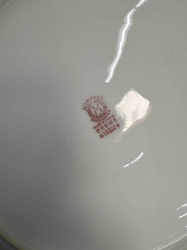
Market conditions for mass-produced decorative servingware, even with charming floral motifs and embossed details, are generally modest. Comparable items, often from mid-20th century producers (e.g., specific lines from companies like Lenox, Noritake, or lesser-known dinnerware manufacturers) in excellent condition typically sell in the $20-75 range. The demand for such pieces is steady but not exceptionally high, usually driven by collectors completing sets, individuals seeking charming decorative accents, or those furnishing a traditional home. Rarity is not a significant factor here; while the exact pattern might not be prevalent, similar decorative floral service pieces were produced in large quantities. Factors impacting value are primarily condition and aesthetic appeal; this bowl scores well on both. Without specific maker's marks or provenance, it's difficult to assign a higher value. Full authentication would ideally involve examining manufacturer's marks on the base, if present, and potentially comparing with established pattern databases, which cannot be done from the single provided image.