AI Appraisal Estimate

AI-generated estimates · not official valuations

From the user

What was submitted

Photo and notes provided by the user — not generated by AI

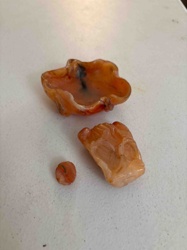
Submitted item photo
Submitted photo · June 18, 2026

User's notes

No additional notes provided.

AI analysis below

AI appraisal

AI analysis & estimate

AI-Generated · Verify before acting

Everything below is generated by AI for informational purposes only. AI can make mistakes — the AI may misidentify items or misattribute them (artist, maker, brand, designer, origin, era). This is not an official valuation and should not be used for insurance, sale, tax, estate, legal, or lending purposes — or any decision requiring a certified appraisal. It is not an authoritative claim about any person, brand, or rights holder — do not share or rely on it as a factual statement about a third party. Always consult qualified professionals before making financial decisions.

Read the full disclaimer

AI Identification

·Not independently authenticated·Verify before acting

Japanese Red Lacquerware Sake Set with Tray and Stemmed Goblets

Asian Antiques & Decorative Arts

AI Estimated Value

·Not an official valuation·Verify before acting

$40 - $75

As of June 18, 2026

AI Item Analysis

·AI can make mistakes·Verify before acting
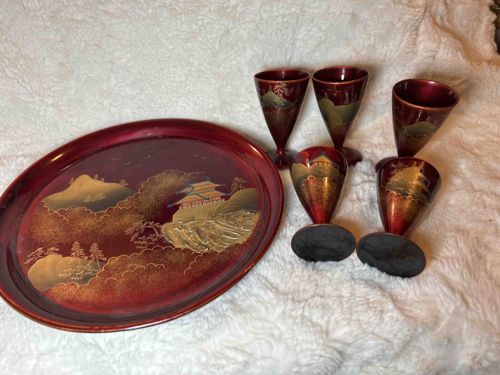
This is a vintage Japanese lacquerware sake or cordial set featuring a large circular serving tray and five matching conical stemmed goblets. The set is finished in a deep cinnabar or burgundy red lacquer, serving as a background for elaborate 'Maki-e' style decoration. The decorative motif depicts a traditional Japanese landscape with golden mountain peaks, a multi-tiered pagoda perched on a rocky cliff, and scattered pine trees. The application utilizes metallic gold and bronze powders to create texture and depth. The tray has a raised rim and shows moderate surface wear, including white scuffing and minor lacquer loss along the outer edge. The goblets feature a flared conical bowl atop a short stem and circular foot. The underside of the goblets appears to be finished in a matte black or unpolished dark lacquer. While no maker's mark is visible in the primary view, the style is characteristic of mid-20th-century Showa-era export ware. The craftsmanship shows hand-painted details with fine line work in the architectural elements of the pagoda. Condition is fair to good, with visible abrasions on the tray surface and some dulling of the original high-gloss luster, consistent with age and domestic use.
AI Appraisal Report

·AI can make mistakes·Verify before acting
Upon visual examination of this Japanese lacquerware sake set, I identify it as a characteristic example of mid-20th-century Showa-era export ware, likely dating from the 1950s to the 1970s. The set consists of a circular serving tray and five stemmed goblets, finished in a deep crimson lacquer often meant to simulate cinnabar. The decorative motif—a traditional landscape featuring Mount Fuji-esque peaks, pine trees, and a pagoda—is executed in a simplified Maki-e style using gold and bronze metallic powders. The consistency of the design and the specific color palette strongly suggest mass-market production intended for Western souvenir trade rather than high-end artisanal craft. Condition is the primary limiting factor for this appraisal. I observe significant surface wear on the tray, including noticeable white scuffing and abrasions that penetrate the gloss finish, indicating regular domestic use. The edges show minor lacquer loss, and there is a general dulling of the original luster. While the goblets appear intact, they lack the refinement found in higher-end Urushi lacquer pieces. The market for mid-century Japanese export lacquerware is saturated, with demand primarily driven by decorative appeal rather than collector investment. Similar sets appear frequently on platforms like eBay and Etsy, typically selling in the $40 to $75 range depending on the severity of the wear. Authenticity as 'vintage export ware' is highly probable based on the visual cues, but true authentication of the base material (wood versus resin/synthetic) would require handling the item to assess weight and warmth, as well as examining the underside for specific maker's marks or 'Made in Japan' stamps which are not visible in the provided images.

Get your items appraised

Instant estimates of your treasures with AI-powered appraisals

Browse More Appraisals