AI estimate as of September 10, 2025 · verify with a professional before acting
AI-Generated · Verify before acting
Everything on this page is generated by AI for informational purposes only. AI can make mistakes — the AI may misidentify items or misattribute them (artist, maker, brand, designer, origin, era). This is not an official valuation and should not be used for insurance, sale, tax, estate, legal, or lending purposes — or any decision requiring a certified appraisal. It is not an authoritative claim about any person, brand, or rights holder — do not share or rely on it as a factual statement about a third party. Always consult qualified professionals before making financial decisions.
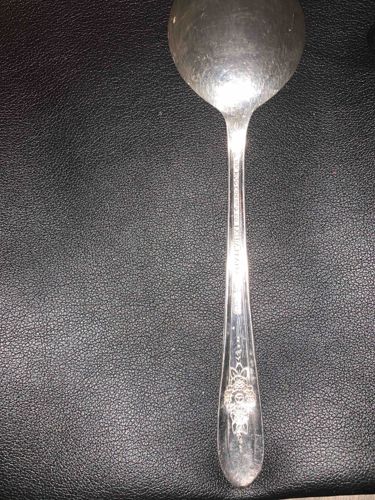
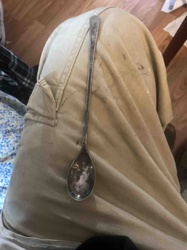
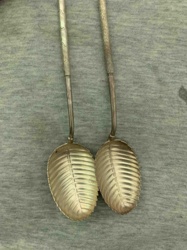
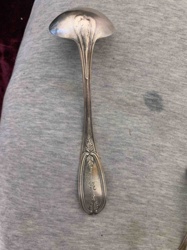
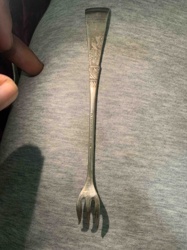
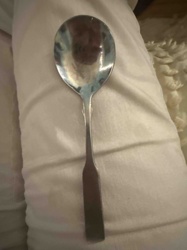
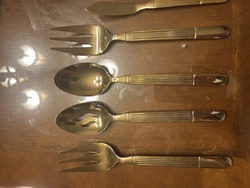
This is a silver-toned metal serving ladle, likely silver-plated, characterized by its substantial bowl and an elongated, tapering handle. The ladle exhibits a classic form, with the bowl appearing somewhat shallow and spherical, designed for serving liquids or smaller portions. The handle is the most distinguishing feature, tapering from a narrower point near the bowl to a wider, rounded end. It is adorned with intricate engraving that combines floral and geometric motifs, indicative of an Art Deco style or a transitional period. Near the bowl, along the spine of the handle, there appears to be a repeating, delicate geometric pattern, possibly a beaded or line design. Further down, towards the wider end of the handle, a more ornate, symmetrical floral and possibly scrollwork pattern is prominent, enclosed within an oval or curvilinear border. There are visible signs of wear consistent with age and use, including minor scratches and scuffs across the polished surface of both the bowl and handle. There is also some tarnishing or patination, particularly visible in the deeper parts of the engraving, which adds to its aged appearance but may also indicate the need for cleaning. The overall craftsmanship suggests a mass-produced item from the early to mid-20th century. No specific maker's marks are clearly discernible from the provided images, but the styling aligns with common patterns from the 1920s-1940s.
AI Appraisal Report
Based on my visual examination of the provided image, I assess this silver-plated serving ladle, featuring floral and geometric engraving consistent with Art Deco styling, to be in good, used condition. Authenticity, based on design elements, appears genuine for the period (likely 1920s-1940s) for a mass-produced item. The visible wear, including minor scratches and scuffs, along with patination in the engraving, is an expected consequence of age and use. While the overall form and decoration are appealing, several factors impact its value.
Market conditions for vintage silver-plated serving pieces are generally stable but not highly speculative. Similar unsigned silver-plated ladles with decorative elements, even from specific eras, typically fetch modest prices. Comparables found in online auctions and antique shops for unmarked, used silver-plated serving ladles range from $40 to $100, depending on condition, specific design, and vendor.
Demand for this type of item is moderate, often driven by collectors seeking specific patterns or individuals looking for decorative yet functional vintage kitchenware. Rarity is low; mass production during its era means many similar pieces exist. The primary factors affecting value are the absence of clear maker's marks, which would significantly increase desirability and price if from a renowned manufacturer, and the fact that it is silver-plated rather than solid sterling silver.
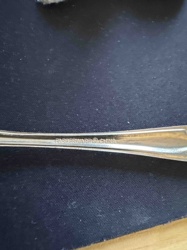
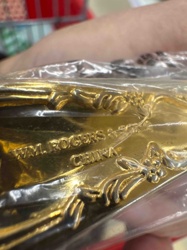
My primary limitation in full authentication is the reliance solely on images. In-person examination would allow me to physically confirm the material (e.g., using a magnet or direct inspection for hallmarks), thoroughly assess the extent of plating loss or damage, and identify any faint or obscured maker's marks that might not be visible in photographs. Provenance documentation, if available, would also add significant value by confirming its history and origin. Scientific testing for material composition is not typically necessary for an item of this value unless there's a specific dispute regarding its plating versus solid silver claims.