AI Appraisal Estimate

AI-generated estimates · not official valuations

From the user

What was submitted

Photo and notes provided by the user — not generated by AI

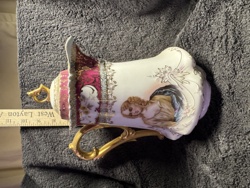
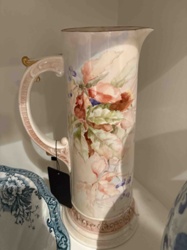
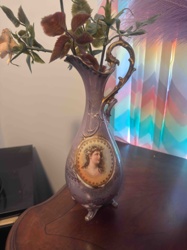
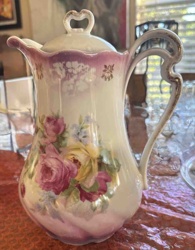
Submitted item photo
Submitted photo · June 13, 2026

User's notes

No additional notes provided.

AI analysis below

AI appraisal

AI analysis & estimate

AI-Generated · Verify before acting

Everything below is generated by AI for informational purposes only. AI can make mistakes — the AI may misidentify items or misattribute them (artist, maker, brand, designer, origin, era). This is not an official valuation and should not be used for insurance, sale, tax, estate, legal, or lending purposes — or any decision requiring a certified appraisal. It is not an authoritative claim about any person, brand, or rights holder — do not share or rely on it as a factual statement about a third party. Always consult qualified professionals before making financial decisions.

Read the full disclaimer

AI Identification

·Not independently authenticated·Verify before acting

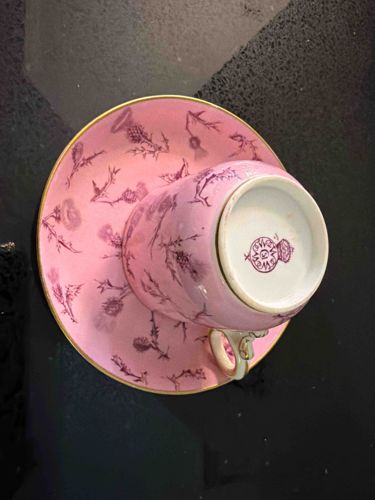
Royal Worcester Pink Thistle Pattern Teacup and Saucer

Antique Ceramics and Porcelain

AI Estimated Value

·Not an official valuation·Verify before acting

$125.00 - $185.00

As of June 13, 2026

AI Item Analysis

·AI can make mistakes·Verify before acting
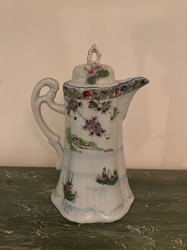
This is a fine bone china teacup and saucer set produced by the renowned English manufacturer Royal Worcester. The set features a striking aesthetic dominated by a vibrant pink ground color, over which sits a darker magenta or puce-colored transfer print of Scottish Thistles. The thistle motifs are delicately rendered, showing stems, prickly leaves, and flowering heads in a scattered arrangement. The edges of the saucer and the rim of the cup are finished with a fine hand-painted gold gilt line, characteristic of high-quality late 19th to early 20th-century English porcelain. The cup features a scroll-style handle with visible gold accents. On the underside of the cup, a clear backstamp is visible: the Royal Worcester 'standard mark' consisting of a crown atop a circle containing four 'W's, with a number 51 in the center. The presence of specific dots or date codes around this mark would typically pinpoint the exact year of manufacture, with this style suggesting a production date in the late Victorian or Edwardian era. The condition appears structurally sound with no visible chips or cracks from this angle; however, there is minor shelf wear on the unglazed foot ring of the cup and some slight fading or rubbing to the gilt edges, which is consistent with light use. The craftsmanship demonstrates the high standards of Royal Worcester's Victorian-era output, featuring crisp transfer work and balanced glaze application.
AI Appraisal Report

·AI can make mistakes·Verify before acting
I have virtually examined this Royal Worcester tea set featuring the Scottish Thistle pattern on a pink ground. Based on the provided imagery, the set appears to be an authentic example of late Victorian/early Edwardian English bone china, likely produced circa 1895–1910. The backstamp, featuring the '51' internal code and characteristic crown/circle motif, confirms it as a product of Worcester’s high-output period. The condition appears very good; the transfer print remains crisp, and while I note minor gilt rubbing on the rim, the absence of visible crazing, chips, or spider cracks suggests a well-preserved piece. Market demand for late 19th-century Royal Worcester remains steady, though prices for transferware have softened compared to hand-painted botanical or fruit studies. The Thistle pattern is desirable for regional interest and those collecting Victorian 'language of flowers' ceramics. Comparables for single sets in this colorway typically realize between $100 and $200 at specialty antique auctions or high-end retail environments. Factors impacting value include the vibrancy of the pink ground and the continuity of the gilding. Limitations of this virtual appraisal include the inability to perform a 'ring test' for hidden hairline cracks or use UV lighting to detect professional restoration. A full authentication would require physical inspection to verify the tactile quality of the glaze and an audit of the date-coding dots surrounding the backstamp to pinpoint the exact year of firing. Provenance documentation, specifically regarding its purchase history or original set context, would further solidify its market position.

Get your items appraised

Instant estimates of your treasures with AI-powered appraisals

Browse More Appraisals