AI estimate as of August 9, 2025 · verify with a professional before acting
AI-Generated · Verify before acting
Everything on this page is generated by AI for informational purposes only. AI can make mistakes — the AI may misidentify items or misattribute them (artist, maker, brand, designer, origin, era). This is not an official valuation and should not be used for insurance, sale, tax, estate, legal, or lending purposes — or any decision requiring a certified appraisal. It is not an authoritative claim about any person, brand, or rights holder — do not share or rely on it as a factual statement about a third party. Always consult qualified professionals before making financial decisions.
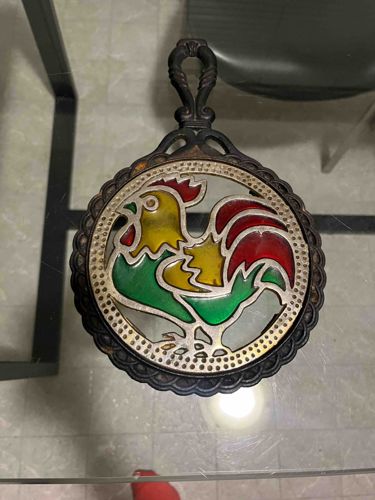
This item is a decorative trivet, likely made of cast iron, featuring a colorful rooster motif. It is predominantly dark, possibly black or very dark bronze, with the central rooster design rendered in vibrant enamel or painted finishes. The trivet has a round shape with an ornate, slightly raised border that appears to be part of the cast iron frame, displaying a scalloped or beaded edge. A decorative handle, also made of cast iron, extends upwards from the top of the circular frame, featuring a twisted or braided design for hanging or carrying. The rooster itself is stylized, with a yellow body, a red comb and wattle, and a red tail, contrasting with a vibrant green underbelly and legs. The outlines of the rooster and the details within its body are created by the metal frame, which also forms numerous small, raised dots around the inner perimeter, adding textural interest. The metallic parts of the rooster design, separating the colored sections, appear to be a light, possibly silver-toned or polished metal. The item shows some signs of wear consistent with age and use, including potential discoloration or minor chipping in the enamel/paint, and some patina on the cast iron, particularly around the edges and handle. The overall condition suggests it is an older piece, possibly mid-20th century, designed for both practical use, such as protecting surfaces from hot dishes, and as a decorative accent in a kitchen or dining area. The quality of craftsmanship is good, indicative of mass production but with attention to detail in the casting and application of color.
AI Appraisal Report
Upon examining the provided image of the Vintage Cast Iron Rooster Trivet, I assess it to be an authentic piece consistent with mid-20th century kitchenware. The dark cast iron frame, vibrant enamel detailing of the rooster, and the twisted handle are characteristic features of trivets produced during this period, often found in domestic settings. The condition appears good for its age, exhibiting typical signs of wear such as minor paint/enamel chipping and surface patina on the cast iron, particularly on the edges and handle. This wear is expected from an item designed for practical use and indicates genuine age rather than artificial distressing.
Market conditions for vintage kitchen collectibles, particularly cast iron enamelware, remain steady. Comparables for similar rooster-themed cast iron trivets, often from brands like John Wright or Virginia Metalcrafters (though no specific maker's mark is visible here), typically range from $20 to $50. The vibrancy of the colors and the relatively intact condition of the enamel on this specific piece contribute positively to its appeal.
Demand for decorative vintage kitchenware is consistent among collectors and those looking for accent pieces. While not exceedingly rare, a well-preserved rooster motif trivet like this holds enduring charm. Factors impacting value include the charming design, the good aesthetic condition of the enamel, and its functional and decorative appeal. The primary limitation in this appraisal is the absence of a physical examination. Without handling the item, I cannot confirm specific weight, detect hairline cracks not visible in the image, or thoroughly inspect for maker's marks or damage on the reverse side. Proper authentication would ideally involve in-person inspection to verify material quality, search for specific manufacturer's identification marks, and potentially conduct non-invasive material analysis if any doubt regarding authenticity or age were to arise. Provenance documentation, such as original purchase receipts or family history, would also add to its verifiable authenticity and potentially its value.