AI estimate as of September 3, 2025 · verify with a professional before acting
AI-Generated · Verify before acting
Everything on this page is generated by AI for informational purposes only. AI can make mistakes — the AI may misidentify items or misattribute them (artist, maker, brand, designer, origin, era). This is not an official valuation and should not be used for insurance, sale, tax, estate, legal, or lending purposes — or any decision requiring a certified appraisal. It is not an authoritative claim about any person, brand, or rights holder — do not share or rely on it as a factual statement about a third party. Always consult qualified professionals before making financial decisions.
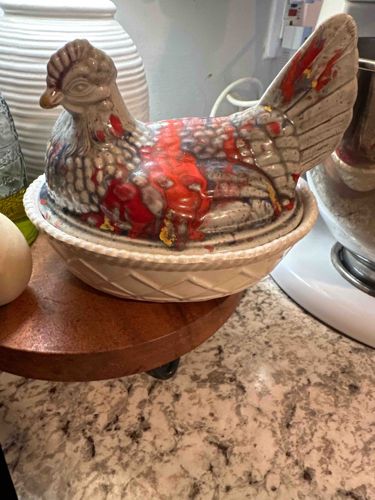
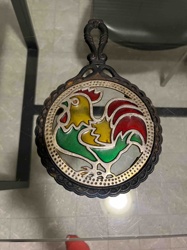
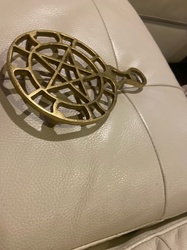
This is a ceramic figural hen-on-nest dish, designed to resemble a chicken sitting on its nest. The item consists of two main parts: a bowl-like base, which forms the 'nest', and a lid molded in the shape of a hen, which covers the base. The hen lid is predominantly light gray or cream-colored, with a textured surface mimicking feathers. It features prominent red and yellow splashes or drips, particularly across its back and side, creating an abstract, somewhat mottled effect. The hen's head, comb, and wattle are depicted with sculpted detail, although the coloring is subdued, blending with the body's base color rather than being distinctly red as natural. The tail feathers are also sculpted with individual lines. The base is an off-white or cream color, with a woven or braided pattern encircling its rim, simulating the texture of a basket or nest. The material appears to be glazed earthenware or ceramic, exhibiting a glossy finish. There are no immediately visible cracks, chips, or significant repairs, suggesting it is in good, used condition. The style is classic farmhouse or country decor, popular from the mid-20th century onwards. The craftsmanship seems standard for mass-produced ceramic kitchenware of this type, with some hand-painted elements evident in the red and yellow coloration. No visible maker's marks or signatures are discernible from the provided images.
AI Appraisal Report
I have visually examined the provided image of this ceramic hen-on-nest dish. The item appears to be in good, used condition with no immediately visible chips, cracks, or significant repairs. The glazing is intact, and the painted details, while somewhat abstract, seem consistent with the intended design. Authenticity, in terms of it being a genuine hen-on-nest dish from the period it represents, is likely, given its common design. However, without a physical inspection, I cannot verify the presence of any hairline cracks, crazing, or subtle repairs that might impact its value.
Market conditions for these types of ceramic hen-on-nest dishes are generally steady but not robust. They are considered common decorative kitchenware, often collected by enthusiasts of farmhouse or country decor. Comparables in similar condition typically sell in the $20-$40 range on online marketplaces and at antique malls. While there's a consistent demand, the supply is also plentiful, preventing significant appreciation. This particular piece's value is primarily decorative, and the hand-painted 'splashes' add a unique, albeit generalized, touch, but not enough to elevate it beyond the common range.
Rarity is low; these items were mass-produced. Factors limiting higher value include the lack of a discernible maker's mark, which could differentiate it if it were from a more collectible manufacturer, and its status as common mid-20th-century kitchenalia. For full authentication and to rule out any restoration, an in-person examination would be crucial to check for crazing, subtle repairs, or manufacturer's marks hidden on the base. Provenance documentation would be valuable if the item had any unique history, but for this type of item, it's rarely available or impactful on value.