These notes were written by the person who submitted this item. Appraiser.AI has not verified them, and the AI's identification and estimate may rely on them.
AI Estimated Value
Not an official valuation
$0.50 - $1.00
AI estimate as of November 10, 2025 · verify with a professional before acting
AI-Generated · Verify before acting
Everything on this page is generated by AI for informational purposes only. AI can make mistakes — the AI may misidentify items or misattribute them (artist, maker, brand, designer, origin, era). This is not an official valuation and should not be used for insurance, sale, tax, estate, legal, or lending purposes — or any decision requiring a certified appraisal. It is not an authoritative claim about any person, brand, or rights holder — do not share or rely on it as a factual statement about a third party. Always consult qualified professionals before making financial decisions.
This analysis also relies on unverified notes provided by the user, which may be incomplete or inaccurate and could affect the result.
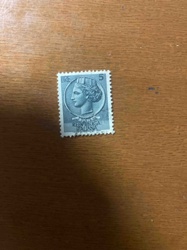
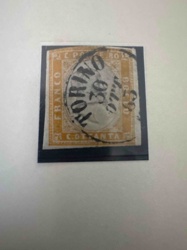
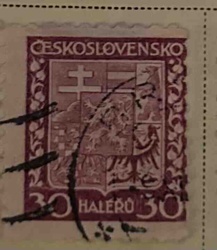
This item is a vintage Mexican postage stamp, commemorating the 400th anniversary of the founding of Campeche. The stamp features a central design of a highly ornate, heraldic-looking crest or coat of arms, rendered in a deep reddish-maroon color. Surrounding the central crest, in an arc, are the words 'IV Centenario de la Fundación de Campeche' (meaning 'Fourth Centenary of the Founding of Campeche'), with the years '1540' and '1940' prominently displayed in the upper left and upper right corners, respectively, also in the same reddish-maroon ink. The denomination '10 CENT' is visible in the lower right, and 'CORREOS MEXICO' in the lower left and bottom center. There is also text 'TALLERES DE IMPRESION DE ESTAMPILLAS Y VALORES MEXICO' at the bottom, which translates to 'Print Shops of Stamps and Valuables Mexico'. The stamp is printed on off-white paper, which has significantly yellowed and appears to be heavily toned or stained, possibly due to age or environmental exposure. The paper exhibits noticeable creasing and wrinkles throughout, particularly across the center and upper portions. The edges are perforated, indicating its nature as a traditional postage stamp. A prominent black cancellation mark, or postmark, is present, arching across the lower left and central part of the stamp, obscuring some of the 'CORREOS' text and the lower portion of the crest. This cancellation mark suggests the stamp has been used. The overall condition is poor to fair due to the extensive creasing, discoloration, and the heavy postmark, which detracts from the clarity of the design elements. Despite the condition, the intricate details of the crest and the commemorative text are still discernible, reflecting a typical style for commemorative issues of its era.
AI Appraisal Report
I have carefully examined the provided image of the Mexico 1940 Campeche 4th Centenary 10 Centavos postage stamp. Based on visual assessment, the stamp appears to be authentic, consistent with known issues of this commemorative series. The design elements, inscriptions, and perforation style align with historical examples. However, definitive authentication would require an in-person examination to verify paper type, printing methods, and watermark (if applicable), which cannot be reliably determined from an image.
The condition of this specific stamp is poor to fair. I note significant yellowing and toning of the paper, consistent with aging and environmental exposure. The extensive creasing and wrinkles, particularly across the center, are major detriments. Furthermore, the prominent and heavy black cancellation mark obscures important design elements, notably parts of the 'CORREOS' text and the lower portion of the crest. This heavy cancellation significantly reduces collector appeal and value.
Market conditions for this particular stamp are generally modest. It is a common commemorative issue from Mexico, not considered rare. Comparables in fine-used condition typically sell for under a dollar. The demand for heavily damaged or poorly canceled examples is very low. The factors significantly impacting this stamp's value are its poor physical condition and the intrusive cancellation mark. Given these factors, its value is primarily as a space filler for a collection or as a low-cost representative example of the issue.
For full authentication, a physical inspection by a philatelic expert would be necessary to examine the paper for watermarks, compare printing details with known genuine examples, and assess the gum (if unused).