AI identification & appraisal estimate

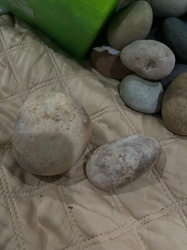
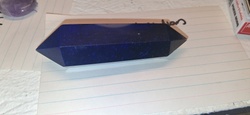
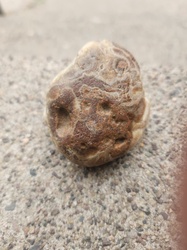
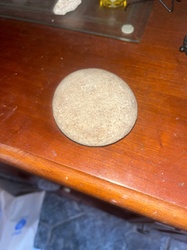
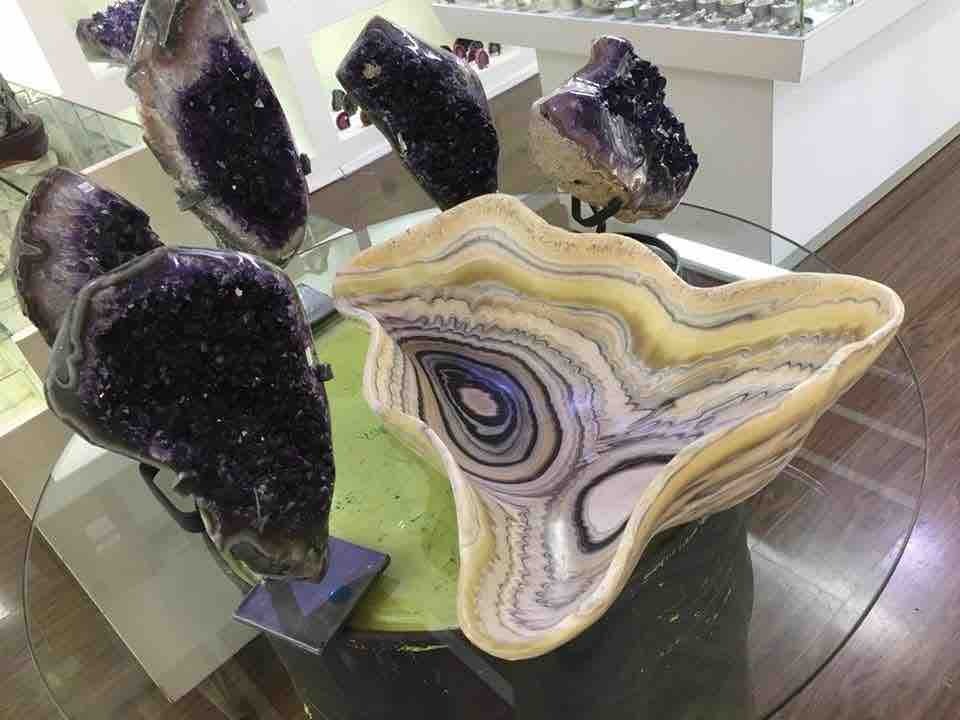
Carved Agate Decorative Bowl and Amethyst Geodes

Submitted photo of Carved Agate Decorative Bowl and Amethyst Geodes
Photo submitted by the user — not generated by AI

User's notes

Natural stone

These notes were written by the person who submitted this item. Appraiser.AI has not verified them, and the AI's identification and estimate may rely on them.

AI Estimated Value

Not an official valuation

$4,500 - $6,200

AI estimate as of April 8, 2026 · verify with a professional before acting

AI-Generated · Verify before acting

Everything on this page is generated by AI for informational purposes only. AI can make mistakes — the AI may misidentify items or misattribute them (artist, maker, brand, designer, origin, era). This is not an official valuation and should not be used for insurance, sale, tax, estate, legal, or lending purposes — or any decision requiring a certified appraisal. It is not an authoritative claim about any person, brand, or rights holder — do not share or rely on it as a factual statement about a third party. Always consult qualified professionals before making financial decisions.

This analysis also relies on unverified notes provided by the user, which may be incomplete or inaccurate and could affect the result.

Read the full disclaimer

AI Item Analysis

This exquisite group of natural stone specimens features a central carved agate bowl flanked by several upright amethyst geodes. The bowl is the centerpiece, showcasing a high degree of craftsmanship in its irregular, organic form that follows the natural banding of the agate stone. It exhibits a striking concentric circle pattern with layers of cream, butterscotch yellow, and deep purple-grey orbital rings. The stone has been polished to a brilliant, glassy finish, highlighting the translucency and density of the mineral layers. The rim is slightly scalloped and maintains a smooth, rounded edge. Surrounding the bowl are multiple amethyst druzy geodes, likely sourced from Brazil or Uruguay. These specimens are characterized by deep, saturated violet crystals tightly packed within their host rock. They are mounted on contemporary black metal display stands, which elevate and angle the pieces for optimal light reflection. Each amethyst segment shows a distinct white to light-grey agate rind bordering the dark crystal interiors. Both the bowl and the geodes appear to be in excellent condition with no visible fractures, chips, or artificial coloring, representing high-quality semi-precious stone decor suitable for luxury interior design or mineral collecting. The scale suggests significant desktop or tabletop decorative pieces, with the bowl likely measuring approximately 12 to 16 inches in diameter.
AI Appraisal Report

I have examined the digital representation of this decorative mineral suite, consisting of a large-scale orbital agate bowl and accompanying amethyst geodes. The centerpiece bowl is of exceptional quality, exhibiting vivid 'eye' banding and high translucency. Based on the 12-16 inch diameter estimate, the labor involved in carving a single nodule of this size without structural failure is significant. The amethyst geodes display the deep 'grape' violet saturation typically associated with top-tier Uruguayan deposits, which commands a premium over paler Brazilian material. Market demand for large-scale lapidary arts remains strong in the luxury interior design sector. Comparables for hand-carved agate bowls of this scale typically range from $2,500 to $3,500 at retail, while the contemporary-mounted amethyst specimens add an additional $2,000 to $2,700 to the grouping. The condition appears excellent, with the polish maintaining a mirror-like finish and no evident 'sugar' shedding in the druzy. However, there are limitations to this digital appraisal. I cannot definitively rule out heat treatment or resonance-tuning of the amethysts to enhance color, nor can I verify the absence of stabilized resins in the agate's micro-fractures without a high-intensity light test and physical tactile inspection. A full authentication would require confirmation of the stones' origin through provenance documentation or X-ray fluorescence (XRF) testing to ensure no artificial dyes were used. Value is predicated on these being 100% natural, untreated specimens as described.

Keep exploring

More minerals and decorative lapidary arts appraisals

Get your items appraised

Instant AI-powered appraisal estimates from a photo

Browse More Appraisals