AI Appraisal Estimate

AI-generated estimates · not official valuations

From the user

What was submitted

Photo and notes provided by the user — not generated by AI

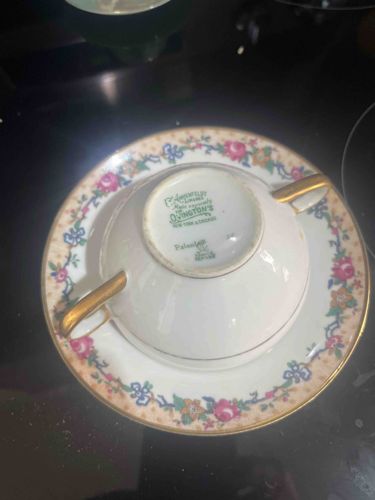
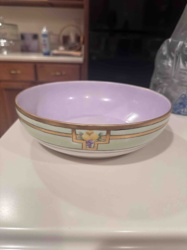
Submitted item photo
Submitted photo · June 25, 2026

User's notes

No additional notes provided.

AI analysis below

AI appraisal

AI analysis & estimate

AI-Generated · Verify before acting

Everything below is generated by AI for informational purposes only. AI can make mistakes — the AI may misidentify items or misattribute them (artist, maker, brand, designer, origin, era). This is not an official valuation and should not be used for insurance, sale, tax, estate, legal, or lending purposes — or any decision requiring a certified appraisal. It is not an authoritative claim about any person, brand, or rights holder — do not share or rely on it as a factual statement about a third party. Always consult qualified professionals before making financial decisions.

Read the full disclaimer

AI Identification

·Not independently authenticated·Verify before acting

Ahrenfeldt Limoges Double-Handled Cream Soup Bowl and Saucer for Ovington's

Antique Tableware / French Porcelain

AI Estimated Value

·Not an official valuation·Verify before acting

$65 - $110

As of June 25, 2026

AI Item Analysis

·AI can make mistakes·Verify before acting
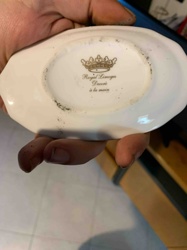
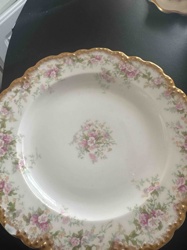
This is a two-piece porcelain cream soup set consisting of a double-handled bowl and its matching saucer. The set is crafted from fine white Limoges porcelain, characterized by its translucent qualities and delicate construction. The decoration features an ornate border with a repeating floral motif including pink roses, orange blossoms, and blue bellflowers, connected by green vine work resting on a stippled cream and gold-rimmed band. The bowl features two elegant loop handles heavily gilded in gold leaf. The underside bears significant maker's marks: a green stamp for 'Ahrenfeldt Limoges' and a secondary retailer mark stating 'Made especially for OVINGTON'S NEW YORK & CHICAGO.' There is also a 'Palais' pattern name and a 'France' origin stamp. Based on the marks, this set likely dates to the early 20th century (circa 1910-1920s), a period when Ovington's was a premier high-end department store. The condition appears to be very good with minimal visible wear to the gilding or glaze, though the foot rim of the bowl shows minor shelf wear typical of its age. The craftsmanship is indicative of high-quality French porcelain production designed for the luxury American export market.
AI Appraisal Report

·AI can make mistakes·Verify before acting
Upon visual examination of this Charles Ahrenfeldt Limoges cream soup set, I find the piece to be a high-quality example of early 20th-century French export porcelain. The marks definitively identify it as a custom commission for Ovington's, a historic luxury retailer in New York. The 'Palais' pattern exhibits the refined floral and gilded aesthetics typical of the 1910-1920 era. The condition appears exceptional for its age; the gold leaf on the handles remains vibrant without the characteristic 'rubbing' often found on utilitarian pieces, suggesting it was likely a cabinet piece or used sparingly. The market for Limoges remains steady but selective. While larger dinner services command significant sums, individual soup sets are currently valued as replacements or accent pieces. Comparables from Ahrenfeldt show that retailer-specific marks (like Ovington's) provide a slight premium due to the historical provenance of the store. However, the prevalence of floral Limoges patterns limits its rarity. Value is driven by the intact condition of the double handles and the clarity of the backstamps. Conversely, it is important to note that full authenticity cannot be 100% verified through digital images alone. A physical inspection is required to check for microscopic 'flea bites,' professional restorations hidden by fluorescence, or hairline fractures detectable only by 'ringing' the porcelain. A complete authentication would involve verifying the glaze consistency under UV light and confirming the uniformity of the gold application to ensure no modern 'touch-ups' have occurred. Provenance documentation, such as original sales receipts or family records, would further solidify its historical value.

Get your items appraised

Instant estimates of your treasures with AI-powered appraisals

Browse More Appraisals