AI Appraisal Estimate

AI-generated estimates · not official valuations

From the user

What was submitted

Photo and notes provided by the user — not generated by AI

Submitted item photo
Submitted photo · May 27, 2026

User's notes

No additional notes provided.

AI analysis below

AI appraisal

AI analysis & estimate

AI-Generated · Verify before acting

Everything below is generated by AI for informational purposes only. AI can make mistakes — the AI may misidentify items or misattribute them (artist, maker, brand, designer, origin, era). This is not an official valuation and should not be used for insurance, sale, tax, estate, legal, or lending purposes — or any decision requiring a certified appraisal. It is not an authoritative claim about any person, brand, or rights holder — do not share or rely on it as a factual statement about a third party. Always consult qualified professionals before making financial decisions.

Read the full disclaimer

AI Identification

·Not independently authenticated·Verify before acting

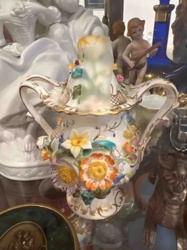
Japanese Imari-Style Porcelain Leaf-Shaped Dish

Antique Ceramics and Porcelain

AI Estimated Value

·Not an official valuation·Verify before acting

$450 - $650

As of May 27, 2026

AI Item Analysis

·AI can make mistakes·Verify before acting
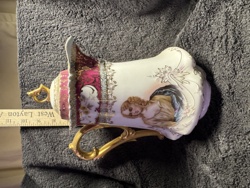
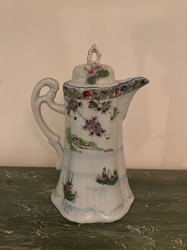
This is a decorative ceramic serving dish or platter designed in the form of a large, scalloped leaf, frequently associated with Japanese Imari or Kutani export styles from the late 19th to early 20th century (Meiji to Taisho periods). The dish features an irregular, lobed rim and a molded handle at the base shaped like a curled stem. It is intricately decorated with overglaze enamels and gilding. The central motif includes a large pink peony surrounded by stylized 'Kakiemon' style leaves in yellow, green, and pale blue. Notable features include areas of deep cobalt blue with gilded scrollwork, a traditional bird figure (likely an oven or pheasant), and scattered floral sprigs on a white ground. The craftsmanship exhibits complex hand-painting and textured molding to mimic the veins of a leaf. Regarding condition, there is visible rubbing and wear to the gold highlights on the rim and stem handle, consistent with age and use. The surface shows minor pitting in the glaze and some grime buildup in the crevices, but no large cracks or chips are immediately apparent from the primary perspective. The underside likely features a foot ring or potter's marks typical of high-quality porcelain exported from Arita or similar kilns during the porcelain trade boom.
AI Appraisal Report

·AI can make mistakes·Verify before acting
I have virtually examined this Japanese Imari-style porcelain leaf-shaped dish, which reflects the high-quality export craftsmanship of the late Meiji period (circa 1890–1912). The piece exhibits a sophisticated palette of overglaze enamels, featuring a prominent peony and avian motif characteristic of the Arita kilns. The molded 'stem' handle and scalloped veining indicate a higher degree of difficulty in production compared to standard round plates. Regarding condition, I note significant wear to the gilding on the high-relief edges and stem, which is expected for porcelain of this age but slightly moderates the value. The presence of glaze pitting and minor soot-like buildup in the crevices suggests an authentic firing environment typical of late 19th-century Japanese kilns. The current market for Meiji-era Imari remains stable, though buyers are increasingly selective. Comparables for dishes of this specific size and irregular mold typically settle in the $400 to $700 range at regional auction houses. Factors such as the vibrant use of yellow and pale blue 'Kakiemon' hues enhance its desirability, while the lack of a visible maker's mark or signed base limits the premium it might otherwise command. Authentication from images alone is preliminary. To provide a definitive valuation/guarantee, I would require an in-person inspection to check for 'ring' resonance (identifying hidden hairlines), UV-light examination for professional restoration, and a close-up analysis of the foot rim's wear patterns. Verification of provenance or original export labels would further solidify its standing as a genuine period piece rather than a mid-20th-century reproduction.

Get your items appraised

Instant estimates of your treasures with AI-powered appraisals

Browse More Appraisals